

Kittel: Doktor Faustus of the Third Reich emerges from the pen of Charlotte Pickering — the alter ego of Liverpool writer and music tutor Catherine Harrison — whose earlier novel Messiah of the Slums marked her as a storyteller unafraid of moral complexity.
This piece plunges audiences into the chilling true story of Gerhard Kittel: a brilliant theologian, a celebrated interpreter of Jewish scripture, and a man who willingly bartered his integrity to serve Hitler’s monstrous vision.
Pickering reframes the Faust myth not as distant folklore but as a warning flaring in real time. The play shows how swiftly a civilised society can curdle when fear, vanity and ideology seep into its bloodstream. The transformation is not thunderous — it is quiet, incremental, almost polite — and that is precisely what makes it terrifying.
Kittel himself is presented as both extraordinary and ordinary: a devoted family man, a scholar admired across Christian and Jewish communities, a figure whose intellect once illuminated the very culture he would later help to endanger.
Yet in 1933, he crossed a line from which there was no return. He joined the Nazi Party and authored his notorious treatise on the “Jewish Question,” a text that entertained extermination as a legitimate course of action. By 1936, he had become a key architect within the regime’s research institutes, lending academic gravitas to the pseudoscience that would justify the Final Solution.
This is not simply biography — it is tragedy. A man of learning becomes an instrument of annihilation. A society that prided itself on culture and philosophy descends into moral night and Pickering’s play invites the audience to watch that descent with eyes wide open.
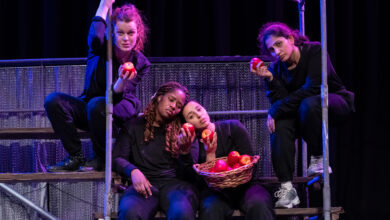
Directed by Jed Birch Kittel: Doktor Faustus and the Third Reich is an uncompromising and intellectually demanding piece of theatre that refuses to offer easy conclusions. This is a production that deliberately unsettles, leaving audiences to wrestle with its ideas long after the final moments fade. Rather than seeking comfort, it confronts the audience with the disturbing intersections of scholarship, power, and moral failure.
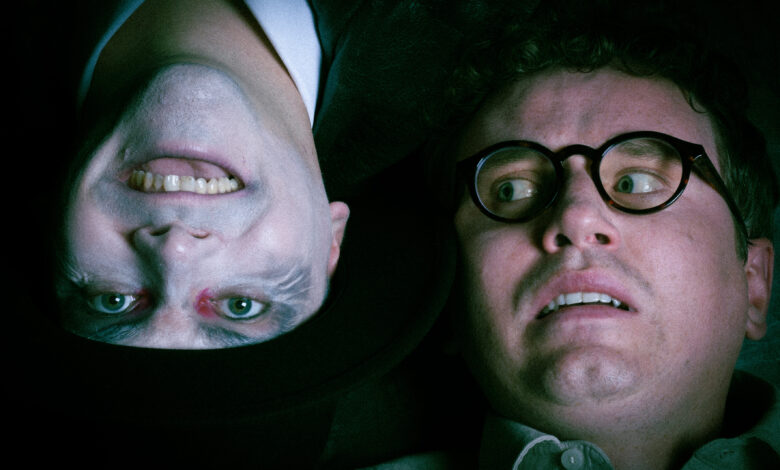
At the heart of the production is a formidable performance from John Henry as Gerhard Kittel. Henry presents Kittel not as a caricatured villain, but as a man whose intellect and ambition quietly corrode his ethical judgement. His performance is controlled and chilling, capturing the gradual normalisation of compromise with unnerving precision. The audience is never asked to empathise with Kittel, yet it is impossible to look away.
Kyle Brookes brings a dangerous subtlety to the role of Herr Herold. His portrayal avoids overt menace, instead presenting extremism as something introduced gently, almost politely. Brookes’ scenes opposite Henry crackle with tension, revealing how influence is often exercised through reassurance rather than force. Together, they create some of the production’s most compelling moments.
Providing a vital emotional anchor is Sophia Lennon as Elisabeth Kittel. Lennon plays the role with restraint and quiet strength, offering a human perspective amid the intellectual debates that dominate the play. Her stillness and clarity cut through the rhetoric, grounding the narrative in lived consequence rather than abstract theory.
Georgia Laity’s Lenore Siegle Wenschkewitz adds urgency and historical weight. Laity delivers the role with a sense of purpose that continually draws the audience back to the real-world implications of academic complicity. Her performance acts as a reminder that ideas are never neutral, and that scholarship carries responsibility. Laity also doubled up as assistant director.
Any production is reliant on it’s backstage , creative team and this production is no exception. Credit must go to Angela Clarke in charge of wardrobe who offered meticulous attention to detail with an added layer of authenticity . Equally impressive was the work of Kyle Jensen whose stage management allowed for the many scene changes to flow without interrupting the overall performance. Whilst Charlie Phillips’ work as make up and Ian Lewis as Videographer served to underpin this memorable production.
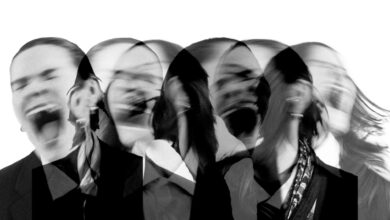
The direction is deliberately stripped back. Minimalist staging, careful lighting, and an unsettling soundscape create an atmosphere of unease without overwhelming the text. This restraint allows the ethical arguments to take centre stage, though the spareness may occasionally leave those unfamiliar with the history wanting clearer contextual guidance.
Ultimately, this is theatre that demands engagement. It is provocative, challenging, and at times uncomfortable — and that is precisely its strength. Unity Theatre has delivered a production that trusts its audience to think critically and sit with difficult questions. For those seeking theatre that interrogates history and conscience with intelligence and courage, Kittel: Doktor Faustus of the Third Reich is a compelling and necessary experience.
Find out more about the production team behind this show, Heirs of Banquo, via heirsofbanquo.co.uk.