
Liverpool Independent Art School At 10: This Is What Art School Was Supposed To Be Like

There is a story about Liverpool Independent Art School (LIAS) that probably tells you more about its philosophy than any mission statement ever could. It involves two artists, a load of drawing equipment, Sefton Park and lots and lots of rain…
Founders Paul Gatenby and his colleague Tony O’Connell had been teaching at what was then the Community College for almost twenty years when they began to feel increasingly uncomfortable with the direction education was taking. Austerity was taking hold, education was becoming increasingly commodified and the things they valued were being cut away. So they started talking to other artists about building something different.
“We were also digging an escape tunnel from a working situation that felt more toxic every day,” they recall.
LIAS emerged from those conversations as a collective, with Josie Jenkins, Colette Lilly, Christine Toh, Siobhan Carmichael and others involved in its early development. It was deliberately democratic, discussion-based and cooperative. No managers, no bosses and, crucially, no desire to recreate the structures they had left behind. Independence was never simply a branding exercise; it was a statement about how art could be taught and experienced.
Then came that rainy day in Sefton Park.
The artists had been caught in a downpour while carrying their drawing equipment back from an outdoor session. Laughing as they struggled through the rain, Paul shouted across the park: “This is what art school was supposed to be like!” The line stuck. Perhaps more importantly, so did the people.
That was ten years ago. In 2026, LIAS is celebrating a decade of doing things differently: ten years of classes, experiments, friendships, false starts and new beginnings, during which it has survived austerity, a pandemic, the loss of equipment and the precarious reality of remaining genuinely independent. Its tenth anniversary therefore feels like an appropriate moment not simply to celebrate its survival, but to ask whether the ideals that created LIAS in the first place have survived with it.
The earliest LIAS students were predominantly local retired women, many of whom had been discouraged from pursuing art when they were younger. They arrived with a lifetime of unrealised creativity and found little more than a welcome, a kettle and some drawing ideas. They made the place their own.
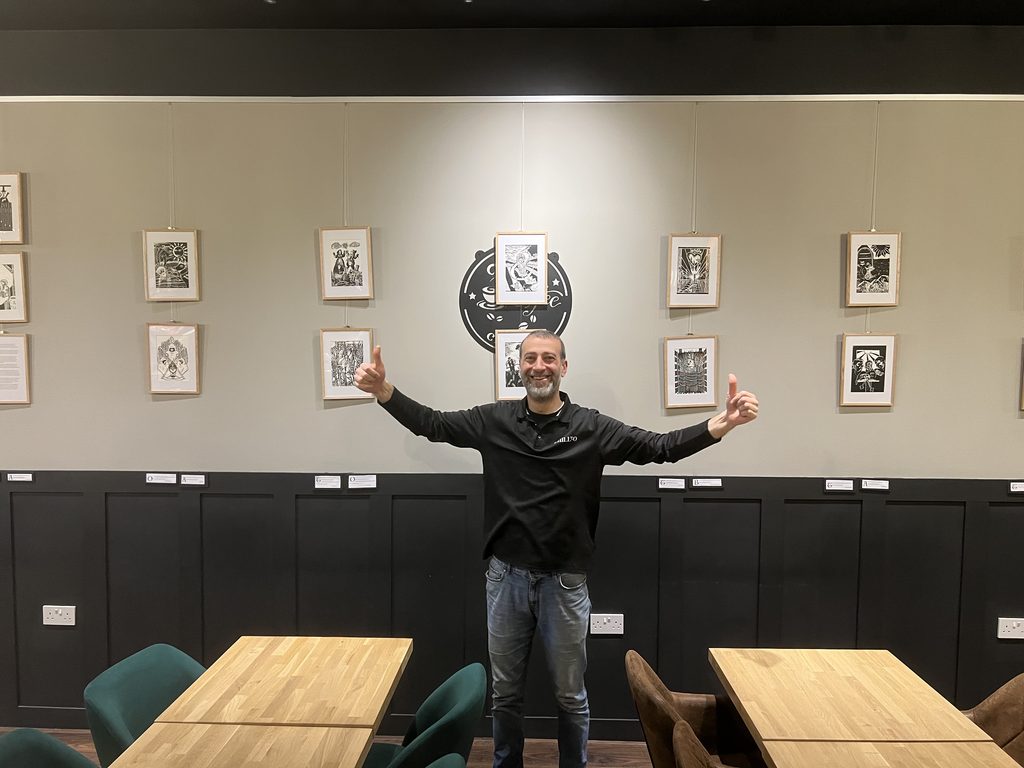
“They loved LIAS for letting them be who they already were,” Tony reminisces. “They built the community and made it home.”
A decade later, that sense of belonging remains at the heart of the school. Beginners sit alongside experienced artists, tutors learn from students and new ideas are encouraged rather than filtered through hierarchy. The philosophy owes something to Pete Jones, one of the founders’ own tutors, whose Zen practice introduced them to the idea of approaching creativity with the openness of a beginner.
If the first few years established what LIAS wanted to be, the pandemic provided the most serious test yet of whether that community could survive. The school closed before many other institutions, conscious that its older artists were particularly vulnerable. What followed was an extraordinary exercise in improvisation: online life drawing, Google Earth urban sketching, art history and even print courses delivered through Zoom.
However, it was also a period of real loss. LIAS received no grant funding and much of its stored equipment was destroyed after a landlord disappeared. One artist managed to rescue the printing press in her van. When restrictions finally eased and outdoor drawing returned, it felt like “coming out of a chrysalis”.
Survival, however, was only part of the story. As LIAS approached its tenth anniversary, the move to John Archer Hall offered the possibility of another chapter. Initially there were doubts about whether the space could be afforded, but Andrea Stables devised a way of funding it collectively, with each class contributing to a central fund. And this idea worked.
Classes now range from life drawing, painting and printmaking to watercolour, batik, urban sketching and children’s art. Staff meetings remain democratic, occasionally chaotic and driven by ideas. If something doesn’t work, it is dropped. If something looks interesting, they try it.
Liverpool has a long tradition of independent and grassroots culture, and LIAS sees itself as part of that lineage. Its growing links with Toxteth Library, Bridewell Studios, the University of Liverpool, Walker Art Gallery, Unity Theatre, Kirby Gallery and others are built around the idea that cultural organisations can support rather than compete with one another. One artist recently described LIAS as “way more punk” than commercial alternatives. It is a description that seems to amuse rather than trouble them.
After ten years, the achievement is not simply that LIAS survived austerity, COVID, the loss of a studio and all the uncertainty that comes with remaining genuinely independent. It is that people still want to walk through its door. The school recently took a three-day field trip to Llandudno. Even its founder admits that, as a “cynical old punk”, he hadn’t expected it to be quite so much fun. There will be another one next year.
And perhaps that is the point. For anyone walking into LIAS feeling they aren’t “really an artist”, the message remains simple: creativity is not something that needs to be earned. It is something most of us possess before the world of work, money and expectation gradually convinces us otherwise.
“Our job as artists and tutors is to remind people that we make art just because we want to,” they say. “Everything else is just labels and snobbery.”
As LIAS enters its second decade, the ambition is not to become bigger simply for the sake of becoming bigger. It is to preserve the friendship, awkwardness, experimentation and bloody-minded independence that got it through the first ten years; to keep “the band” together, bring old tutors back into the conversation and build connections with other independent art schools beyond Liverpool. In other words, to keep doing things their own way.
Just as art school was supposed to be like.
For more information visit liverpoolindieartschool.com and follow @liverpool_indie_art_school.