

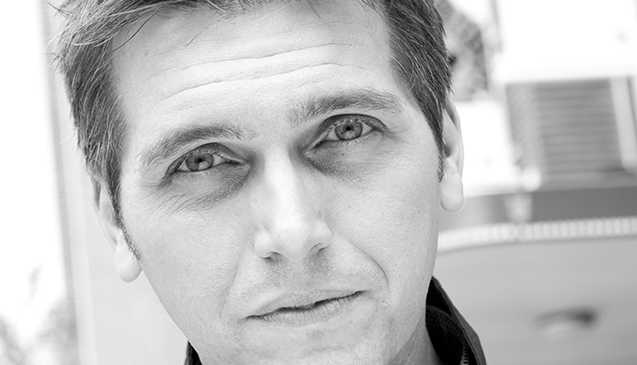
Where Sound Becomes Structure — Kenneth Hesketh on architecture, atmosphere and the strange emotional power of composition.
For Kenneth Hesketh, music was never simply something he did — it was an environment he inhabited. Born in Liverpool in 1968, his earliest formative experiences came as a chorister at Liverpool Cathedral, where sound itself became something physical, architectural and psychologically charged. Reflecting on those years, Hesketh says becoming a chorister at nine placed him inside “an environment where music wasn’t simply decorative or recreational — it was architectural, ritualistic, physical.” Long before he fully understood harmony or composition, he was already fascinated by the way sound behaved inside vast resonant spaces.
That sense of atmosphere remains central to Hesketh’s work today. Across a career that has established him as one of Britain’s most distinctive contemporary composers, his music continually explores transformation, memory, instability and what he describes as “labyrinthine pathways, memory traces, overlapping temporalities” alongside “the notion of entropy and degradation within systems.” Even the non-musical influences of his childhood — the strange melancholia and ambiguity of 1970s British television, folk horror and children’s literature — continue to echo through his work in transformed ways.
By the age of ten or eleven, Hesketh was already composing seriously. Alongside the cathedral’s choral traditions, his imagination was opened further by early encounters with Debussy, Ravel, Stravinsky, Bartók and Berg, while trips to the Liverpool Empire Theatre with his piano teacher Dorothy Hill introduced him to opera at a remarkably young age. “By the age of 13 or 14,” he recalls, “I had seen From the House of the Dead, Peter Grimes, The Cunning Little Vixen, Death in Venice and quite a few others.” Discovering Diaghilev ballet music as a teenager proved particularly decisive: “I was smitten from that point on.”
Hesketh’s rise within contemporary classical music came early. At nineteen he received his first commission from the Royal Liverpool Philharmonic Orchestra, beginning a long relationship with the orchestra and the city’s musical culture. He later studied at the Royal College of Music under Edwin Roxburgh, Joseph Horovitz and Simon Bainbridge before continuing his studies in the United States. A major turning point arrived in 1995 when he attended the Tanglewood Music Center as the Leonard Bernstein Fellow, studying with the legendary French composer Henri Dutilleux — an encounter Hesketh describes as profoundly influential “artistically and personally.”
Since then, Hesketh has built an international reputation for music of extraordinary colour, complexity and emotional intensity. His work has been commissioned and performed by ensembles including the London Sinfonietta, BBC Philharmonic and Ensemble intercontemporain, while conductors such as Sir Simon Rattle, Oliver Knussen and Susanna Mälkki have championed his music. Yet despite these achievements, Hesketh speaks candidly about the instability that comes with a composing life. “Uncertainty never disappears entirely,” he admits. “Composition is a strange profession because one spends enormous amounts of time alone confronting things that may or may not ultimately justify themselves.”
That honesty runs throughout his reflections. Rather than presenting artistic development as a neat upward trajectory, Hesketh describes it as an ongoing process of refinement, doubt and rediscovery. “I think one’s ‘voice’ is less a destination than an ongoing process,” he says, shaped not only by influences but by the gradual discovery of deeper structural and emotional concerns beneath the surface of music itself.
Collaboration has also proved essential to that process. Hesketh speaks warmly of the performers, ensembles and conductors who have helped shape his work over the years, arguing that the best musicians do far more than simply realise a score. “The best performers don’t merely ‘realise’ a piece — they illuminate it,” he explains. “They expose balances, pacing issues, latent drama, hidden lyricism, or structural tensions one can shape.”
Alongside composing, Hesketh has become an important teacher and mentor, currently serving as Professor of Composition and Orchestration at the Royal College of Music. Yet even here, certainty remains elusive. Teaching, he says, continually forces him to re-examine his own assumptions while remaining sceptical of “easy notions of ‘newness.’”
What emerges most clearly from Hesketh’s reflections is an artist committed not to fashion or careerism, but to depth, curiosity and artistic authenticity. Asked what advice he would offer younger composers, his answer feels revealing not only of his teaching philosophy, but of his own creative life: “Read widely. Listen widely. Remain curious beyond music itself.” Most importantly, he says, composers must spend a lifetime discovering not simply how to write music, but “what is necessary and quintessential” within their own work.
It is that restless search — for atmosphere, transformation, meaning and emotional truth — that continues to define Kenneth Hesketh’s music, including his striking work Point Forms. As usual as part of the Creative Spotlight interview, we like to discuss with our chosen subject an example of their work. And it is Point Forms that forms the focus of the following conversational analysis of this fantastically challenging work…
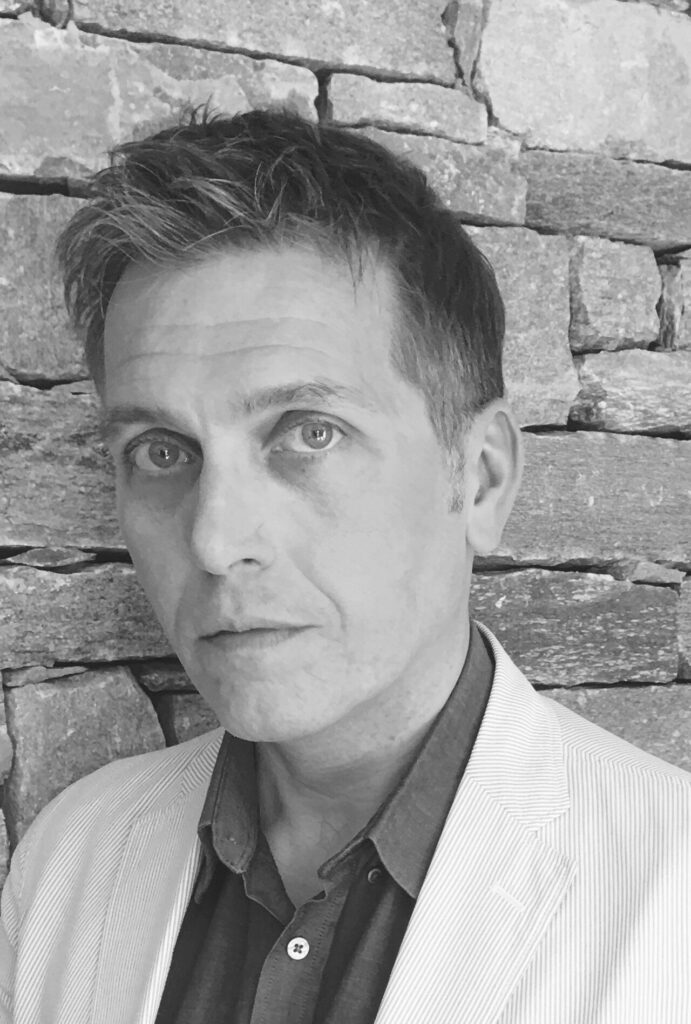
Point Forms takes its cue from Kandinsky’s Point and Line to Plane. Do you remember when that connection first clicked, and what made you want to respond to it musically rather than simply admire it?
I had known Kandinsky’s theoretical writings since my mid-twenties, and Point and Line to Plane in particular resonated strongly with instincts I already had concerning gesture, structure, and transformation. At that stage I probably wouldn’t yet have described these interests as “ekphrastic” in any formal sense, but looking back I can see that the seeds of later works were already present there.
What fascinated me was not the idea of directly illustrating visual art in sound, but Kandinsky’s attempt to describe relationships between elements – points, lines, accumulations, tensions, trajectories – almost as living forces. His language itself suggested musical possibilities. Words such as “stippled”, “sprayed”, or “compact” immediately implied different kinds of textural behaviour and density to me.
Many years later these concerns became much more deeply embedded in my work in pieces such as Inscription-Transformation, Viae, and Uncoiling the River, but Point Forms already contains an early expression of that way of thinking.
Kandinsky was analysing how visual elements behave in space. When composing the piece, did you feel you were consciously “translating” those ideas into sound, or allowing them to operate more intuitively beneath the surface?
There are certainly structural ideas in the piece that arise quite consciously from Kandinsky’s propositions concerning points developing into lines, lines becoming layered or interwoven, and forms evolving organically through interaction. The idea of one line temporarily intertwining with another before diverging again became especially important.
At the same time, I wasn’t interested in creating a strict one-to-one translation system between image and sound. The piece needed to function musically and psychologically on its own terms. Kandinsky acted more as a catalytic presence than a blueprint.
The title feels precise, almost architectural. In musical terms, what is a “point” for you – an attack, a gesture, a moment of energy, or something that unfolds over time?
During composition, I played with the idea that a point could be an attack or isolated event, but it could also become an accumulation, a texture, a pressure point, or a class of events that gives rise to new cycles and new perspectives on the material from which the progressing line unfolds.
What interested me was the instability between these states. In that sense the piece explores transformations between point and line suggesting unfolding musical topographies.
The piece seems in constant motion, even in its quieter passages. How much of that sense of momentum was carefully planned, and how much emerged organically as you wrote?
Structural awareness, particularly concerning pacing, accumulation, and release, is always determined as much as possible to, ironically, suggest that the material itself suggests its own pathways forward and its own behaviour.
I’ve always been interested in organic development rather than purely imposed architecture. Even in quieter passages there is usually some latent energy or internal pressure trying to move the music elsewhere.
You chose the basset clarinet rather than the standard instrument. What possibilities did that open up in terms of range, colour, or physicality, and how central was its sound world from the outset?
The basset clarinet was absolutely central from the outset having been suggested by the commissioning performer, Mark Simpson. Its extended lower register opened up a darker and more varied sonic world than the standard A clarinet would have allowed. I was particularly interested in the way the instrument could shift rapidly between agility, lyricism, graininess, fragility, and something almost vocal or wailing in character.
The broader range also allowed the structure itself to inhabit different timbral spaces as momentum and mood evolved. The journey from the opening high piano note to the final low basset clarinet note became important formally as well as colouristically.
The work is dedicated to Mark Simpson. How did writing for a specific musician shape the risks you were prepared to take, and did his musical personality influence the character of the material?
Writing for Mark was a joy because I knew there would effectively be no technical ceiling. When you write for a musician of that calibre, it inevitably raises your own game compositionally because possibilities remain open rather than needing to be compromised in advance.
What was also invaluable is that Mark is himself an exceptional composer, so he understood the piece simultaneously from performer and practitioner perspectives. That creates a particularly rich form of collaboration because musical problems are understood structurally as well as physically.
Once the piece moved from page to rehearsal room, did anything shift? Were there moments where hearing it performed altered your sense of balance, pacing, or texture?
Nothing fundamental changed conceptually, though rehearsals naturally led to refinements of pacing, intensity, and practicality. I did alter aspects of the opening. Originally there was a sung line combined with the instrumental part, but I ultimately felt it would prove unnecessarily difficult to realise consistently in performance. In hindsight I think the final version is stronger for its greater focus and clarity.
There’s a remarkable density of detail in a relatively compact span. How do you prevent that compression from tipping into overload – both for the performer and for the listener?
That balance is always delicate. Density only functions if there is sufficient differentiation within it – changes of register, colour, pacing, articulation, or direction. Otherwise complexity risks simply becoming opaque.
Even highly compressed passages need to breathe internally and project clear energies or trajectories. One hopes the listener can perceive the larger behaviour and momentum of the material, if not every detail individually.
From the performer’s perspective, where does Point Forms demand absolute precision, and where are you open to interpretation and individual presence entering the frame?
The structural relationships and pacing need considerable precision because so much of the piece depends upon the interaction and transformation of small gestures and textures. Timing, balance, articulation, and control of energy are therefore critical.
At the same time, I would never want a performance to feel clinically neutral. The volatility of the material, its moments of aggression, playfulness, lyricism, or instability, all benefit enormously from a performer’s own sense of dramatic presence and character. I would like to think that moments where that is possible are reasonably self-evident.
Looking at the piece now, where does Point Forms sit within your wider catalogue? Does it feel like a distillation of ideas you’d been circling, a turning point, or something that still stands slightly apart?
I think it represents one pathway through a landscape I still continue to explore today. Other works may be denser or structurally more elaborate, but many of the underlying concerns remain surprisingly current in my thinking – interwoven lines, organic transformation, unstable repetition, colour as structure, and abstract pathways through material.
In retrospect I see Point Forms as one manifestation of ideas that later became much more deeply embedded in my work, even if at the time the implications of their presence were not pursued or where those ideas might one day lead.
From the echoing spaces of Liverpool Cathedral to concert halls and festivals across the world, Kenneth Hesketh’s journey remains rooted in the city that first shaped his imagination. Liverpool gave him architecture, atmosphere, ritual and sound; in return, Hesketh has become one of the city’s most internationally respected contemporary composers, creating music of rare intelligence, emotional depth and sonic imagination. Yet what remains most striking is not simply the scale of his achievement, but the continued sense of curiosity driving it forward.
Decades into an acclaimed career, Hesketh still approaches composition not as certainty, but as exploration — following lines, tensions and transformations wherever they may lead. In many ways, Kenneth Hesketh’s music still carries the resonance of Liverpool itself: restless, searching, complex and impossible to contain within easy boundaries.