


Ursula Starr – Process, Place and the Freedom to Experiment…
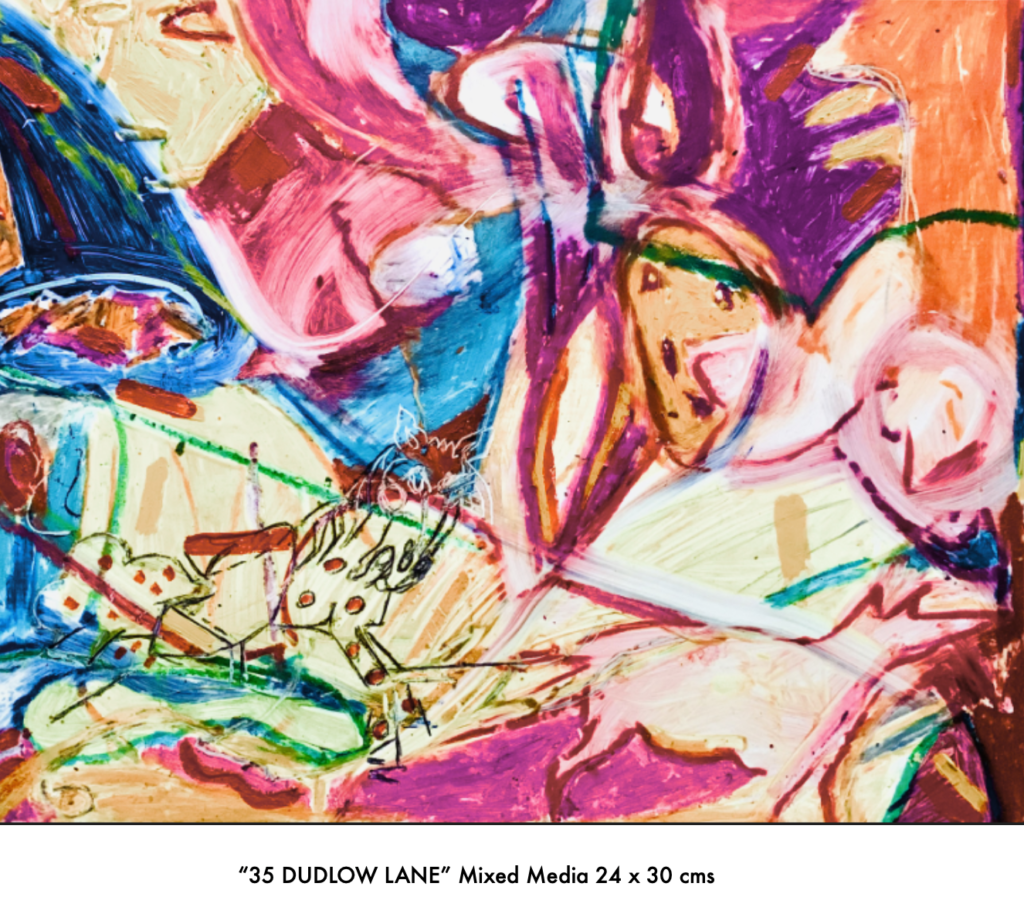
Making art for Ursula Starr has never been about arriving at definitive answers. Instead, it is an ongoing conversation with landscape, memory and material; a practice shaped as much by curiosity as experience, where experimentation is not simply a method but a philosophy. Across decades of painting and printmaking, she has cultivated an approach that remains remarkably open—one that values discovery over certainty and embraces the unexpected as an essential part of the creative act.
That openness defines work which resists easy categorisation. Moving effortlessly between observation and abstraction, Starr creates images in which emotional response and formal composition exist in constant dialogue. Rather than seeing these qualities as separate, she understands them as inseparable strands of the same creative process. “I don’t see them as distinct entities,” she explains. “Observational, personal, emotional aspects are hopefully and necessarily all bound up together at the same time.”
It is a deceptively simple statement, yet one that reveals the foundations of her practice. Whether working on a gestural painting, an intricately layered print or an experimental monoprint, Starr approaches each new piece not with a predetermined conclusion, but with a willingness to see where the work itself might lead. Process, in this sense, becomes an act of enquiry rather than execution.
That spirit of exploration has been present from the very beginning. Liverpool provided the first foundations of her artistic education, where a Foundation course at Liverpool School of Art encouraged students to move freely between painting, sculpture, graphic design, life drawing and art history while absorbing influences from literature, film and contemporary culture. Later, at Ravensbourne College of Art, a more independent environment challenged students to develop their own artistic voices, supported by visiting tutors from institutions including the Slade School of Fine Art and the Royal College of Art. Among those who left a lasting impression was the painter Brian Fielding, whose lyrical abstraction demonstrated the expressive possibilities of gesture and atmosphere. “The work had a great influence on me,” Starr reflects.
Yet formal education was only one part of a continuing artistic apprenticeship. Galleries, exhibitions and the work of other artists became equally important sources of inspiration. The emotional intensity of Chaim Soutine, Edvard Munch and the German Expressionists continues to resonate, while the measured balance and timeless clarity of Piero della Francesca offers an altogether different but equally compelling touchstone. Rather than adopting a single aesthetic, Starr has absorbed ideas from across the history of art, allowing them to inform a visual language that remains unmistakably her own. However, running through that language is one enduring presence – landscape.
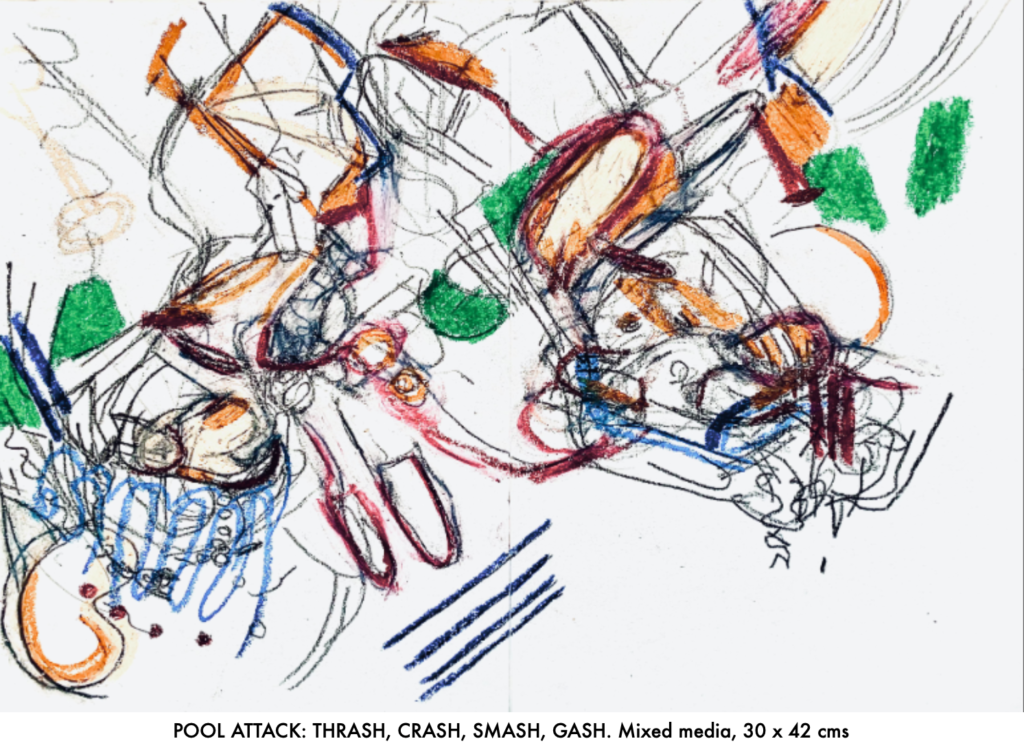
For Starr, landscape is never simply a location to be depicted. It becomes a repository of memory, atmosphere and lived experience, shaped as much by emotional resonance as physical geography. “Landscape, memories and the atmosphere they evoke are themes in my work and always will be,” she says. “It’s past, present and future… It’s what I’m about, what’s shaped me.”
That relationship extends naturally into printmaking, a discipline whose combination of structure and unpredictability perfectly complements her way of thinking. From the meticulous demands of etching and multi-block linocuts to the spontaneity of monotypes and monoprints, every process presents another opportunity to discover something unforeseen. “There is a wealth of mediums and processes to use,” she says. “And that’s great.”
For Starr, experimentation is less about novelty than remaining creatively alert. Each unfamiliar material or technique offers an opportunity to question established habits, preventing practice from settling into comfortable routine. Even after decades of exhibiting nationally and internationally, she continues to seek out workshops, collaborate with fellow artists and explore new disciplines, including hand papermaking. The desire to keep learning remains undiminished. Underlying everything is a quiet refusal to stand still. “Everything has the possibility of exciting me creatively,” she says. “Who knows what’s around the next corner?”
It is perhaps this enduring openness that gives Starr’s work its distinctive vitality. Technical accomplishment is matched by an unmistakable sense of curiosity, while years of experience have done nothing to diminish her willingness to embrace uncertainty. Instead, the familiar continually becomes new, inviting viewers into works that feel both deeply personal and generously open to interpretation.
That philosophy finds an eloquent expression in Bamboo Ballet. More than a study of natural forms, the monoprint becomes a meditation on movement, rhythm and chance, revealing how observation, intuition and material can work together in unexpected harmony. In the conversation that follows, Ursula Starr reflects on how a handful of bamboo leaves became the starting point for an exploration of composition, experimentation and the enduring creative possibilities that emerge when an artist is prepared to let the work lead the way.
To explore these ideas in greater depth, I asked Ursula Starr to focus on one work that encapsulates many of the concerns running throughout her practice. Bamboo Ballet, a deceptively simple monoprint made from fallen bamboo leaves, opens a wider conversation about movement, chance, observation and the creative possibilities that emerge when artists allow materials to shape the journey.
Bamboo Ballet feels both organic and architectural at the same time. What first sparked the idea for this piece?
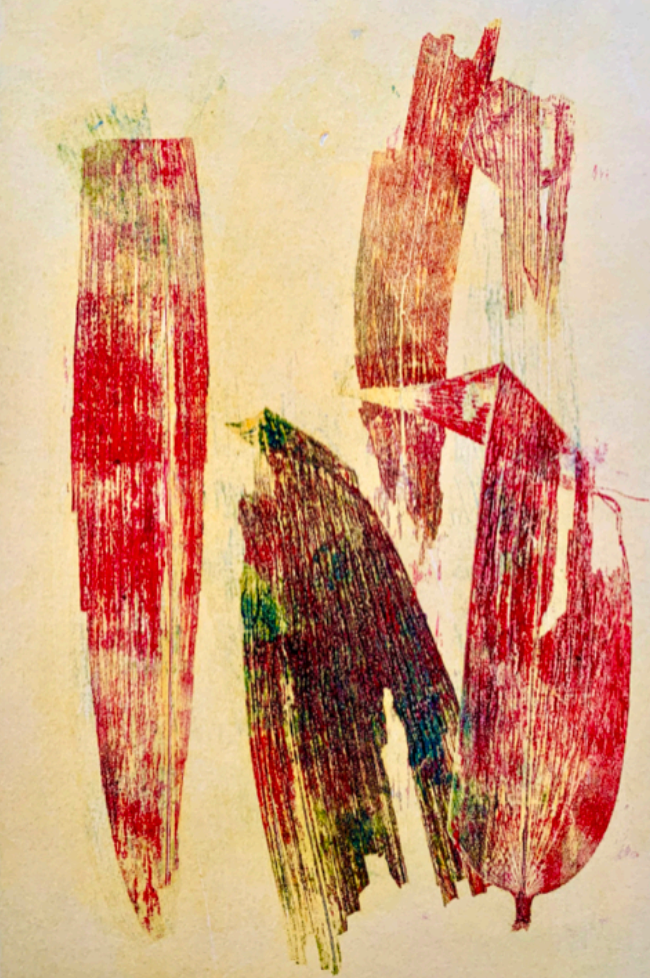
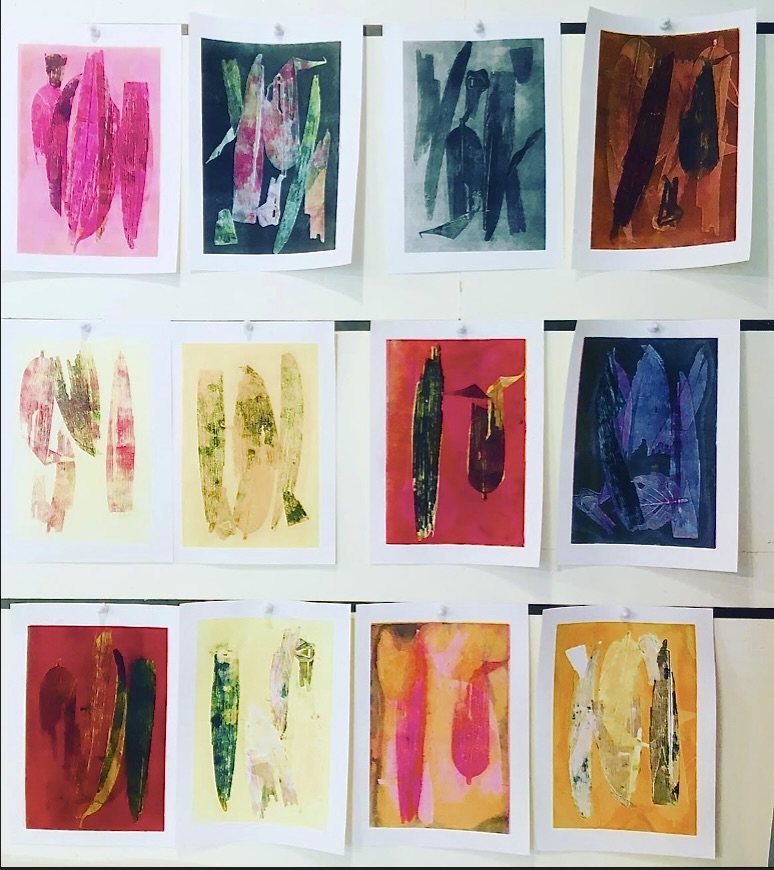
Yes, it’s both organic and architectural at the same time, thanks for that. Bamboo Ballet 1 is one of twelve mono prints I produced at a workshop entitled “monoprinting with nature” a few years ago. It’s on Snowdon acid-free paper (16.5 x 24.5 cm). It was great working in an experimental way alongside others using, in my case, dead bamboo leaves from the glorious garden.
The title suggests movement and rhythm rather than stillness. Were you thinking about dance, gesture or performance while making it?
The title does suggests movement and rhythm rather than stillness though I see stillness in the result. Placement and composition were very important in the process initially and then becoming aware of the rhythms in the leaves and in their dispositions with others.
That movement could be bold but also soft, subtle and graceful and more gentle in its depiction. Ballet and choreography come to mind when the 12 are shown together (the order can be varied of course).
The layered marks and textures almost reveal the process of the print being built up and broken down. How important is accident or unpredictability in your work?
The process of the print being built up and broken down is an apt description. It’s a fluid one and conveys the experimental nature of that day. The pressure of the press, the transparency of the ink, the strength of the colour and the physicality of the bamboo leaves (some very fragile) all have a part to play in the production.
It’s a learning process. I love what accident and unpredictability can bring, rarely having an end result in mind. The wider process is used a lot but that interests me rather than trying to produce a finished and known outcome. Mystery is important.
There’s a tension in the image between fragility and strength. Is that something you consciously explore?
Ah, that’s right, a tension between fragility and strength. Well I know I prefer bold statements visually in my artwork and strong, inquiring work, hopefully with oomph and energy. Whether conscious or not, my emotions, experiences (including health) will have a part to play. Play is important.
I like the idea of something small becoming monumental, like a mono print, but at the same time the bamboo leaf is fragile and can disintegrate.
The work sits somewhere between abstraction and landscape. Do you begin from direct observation, memory or intuition?
In this case observation and physical experimentation in placing the leaves on a surface (plate) to be printed was the key factor running through. Intuition was tied up in that process — landscape, still-life, abstraction — I can see all three.
Direct observation, memory and intuition can each be starting points for all the art works I do. They can seamlessly overlap.
The vertical forms feel almost like figures or presences rather than plants. Do you like viewers finding their own narratives within the work?
I don’t think my work has one overriding message. Questions are more interesting than answers. If viewers pause, look, think and perhaps bring their own experiences and interpretations to the work, then that is rewarding.
I hope people engage with the work emotionally or visually rather than feeling they have to “understand” it. Curiosity is important. I want the work to remain open enough for different readings.
Colour seems to play an emotional role here, especially the deep reds against the softer background tones. How do you approach colour when building a print like this?
Nature has always been a constant source of inspiration for me, whether through walking, observing or collecting. I am interested in the forms, structures, rhythms and patterns that occur naturally. I don’t try to copy nature directly. Rather, I respond to it and use it as a starting point. The process of looking is just as important as the making.
Printmaking can leave traces, ghosts and impressions from earlier stages of the process. What do those remnants mean to you visually or emotionally?
Working with mono-printing encouraged me to relinquish control to a degree. Every print is slightly different and there are always surprises. That unpredictability is exciting. Sometimes the print doesn’t work as expected but can lead to another idea entirely. I enjoy that sense of discovery and the dialogue between intention and accident.
Bamboo Ballet has a meditative quality but also a sense of energy and tension. What kind of emotional response were you hoping the piece might create?
I would encourage people to spend time with the work. There isn’t a right or wrong way of looking. Perhaps notice the movement, the spaces between the forms and the balance of the composition. The title may offer one way in, but viewers should feel free to make their own connections.
Looking back at the finished work now, what do you feel Bamboo Ballet reveals about where you were creatively at that moment in time?
This workshop reinforced my belief that experimentation is essential to my practice. Trying unfamiliar methods and allowing materials to speak can open unexpected possibilities. I hope to continue exploring printmaking alongside painting and drawing, carrying forward the sense of freedom and play that this process gave me.
Speaking with Ursula Starr, it quickly becomes apparent that Bamboo Ballet is about far more than a single monoprint. It offers a window into an artistic philosophy shaped by patience, curiosity and an enduring willingness to embrace uncertainty. Throughout our conversation, she returns repeatedly to the idea that making art is not about imposing control over materials but entering into a dialogue with them. In that respect, the finished work is only part of the story; equally important is the journey that leads there.
There is something quietly refreshing about that perspective. In an age that often values certainty, speed and instant explanation, Starr reminds us that creativity flourishes in spaces where questions remain unanswered. Her work resists the temptation to provide fixed meanings or definitive interpretations. Instead, it invites us to look more closely, to pause, and to discover our own connections within the rhythms, textures and forms that emerge across the surface of the print. The mystery is not something to be solved but something to be experienced.
That openness has been a constant throughout her career. Whether painting expansive landscapes or creating intimate monoprints from fallen bamboo leaves, Starr continues to explore the relationship between observation, memory and emotion with remarkable consistency. Landscape becomes more than place; it becomes a repository of lived experience. Printmaking becomes more than technique; it becomes an act of exploration where intention and accident exist in creative partnership. Even the most familiar natural forms can reveal unexpected possibilities when approached with genuine curiosity.
Perhaps what is most striking is that, after decades of professional practice, Ursula Starr still speaks with the enthusiasm of someone discovering new ideas for the first time. There is no sense of creative complacency. Workshops, unfamiliar processes and collaborations with fellow artists are embraced not as diversions from established practice but as opportunities to continue learning. Experience, for Starr, has never closed doors; it has simply opened new ones.
That generosity of spirit extends naturally to those who encounter her work. She asks very little of the viewer beyond a willingness to look, to think and to remain open to their own responses. There is no expectation that every image must be decoded or intellectually resolved. Instead, there is an invitation to slow down and engage with the work on both an emotional and visual level, allowing personal memories and associations to become part of the conversation. In doing so, the relationship between artist and audience becomes every bit as collaborative as the dialogue between artist and material.
Ultimately, Bamboo Ballet serves as a reminder that the creative process is rarely linear. It evolves through observation, experimentation, instinct and, perhaps most importantly, the courage to follow unexpected paths. That philosophy resonates far beyond the studio. It speaks to the value of remaining curious, of resisting easy conclusions and of recognising that some of the most rewarding discoveries occur when we allow ourselves the freedom to explore rather than simply arrive.
It is an approach that continues to define Ursula Starr’s practice and one that ensures her work remains both deeply personal and generously accessible. As she continues to paint, print and experiment, it seems certain that new materials, new landscapes and new questions will emerge. If this conversation reveals anything, it is that Ursula Starr will meet them with the same openness, integrity and quiet enthusiasm that have shaped her work from the very beginning — and that is an inspiring prospect for anyone who believes that creativity is a lifelong journey rather than a destination.