

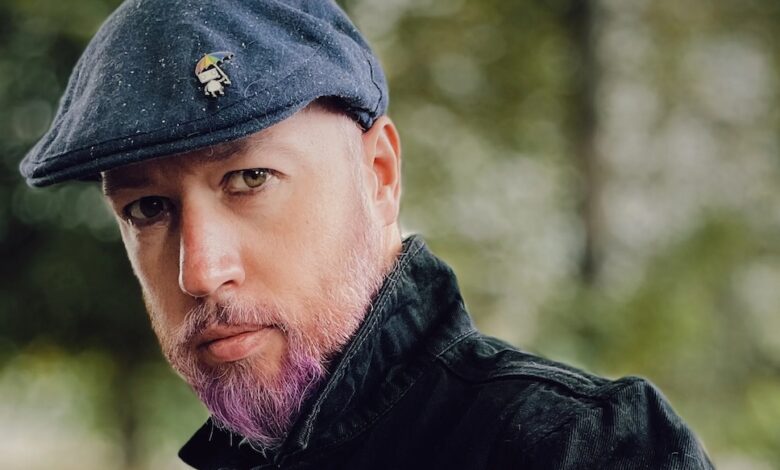
Pete Carr: The Art of Looking Closer…
Photography began for Pete Carr as a creative outlet, but the reasons they were drawn towards it reveal something fundamental about the way they sees the world. The technology appealed to their autistic fascination with how things work, while the immediacy of pressing a shutter and seeing something you have made appear on the back of the camera provided a form of creative gratification that drawing had never offered them. Then, in the early 2000s, a modest Canon A70 compact camera began to transform that interest into something more purposeful.
Experimenting with macro photography, Carr discovered that the camera could reveal aspects of the world that ordinary vision routinely overlooks. A dandelion they had seen countless times suddenly became an intricate landscape of tiny hooks and structures, each individual part playing its role in the life of the flower. “I had seen a dandelion many times, but it wasn’t until I took a close up photo that I could see the tiny hooks on each individual part that help the flower pollenate.” It was a small discovery, but it contained the essence of what photography would become for Carr: a way of looking again. “My camera is this little box that takes me places, shows me new things and keeps me curious.”
Within around eighteen months Carr had moved from his compact camera to a proper DSLR set-up and was exploring Liverpool through its architecture, music and streets. What had started as taking photographs had become a way of experiencing the city, and that distinction remains important when considering his work today. Carr’s photography isn’t simply concerned with recording what is in front of the lens. It is about the process of discovery that happens before the shutter is pressed: noticing something, becoming interested in it, following it and allowing it to reveal itself.
For years, Carr wondered what sort of photographer they should call themself, feeling the pressure to settle upon a single discipline. As they themselves states “For a long time I’ve tried to answer the question of what kind of photographer am I? If I had to put it on a form, what would I write? Architectural, portrait, event, documentary? I felt the need to pick one and focus, but I never could.”
Eventually, he came to understand that perhaps the label mattered considerably less than the reason for taking the photograph:
“I think my work has evolved to accept that a bit of a jack of all trades, master of none is fine. Photography has this weirdness to it where people are mostly just one thing, but really you’ve got to be out there photographing what you love.”
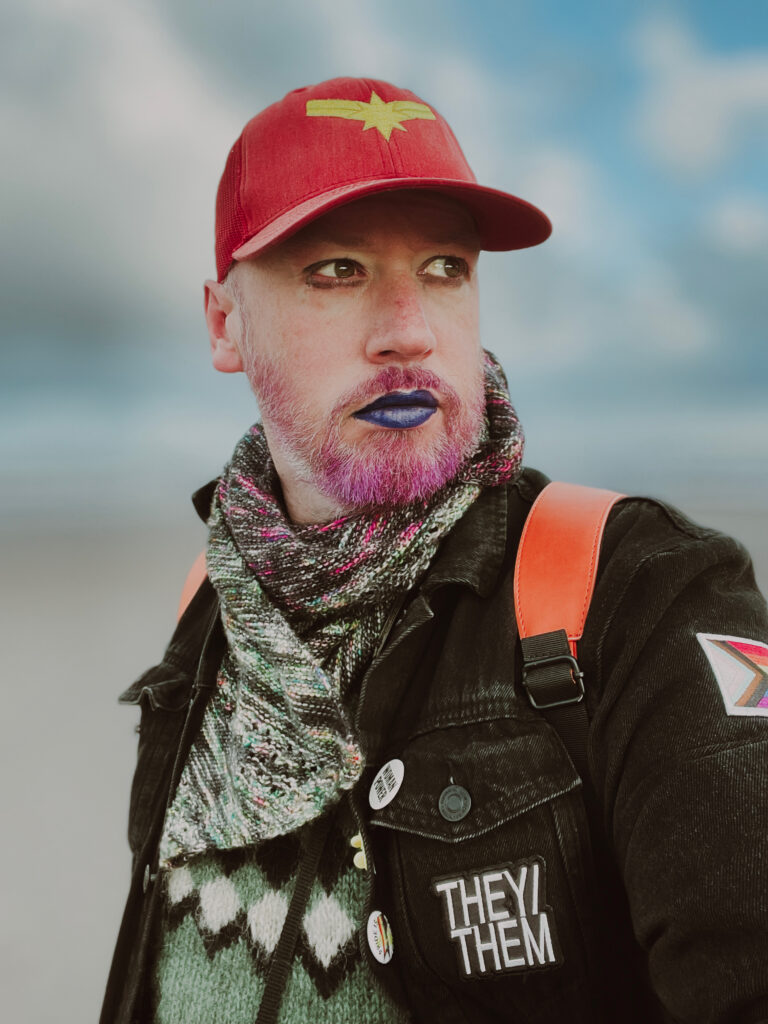
That acceptance has given Carr’s photography room to breathe. His practice moves between architecture, documentary photography, portraiture, events and cultural projects, but underneath those apparently different subjects is a consistent set of concerns. Disability, neurodiversity and LGBTQ+ culture are particularly close to his heart, and increasingly his photography has become inseparable from his understanding of his own identity and the way they experience the world.
Carr describes their camera as a “stim tool”. Its buttons, dials, sounds and physical mechanics provide sensory stimulation, while the act of looking through the viewfinder can reduce an overwhelming world to a manageable point of focus. “When the world is too much, I can get behind the viewfinder and narrow my focus.”
There is a fascinating relationship between the two sides of their neurodivergence and the creative process. The camera can help them regulate when the world becomes overwhelming, while the excitement of seeing an image work can stimulate the dopamine-seeking side of his ADHD. Before photography, the city was largely a place of study, work and family visits. Once they began carrying a camera, however, they started to see it differently. A new building became something to investigate; the rebuilt Everyman became a photographic subject rather than simply another development in the city. Photography encouraged Carr to explore, to notice and to recognise how quickly familiar places can change:
“The everyday is something we often don’t notice changing, even though it happens right before our eyes. Suddenly something is gone and a photo is often the only record.”
That idea is particularly important to Carr because his Liverpool is rarely the postcard version. They are interested in quieter spaces, overlooked details and the everyday moments that might otherwise disappear. Their autistic experience plays a part in that too. Crowds and sensory intensity can be overwhelming, although there are moments, Pride, for example, when the energy of a crowd can be exhilarating. More often, when they are simply wandering with their camera, they prefer somewhere they can breathe.
His curiosity also travels. In Venice, they became fascinated by washing lines stretching across streets; in Berlin, it was trees; in Paris, people on mopeds; in Amsterdam, the strange and wonderful things people transported on bicycles.
Carr is reluctant to claim that they have discovered a definitive visual voice. They are continually tinkering and responding to other photographers, and his own approach has changed considerably over time. Earlier in their career, they processed images heavily until they realised that people were sometimes responding to the “makeup” they had applied rather than the subject itself. Since then they have tried to remain grounded in what is happening in front of the camera.
That instinct is particularly significant when they photograph people. Carr’s understanding of themselves as a non-binary person has made them increasingly conscious of the male gaze and of the responsibility involved in photographing another human being. They want to approach the person in front of the lens as an individual, somebody with their own story rather than merely an object within his frame.
For Carr, representation is therefore about possibility. It is about people being able to recognise themselves in images and perhaps imagine possibilities that previously seemed unavailable to them. His own experiences as a non-binary disabled person have shaped the photographs he makes, but they have also encouraged a wider empathy towards the people they photograph. And it is here, perhaps, that Carr’s philosophy of photography begins to find its clearest expression. The camera allows them to look more closely, but looking closely doesn’t necessarily mean revealing everything. Sometimes it means understanding when to step back, when to leave something outside the frame and when giving a subject space is more important than obtaining the photograph.
That becomes particularly apparent in the work Carr has chosen to explore for this latest edition in the 2026 Creative Spotlight Series.
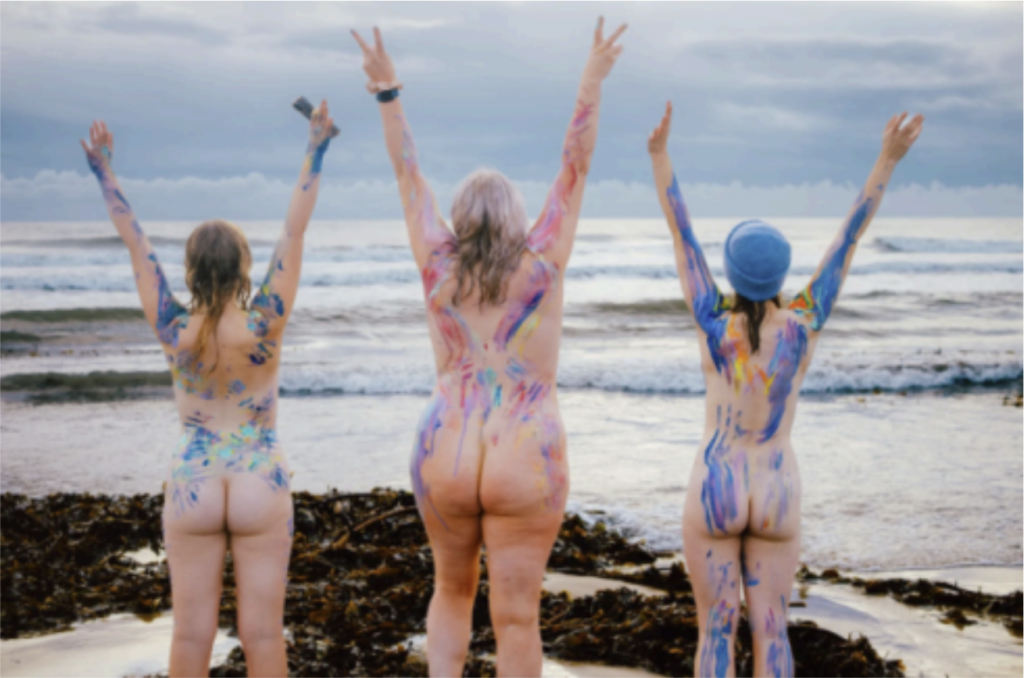
The image above is immediately striking: three figures by the sea, photographed from behind, their bodies marked with paint, the open water and horizon stretching out before them. It is colourful, playful and apparently spontaneous. The photograph is currently on show at London’s House of Fuji and The Hatch in New Brighton, with a further opportunity to see it coming up at Chester Photo Festival. But as Carr discusses the photograph, it begins to open into something more complex, a work about joy, freedom and friendship, but also vulnerability, trust, identity, representation and the right to exist without apology…
Every photograph excludes far more than it includes. What persuaded you that this was the moment worth preserving?
It’s joy, authenticity, friendship, and freedom. Freedom to be silly, and to be seen naked.
The relationship between the three figures and the landscape feels carefully balanced. How conscious are you of composition when working in what appears to be such a spontaneous setting?
Being conscious of my surroundings does keep me on my toes. You see something interesting and by the time you’ve raised your camera it might be gone. So good composition is partly muscle memory from years of getting out with a camera and partly trying to soak in as much from the scene as you can in an instant.
The paint transforms the human body into something almost sculptural. Were you interested in the symbolism of body painting, or was your focus primarily on the visual possibilities it created?
At the time it was just something visually interesting that added to the mood of the morning, but perhaps plays into a large topic I’d like to explore. I think it would be interesting to do some abstract photos of the human body covered in paint, glitter, and colour. A fun way of finding comfort in our skin.
Although we’re looking at three individuals, the image conveys a powerful sense of collective identity. What interested you about photographing people as a group rather than as separate portraits?
I normally am drawn to getting single portraits of people. I find it helps the viewer really focus on that one person. However, here I liked the solidarity of the group.
The sea has long been associated with ideas of freedom, renewal and escape. Did the coastal setting shape the meaning of the photograph, or could this image have existed anywhere?
I think there’s something freeing at the edge of the world. Nature doesn’t judge. You can stand there feeling as silly as you like, or connected to the world in ways you never imagined. In front of you lies the horizon and the sunrise of a new day. Then there’s the sound of water lapping at your feet followed by laughter. I think this image could exist in other places, but probably not in the man made world. It might be more rebellious in that context.
Your decision to photograph the subjects from behind is intriguing. What do we gain as viewers by not seeing their faces?
I hope it allows people to see themselves in this place. That it could be you, ignoring gender, race, or ability.
Colour dominates the image without overwhelming it. How do you decide when colour becomes an essential part of the narrative rather than simply an aesthetic choice?
When it’s clearly part of the story. I once photographed myself in black and white, and while I liked it I did not see myself in the photo. I saw someone else’s style of photography applied to my self portrait. When I redid it in colour I saw myself. I saw my colourful beard, clothing, pin badges and nail polish. All those little details came to life.
This photograph sits somewhere between documentary photography and constructed image-making. How do you see that balance within your own practice?
I try to have a documentary eye to my work, but I do recognise that I am not a documentary photographer. What I aim for is trying to make something that will catch people’s eye, in a good way, that piques their curiosity and then opens them up to explore a topic.
Images like this can easily be described as celebrations of freedom or individuality, but they also raise questions about vulnerability and trust. Was that tension something you wanted to explore, or is it something viewers have brought to the work afterwards?
It’s certainly on my mind while I’m working. While these photos are not of naturists, they are skinny dippers, the naturist community is one of the rare places where you can trust people enough to be naked around them. You know there is never going to be a camera photographing you for likes on social media. It’s a safe space. I am interested in exploring these safe spaces where people are themselves and the joy that it brings. And this space, in particular, does require a level of trust while people are this vulnerable. One of the reasons why I chose to hide people’s identities was so that I could show the event without betraying anyone’s confidence. While there is a specific zone setup for people who don’t mind being in a photo, I still felt that I needed to go that extra step to protect people. For those in the moment, it’s an incredible moment of rawness that I do not wish to break.
Looking back at this image now, has its meaning changed for you since you first pressed the shutter, or does it still say exactly what you intended?
I think it still says what I hoped it would. Get out there and live!
And that brings us back to the philosophy that sits behind Carr’s wider practice. Curiosity isn’t the same thing as intrusion. Looking closely doesn’t have to mean taking something from the person or place being photographed. Sometimes looking closely means recognising when to step back, when not to reveal everything, and when allowing a subject some privacy actually makes the photograph more honest.
That connects directly with Carr’s belief that “you can’t be what you can’t see.” Representation requires visibility, but visibility also requires respect. His photographs increasingly explore that balance: allowing people to see themselves while refusing to turn them into objects for consumption.
After two decades behind the camera, Carr says he feels as though he is only at a point of commencing in his photographic career.
“After a couple of decades behind the camera I feel like I’m just getting started. I’m not exactly sure where I’m going, but I do have inspiration to guide me.”
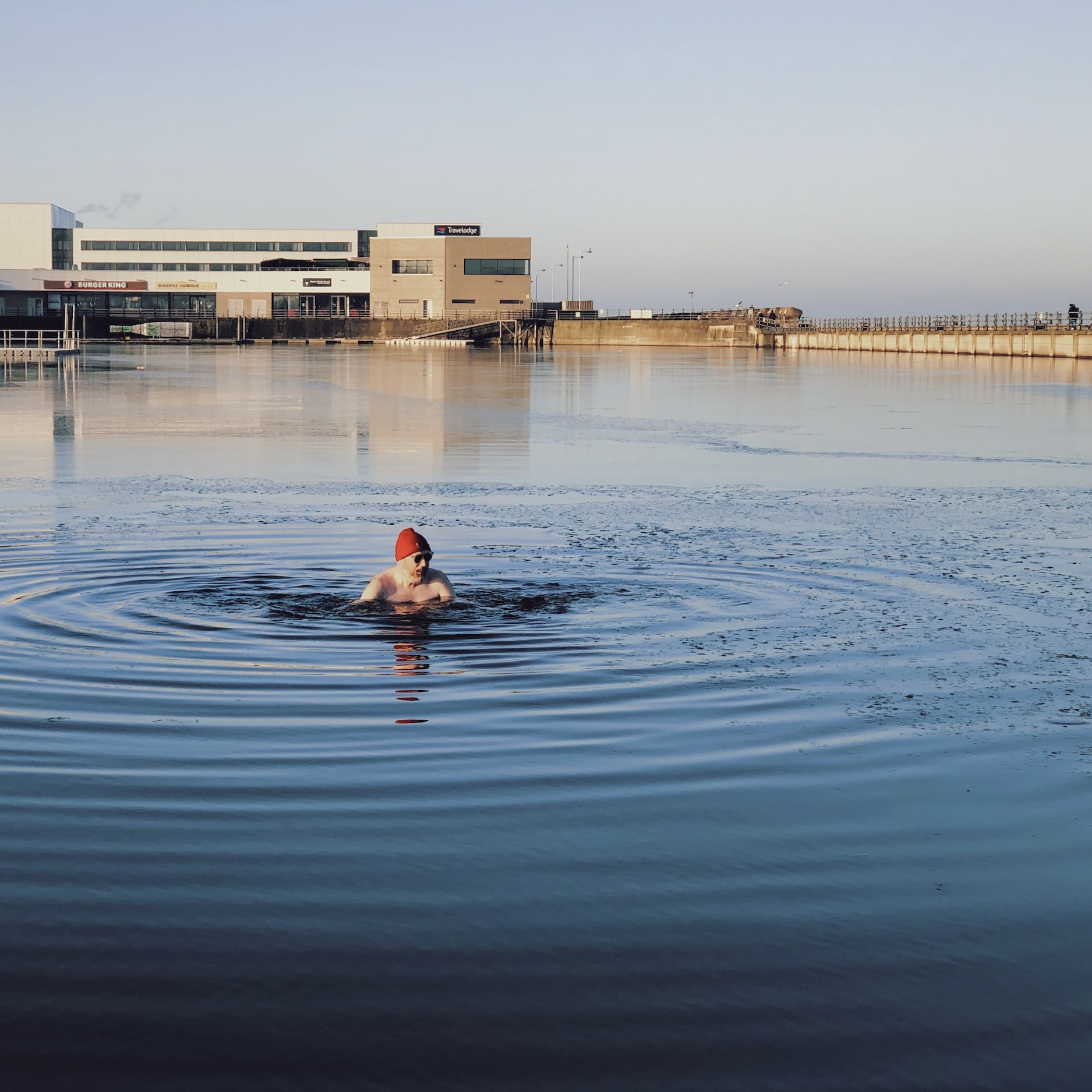
There is something rather wonderful about that admission. Carr’s photography has developed enormously, but he hasn’t arrived at a fixed definition of what he is or what his work must be. He continues to follow whatever catches his attention: a washing line in Venice, a tree in Berlin, a changing Liverpool streetscape, an overlooked detail, a body covered in colour or the minute anatomy of a dandelion. His next interests, body positivity, naturism, disability and wild swimming, suggest that the questions of visibility, freedom, identity and belonging will continue to develop in new directions.
Photography, Carr says, is “an act of curiosity.” It is also, perhaps, an invitation: a person effectively saying, “Look at that!” The dandelion was always there. Liverpool was always changing. The people Carr photographs were always carrying their own stories. Their achievement is not simply that they photograph them. It is that they have learned how to make us stop and see them.
And perhaps that is the most positive thing about Pete Carr’s work. In a world increasingly crowded with images, they remind us that seeing and looking are not necessarily the same thing. To really look takes curiosity, empathy, patience and sometimes the willingness to question what we thought we already understood. Carr is still doing that themselves. Still looking. Still experimenting. Still discovering. And, after twenty years, still finding reasons to say:“Look at that!”
Follow @petecarrphoto on Instagram or visit PeteCarr.net for updates.