

Beyond the Screen: Bruno Castro on Emotion, Discussion and Independent Documentary Film In Liverpool

Liverpool is a city alive with music, theatre, and grassroots storytelling — yet independent cinema, especially documentary, remains under-served. Beyond multiplexes and occasional screenings, there is no permanent, publicly minded space for non commercial film exhibition and discussion. Liverpool Doc Club steps into that gap, not as a conventional venue, but as a curatorial project and a community in formation.
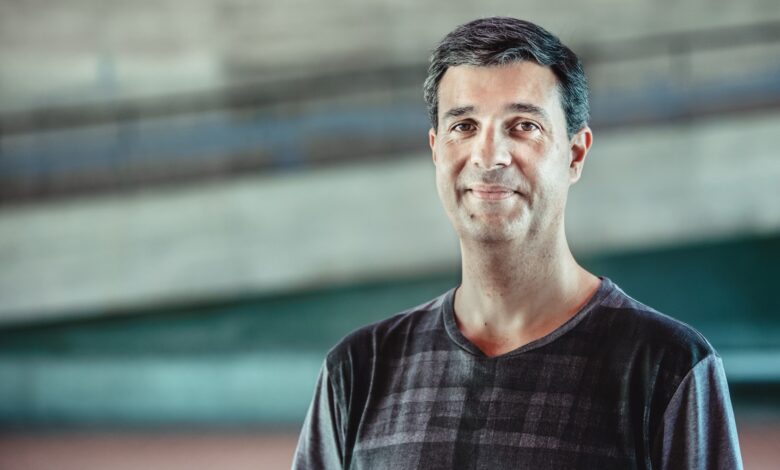
Founded by a curator with experience from Lisbon to UK festivals and cineclubs – Bruno Castro – the club prioritises connection over commerce. Its screenings are designed to spark conversation, encourage reflection, and challenge audiences to see the world differently. In a landscape where thousands of documentaries are produced each year and quickly vanish, Liverpool Doc Club argues for slow, deliberate curation: films chosen for emotional truth, formal innovation, and social relevance.
Inspired by Lisbon’s Alvalade Cineclube and the Bristol Documentary Club, the project pairs unseen films with meaningful discussion, often involving directors or local experts. Its first season, featuring Motherboard and Folktales, highlights women filmmakers and examines contemporary questions of community, mental health, and human experience.
By hosting screenings across the city — from theatres to libraries and unconventional spaces — Liverpool Doc Club demonstrates the urgent need for a permanent independent cinema, rooted in public life and committed to fostering dialogue through film. Liverpool Noise Correspondent Steve Kinrade managed to catch up with Bruno to get a better understanding of the project.
Bruno, you’ve been curating film since 2010, from Lisbon to Liverpool. What personal or cultural gap did you feel Liverpool Doc Club needed to fill?
Well, there is a cultural gap in Liverpool, not between Lisbon and here, but in what the city should have in terms of cinema exhibition. There’s no arthouse independent cinema — the Plaza is a community space — which is peculiar compared to cities like Manchester, Leeds, or even Kendal. It’s sad that all the cinemas closed down and nothing was done.
There’s a need for a space that allows gatherings, discussion, and alternative approaches to curation and programming. At first, Liverpool Doc Club and other short-term projects at Imagine Futures CIC aim to highlight this. DIY cinema clubs are emerging, but we still struggle to find venues. The priority now is to “open a new space,” and Unity Theatre has welcomed us warmly, sharing our values. In the short term, we’ll also hold screenings across different venues, conventional and non-conventional, to show the city that a new cinema is needed — big or small, DIY or not.
Most cinemas focus on programming for business reasons, but in a world where millions of films are made each year, we need projects that rely on curatorship: connecting with audiences, encouraging discussion, and promoting independent approaches without corporate influence. That’s what’s currently missing in Liverpool.
Liverpool has a strong music and arts identity, but documentary cinema feels under-served. Why do you think documentary needs a dedicated space here?
This is probably the case everywhere in the UK. Liverpool Doc Club is, it seems, the second or third documentary club in the country. It’s inspired by the Bristol Documentary Club. We’re in regular contact with them, as well as with the Documentary Film Council. There are also some new projects coming up: one in East London and one in Belfast in the near future. The thing is, documentaries are experiencing a golden age in terms of production. There are so many good films and so many different approaches, people are trying experimental things as well as more conventional ones. Documentaries struggle a lot in terms of mainstream exhibition channels. Most cinemas just show what they think people want to see, but that’s not enough because many documentaries are not sellable in that way. People in Liverpool are interested in connecting with others, having discussions and trying to understand the world and the country and others at the same time, there is a need to make it happen. It’s not ‘Wicked’ who will help us navigate this.
Alvalade Cineclube was built around community and discussion rather than pure exhibition. How much of that DNA carries over into Liverpool Doc Club?
Well, I would say that the Alvalade Cineclube had the same motivation at the beginning. In Lisbon, there are no truly independent arthouse cinemas — only two non multiplexes, and they’re owned by distributors. So we felt that we needed a space to show, discuss and experience things differently, not only to show films that had already been released, but also to show new films, not available through national distribution channels. The main goal was to open up those discussions. One of the reasons we programmed series such as one on female Iranian film directed is that we tend to think of male directors when we think of Iranian cinema. The same applies to cinema from Angola. African production is stepping up, but there’s no space for it in mainstream cinemas. We thought it was important to also open that space at the Liverpool Doc Club, try to do it in Liverpool, creating a community that is willing and interested in having discussions and connecting with others. These discussions could be about pressing issues or other.
What makes a ‘good’ documentary for you as a curator — is it political urgency, formal innovation, emotional intimacy, or something else entirely?
As a curator, the conventional answer is ‘a bit of everything,’ but for me the key is emotional truth. Cinema isn’t journalism; it should go beyond the facts to connect with people on a deeper level. Formal innovation and different approaches are welcome, but what matters most is how a film resonates emotionally.
For example, I recently watched a documentary about drunk people in a US bar — not politically urgent, not formally experimental, but profoundly affecting. Another older film followed twin sisters working as prostitutes in Amsterdam, capturing their lives with humour and humanity. Neither was revolutionary in form or political content, but both connected with audiences and raised important questions about human experience.
Of course, political documentaries also have their place — like The Librarians, about book banning in the US — but ultimately, what makes a good documentary is its ability to be emotionally accessible, truthful, and meaningful to viewers. That’s what guides my curatorial choices.
How do you balance accessibility with ambition when programming — especially for audiences who might not identify as ‘documentary people’?
The idea of ‘documentary people’ doesn’t really exist. Many fiction films are based on real stories, so even those who say they’re “not into documentaries” can enjoy them, and vice versa. Documentaries aren’t a fixed genre; it’s less about promoting documentaries per se, and more about sharing the ideas and approaches the films explore.
Take our upcoming screening Motherboard: it examines raising a child alone while working in the creative sector. It could even work as fiction — what matters is whether it resonates. Accessibility isn’t about dumbing down; it’s about offering films in a way that connects.
Liverpool Doc Club has a clear ethos: it’s about a curatorial approach, not just programming. We want audiences to trust the project, to be open to films they haven’t seen before, and to engage in discussion about what it means to be human today. It’s about selling an approach, not individual films. That takes time, participation, and trust — but it’s worth it.
The first season includes films like Motherboard and Folktales. What connects the films in this opening programme, even if it’s not immediately obvious?
At first glance, these films might seem very different, but they share a core focus: exploring what it means to be human today. Motherboard and Folktales have never screened in Liverpool before, and both are directed by women — a political stance on representation. They each look at how we navigate modern life: raising children, coping with mental health challenges, and finding agency in difficult circumstances. Folktales follows young people, some neurodivergent, at a Forest School in Norway, while Motherboard looks at adulthood and creativity — different subjects, same questions about human experience.
Both films are also formally striking. Victoria’s use of mobile phones and varied cameras makes Motherboard distinctly of 2025, while Folktales impresses with colour, framing, and cinematic intimacy. They show that documentaries about people, with people, can also be beautiful films.
The season also champions new talent through Liverpool Doc North, showcasing short films by alumni alongside the features. Sam Oddie and Matthew Reese explore youth and neurodivergence, and will engage with audiences at screenings. For me, building a documentary community means creating a space where directors and audiences meet, and where new voices have a seat at the table.
Liverpool has a long history of grassroots organising and social storytelling. Do you see documentary cinema as part of that tradition?
Yes, all the films I’ve seen that explore local themes or different aspects of Liverpool’s social life have that kind of history behind them and prove that point. A good example, which we recently screened at Shakespeare North Playhouse, is Kitty and Her Accordion, directed by Roz Di Caprio. It’s about the life of a working-class woman from the mid-20th century who was the mother of a now well-known actress. She couldn’t have an artistic career because she had to deal with having four children and living in Huyton back then. There are a lot of social connections. People in Liverpool are truly interested in maintaining that identity and way of looking at life, which demands that we connect with others and see the world in that sense.
You’ve worked across festivals, cineclubs and community cinemas. What does a recurring local club offer that festivals can’t?
Festivals offer diversity and a chance to see films that might not otherwise be programmed, but they rarely build lasting communities. They happen once a year, often in a competitive format, and leave little space for meaningful conversation. I remember presenting at Cinema Rediscovered in Bristol — a lovely event with Q&As — but it only ran for a few days. Audiences deserve something regular, a space to engage over time, rather than fleeting experiences.
Many films follow the festival circuit, seen by a few hundred people, then vanish. A prime example is Between Revolutions, about the Romanian and Iranian revolutions, which screened at Berlin and other festivals but hasn’t had a UK release. Clubs like Liverpool Doc Club offer the chance to bring such films to local audiences willing to engage deeply, creating continuity and connection that festivals alone can’t provide.
How important are post-screening discussions, Q&As and shared conversation to the Liverpool Doc Club experience? Could the club exist without them?
These are absolutely crucial. Of course, a club — be it Liverpool Doc Club or any other — can exist without them. But we feel that people attend different screenings because they have the opportunity to connect with others. That’s more than just watching a film with others in the room. It’s about having a shared conversation and the possibility of doing that with a director, other people or audience members. I’m always trying to bring new people in, because it’s more interesting to do that with non related guests than with directors and actors. For instance, for Folktales, we’ll have Forest School leads, from Merseyside, to share their views on the film. That’s also the reason why we have held a panel discussion with senior librarians from local universities at the Central Library, at the first Liverpool Doc Club screening. We wanted to hear their thoughts on the film and what they can do to help, how they see the future, what in the film inspired them. This is how we can build bridges with audiences.
The Liverpool Doc Club is supported by organisations like Film Hub North and the Documentary Film Council. How does that support shape what’s possible — and what independence do you insist on keeping as a curator?
Actually, it doesn’t determine what’s possible because the support we get isn’t conditional. The BFI has guidelines, like promoting foreign, independent, or documentary films, and that’s already what we aim to do, so it fits perfectly. There are no strings attached. We’d struggle only if we tried to screen something completely outside the remit, like pornography, but that’s not our goal anyway.
Our independence is total. I’ve never felt any bias from these organisations — we present the programme we want to screen, and they trust us. They’re mature, solid teams who understand what kinds of films we should be showing. Support like this is crucial because it allows us to take risks, show unexpected films, and create different experiences. At the end of the day, it means we can do our best, experiment, and remain fully independent in curating for our audience.
You have been quoted as stating that cinema can be a form of cultural mediation. Personally, this is such a wonderful phrase. So in a city like Liverpool, what kinds of conversations do you hope these films might unlock?
That’s a very interesting question. There are so many conversations that can happen, but it takes time to gain people’s confidence and open them up. At the ‘The Librarians’ screening at Central Library, one audience member asked some challenging questions about the recent closure of a Liverpool library, which sparked a discussion about how censorship can start with the closing of public spaces. It’s the kind of conversation I had never thought of before.
If people understand this is a safe space, they will speak their minds — and that’s the main goal. Cinema lets us share other realities, bridge topics and connect people. The key is getting people into the theatre, because even those who aren’t initially interested often become open to the experience. It’s also about making the screenings meaningful, even if someone doesn’t speak up but goes home thinking about it. I’ve screened films for an audience of one before — if it matters to that one person, it matters.
Cultural mediation is exactly that: using curatorial practice and screenings as a bridge. Inertia is the enemy, and only bridging can combat it. In Liverpool, I hope these films deepen conversations about diversity, help us respond to social and urban changes, and allow space for difficult discussions about our history. Cinema can open all of these doors.
Looking ahead, what would success for Liverpool Doc Club look like — packed rooms, riskier programming, new audiences, or something harder to quantify?
Well, expanding cinema audiences in Liverpool and the UK is important, but here it’s especially crucial that screenings are affordable and accessible. People need to know there’s no barrier to attending. We’re not focused on packed rooms. Sometimes it’s five or six people, sometimes ninety-four — like in Bradford last week. I once had an audience of eight, and we spent a wonderful half-hour discussing docufiction before the film. Those people were engaged, some even reached out afterward to ask questions or share that they were studying film, doing a PhD, or programming local community cinemas.
It’s not just about numbers. Of course, a bigger audience can make it easier to take risks, but sometimes you take risks even when you don’t know how it will land. That’s the nature of curating. The Liverpool Doc Club takes a curatorial approach rather than just programming. Programming responds to what audiences want; curating proposes new perspectives, challenges people, and works proactively with them. That’s the difference — it’s a movement for, not from.
We’re here to find new films, open up discussions, and take risks. Sometimes the hard way pays off, but it’s worth it!
The Liverpool Doc Club (@liverpooldocclub) – details about their current activities might best be found on their webpage liverpooldocclub.co.uk.