

Speaking out when silence feels safer…
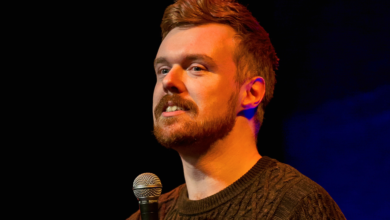
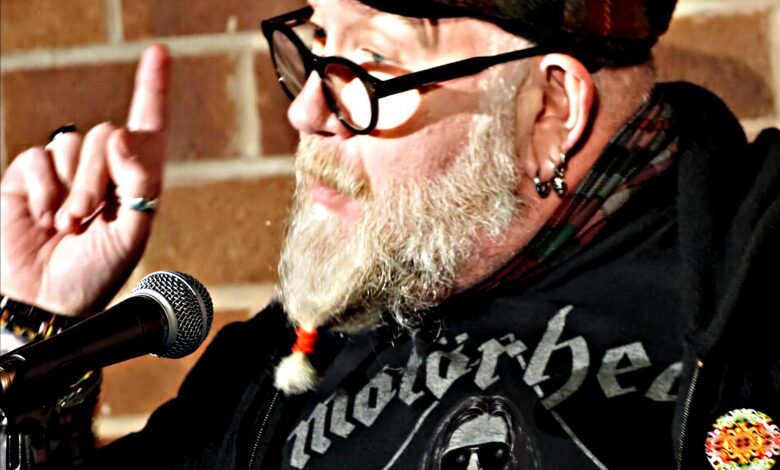
Paul Reid’s route into writing has taken in school classrooms, punk rock stages, spoken word performances and creative writing groups across Liverpool. Throughout those different chapters, one thing has remained constant: a desire to connect with people, whether through humour, observation or reflections on the world around him.
Writing has remained a constant presence since childhood, when he enjoyed reading his stories aloud in class. In his younger years, he played in a succession of punk bands, relishing the opportunity to write lyrics designed to provoke and amuse in equal measure. Following a long and ongoing struggle with mental illness, Reid continued to write intermittently before returning to solo performance, developing a spoken word style that combines humour, personal reflection and social commentary. More recently, support from organisations including Writing on the Wall, Kindred Minds and Garston Writers Group has helped him refine and structure his work while preserving the spontaneity that sits at the heart of his creative process. He describes his writing as something that “explodes” in his head, often sparked by an overheard remark or a phrase hastily noted down before being allowed to grow into something larger.
The poem featured this week emerged from a chance encounter with history. Watching a documentary in 2020, Reid discovered the story of The White Rose, a non-violent resistance movement founded by students at the University of Munich during the Second World War. At its centre were siblings Hans and Sophie Scholl. Hans, aged twenty-five, and Sophie, just twenty-one, became leading voices in a small group that secretly produced and distributed leaflets condemning Nazi ideology, exposing atrocities committed in occupied territories and urging fellow Germans to resist state tyranny.
Their campaign was short-lived. In February 1943, the brother and sister were arrested after leaving leaflets in the university’s main atrium. Following a brief trial before the notorious People’s Court, they were convicted of treason and executed by guillotine later that same day. Their courage has since become a powerful symbol of moral resistance in the face of dictatorship.
Rather than revisiting those events directly, Reid’s poem considers what their actions mean today. It asks how any of us might respond when confronted by authoritarianism, intolerance and division, and finds inspiration in two young people who chose to speak out when remaining silent would have been far safer.
The White Rose
What do you think it would take for you
To make a stand against what you see as wrong
Knowing deep in your bones the price that
Would have to be paid
To live in the shadows, in darkness and shade
feeling the eyes of suspicion touch your
skin
Every knock on the door, every creak of
the floor
A portent to a slow – and painful – demise
Feeling the silence of fear all around you
Knowing your family and friends would betray you
No safety in numbers, no ranks by your side
Around you collaborators, filled with a
deluded arrogant pride
Long gone are the times when thoughts
are fuelled
By innocence of youth and by evidenced
truth
now it is hatred that thrives
On print, over air waves
From pulprits and platforms
To profess disagreement, to most, would
be absurd
So, best utter not a word
Now lost to our memories, are your
courage, strength and deeds
As they cut off your head and broke one
of your legs
Dragged you out to a dirty back yard
The pain, and the torment you suffered it
must have been hard
Tell me from where did you summon your
driven spirit,
Aware of the inevitable, slow, torturous painful lonely death.
And, when death came calling, your final
words spoken,
Were of the beautiful, smiling early
mornings warm sunshine
John Reid