


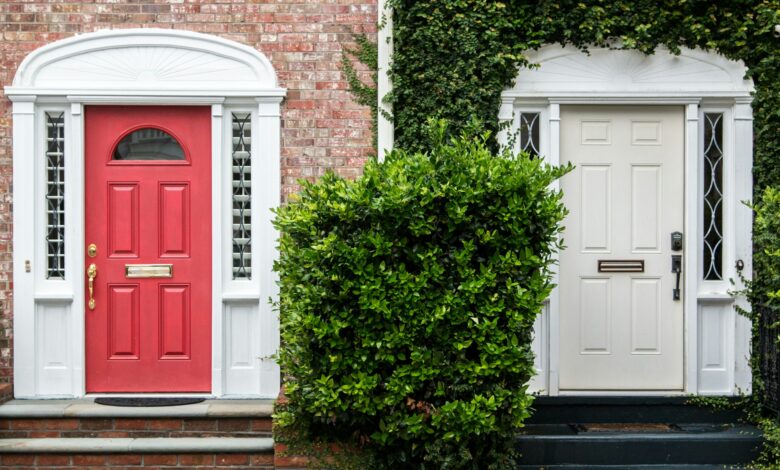
Wirral has a mix of Victorian terraces, older semis, detached homes and newer properties, so the right door for your home can depend on its age and style. If you live in an older property, a traditional timber door may suit its character, while PVC can work particularly well with many modern homes.
PVC doors are easy to look after and handle wet weather well, while wooden doors offer a natural finish that you can paint or stain to match your property.
If you’re looking to find out more about the costs, maintenance, insulation, security and styles available, keep reading to compare PVC and wooden doors.
PVC Doors vs Wooden Doors: Quick Comparison
Before we go into depth, here is a quick comparison of PVC and wooden doors:
| Criteria | PVC Doors | Wooden Doors |
| Maintenance | Low | Regular painting or staining |
| Weather resistance | Good | Depends on timber and treatment |
| Insulation | Good | Good, depending on construction |
| Security | Multi-point locking available | Strong locks and hardware available |
| Appearance | Modern and wood-effect finishes | Natural and traditional |
| Lifespan | Long with proper care | Long with regular maintenance |
| Cost | Generally more affordable | Wide price range |
| Customisation | Good choice of colours and styles | Highly customisable |
| Moisture resistance | High | Requires protective treatment |
| Best suited to | Modern and low-maintenance homes | Traditional and period properties |
So, What Is a PVC Door?
PVC doors are made using polyvinyl chloride, a rigid plastic material commonly used for external doors and window frames. Modern PVC door systems usually contain reinforced profiles and insulated sections to improve strength and thermal performance.
You can choose from double or triple glazing, different panel designs, and multi-point locking systems. Wood-effect finishes are also available if you like the appearance of timber but do not want the same level of maintenance.
One of the main benefits for homeowners is that PVC is resistant to rot and does not need regular painting or staining. You will usually only need to clean the surface and occasionally check the seals and hardware as part of routine upkeep.
If you’re looking to replace an older door, Heswall Glass provides PVC door installation in Wirral, with different styles and finishes available to suit your home.
5 Types of PVC Doors
PVC doors are available in several designs, with each type suited to a different part of your home:
1) PVC Front Doors
If you need a new main entrance, PVC front doors are designed for everyday use and security. You can choose from different panel layouts, colours, wood-effect finishes and glazing options to match your home’s style.
2) PVC Back Doors
For access to your garden, patio or side entrance, a PVC back door can be a practical option. Glazed designs can bring more daylight into your home, while solid panels can give you greater privacy.
3) PVC French Doors
If you want a wider opening between your home and garden, PVC French doors have two opening panels that can create more space when both doors are open.
4) PVC Patio Doors
PVC patio doors use sliding panels that move along a track. They can give you a wide glazed area without taking up the same opening space as hinged doors.
5) PVC Stable Doors
If you want more ventilation without fully opening your door, a PVC stable door is divided into two sections. You can open the top half while keeping the bottom section closed, which can also help keep children or pets inside.
Advantages and Disadvantages of PVC Doors
PVC doors are easy to maintain and come in many styles, but they also have a few drawbacks to consider:
| Pros of PVC Doors | Cons of PVC Doors |
| Low maintenance and easy to clean | Older or lower-quality doors can discolour over time |
| Resistant to rot and moisture | Some designs have a less natural appearance than timber |
| No regular painting or staining needed | Repairs may be difficult if older components are no longer available |
| Good thermal insulation when properly constructed | Hardware such as locks, hinges and seals can wear out |
| Available in many colours, styles and finishes | Quality and performance can vary between products |
| Multi-point locking systems are available | Replacement can be more costly than repairing minor faults |
What Is a Wooden Door?
Wooden doors are made from natural timber or engineered wood. Traditional solid timber doors are still used in many older homes, while engineered timber provides greater dimensional stability by combining multiple layers of wood.
When choosing a timber door, you may come across softwood and hardwood options. Softwood doors are generally less expensive, while hardwoods such as oak are denser and are often chosen for higher-end doors.
One of the biggest advantages is that you have plenty of control over the appearance. You can paint, stain or treat the timber to suit your home. However, you will need to protect the surface from moisture, particularly around exposed edges and joints.
6 Types of Wooden Doors
Wooden doors come in different constructions and designs, making them suitable for both traditional and modern homes.
1) Solid Wood Doors
Solid wood doors are made from natural timber and have a substantial feel with visible wood grain. Oak, pine, and other timber types can be used, depending on the style and budget.
2) Engineered Wood Doors
Engineered wood doors are made by bonding layers of timber together. This construction can reduce movement caused by changes in temperature and humidity, making them a practical choice if you want greater stability.
3) Panelled Wooden Doors
If your home has a traditional style, panelled wooden doors feature raised or recessed sections across the surface. You can paint or stain them to match your property’s appearance.
4) Glazed Wooden Doors
If you want more natural light inside your home, glazed wooden doors combine timber with glass panels while keeping the traditional appearance of a timber door.
5) Wooden French Doors
Wooden French doors have two hinged panels that open from the centre. They can create a wider opening between your home and your garden, patio or other outdoor space.
6) Wooden Stable Doors
Wooden stable doors are divided horizontally into two sections, allowing you to open the upper half separately while keeping the lower section closed.
Advantages and Disadvantages of Wooden Doors
Wooden doors offer a natural look and can be customised in different finishes, but they need more care than PVC doors.
| Pros of Wooden Doors | Cons of Wooden Doors |
| Natural timber appearance | Require regular painting, staining or treatment |
| Can be sanded, repaired and refinished | Can absorb moisture if not properly protected |
| Wide choice of timber types and finishes | May swell, shrink or warp with moisture and temperature changes |
| Suitable for traditional and period properties | Maintenance can add to long-term costs |
| Can be made to suit bespoke designs | Hardwood and bespoke doors can be expensive |
| Good strength and durability when properly maintained | Exposed doors need regular checks and maintenance |
PVC Doors or Wooden Doors: Which Is Better?
There isn’t one right answer when choosing between PVC and wooden doors. It really comes down to your home, your budget and how much maintenance you’re happy to do.
PVC doors are easy to look after, handle moisture well and come in plenty of styles and finishes. Wooden doors have a more natural look and can be a great fit for traditional or period homes. You can also repaint or refinish them over time, although they usually need more looking after.
Think about what will suit your home now and in the years ahead, rather than simply choosing one material over the other.