

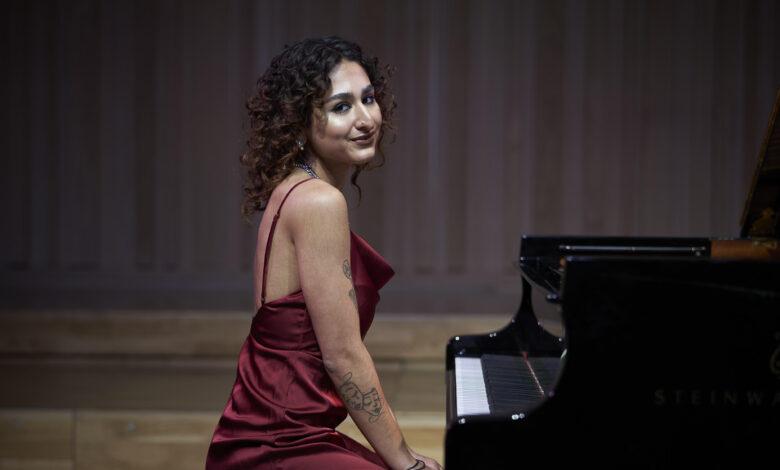
Soraya Verjee is one of Liverpool’s young rising Classical musicians. During her Undergraduate degree at University of Liverpool, Soraya became passionate about championing underrepresented composers following an increased awareness of the male-dominated industry.
Studying at the Brit School and graduating from the University of Liverpool in 2025, Soraya has already begun to establish herself as a budding concert pianist, working on many exciting projects that champion female composers as well as appearing on the BBC hit show, The Pianist.
Now, as a freelance musician, she continues to perform, aiming to challenge gender stereotypes and spotlight the music of women once forgotten. We had the chance to catch up with Soraya about some of her upcoming shows in the city…
Tell us about your time at University studying Music? What skills and experience has this given you?
My time at the University of Liverpool was a journey of self-discovery, as a musician and as a person. It was in my first year that I started to question the lack of feminine voices within concert programmes and academia and by my third year, I had integrated this into my artistic vision. I could never have imagined I would be performing an all-female programme in the concert hall where I had my performance training for three years. What I appreciated most about my degree is it offered me space to be independent about my module and pathway choices (that was one of the reasons why I even chose Liverpool in the first place!). I think having the opportunity to try out all aspects of music really helped me figure out where I see myself in the industry, and led me down creative avenues that I wouldn’t have ever explored. From my lecturers to my classmates, I am fortunate to have collaborated with so many inspiring musicians and gained invaluable support from them when entering into this career.
Tell us about your music career. Where did your journey start, and who are your influences and what are you working towards currently?
My journey into classical music was quite unconventional; I started playing piano when I was very young, as nothing more than a pastime. As a teenager, there were a couple years where I stopped playing classical piano; I tried many instruments during that time and became very drawn to playing 70’s rock.
Before university, I attended the BRIT School in London, studying a popular music diploma. Funnily enough, it was there that I fell back in love with classical music. I think had I not had that hiatus from piano, to explore different hobbies and paths of life, I probably would’ve given up playing altogether.
However, I grew up listening and watching a lot of pianists, most notably Tiffany Poon, who was probably one of the first people to show the more ‘human’ side of being a classical musician. I just adore her Schumann album, but found out a great deal about Clara Schumann’s life and works through her!
I listened to a lot of Ivo Porgorelich during my undergraduate degree and was attracted to his unconventional and daring interpretations. That being said, I think my influences as an artist aren’t just limited to classical music, and there’s lots to learn from all the creatives and people around us.
I’m excited to continue expanding my repertoire choices for upcoming performances across the country, which includes curating programmes around German Romantics. I’ll be continuing my teaching activities across Liverpool until July, before returning back to education, to complete a Performance Master’s at Royal Birmingham Conservatoire. A lot of my ‘year out’ has included stepping outside my comfort zone, both at the piano and in myself, and I really want to make the most of everything that comes my way in these final few months.
Has there been a key highlight or favourite performance that you’ve had so far in your career?
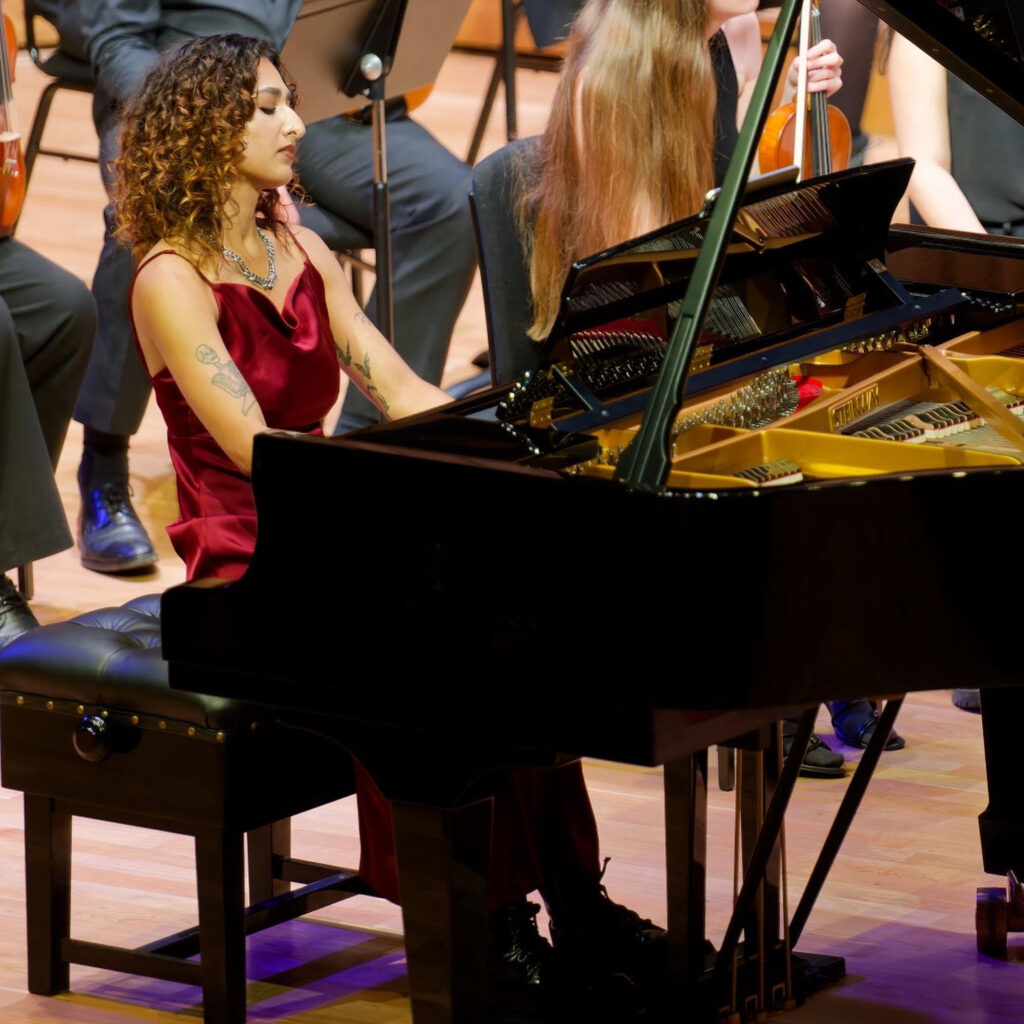
There are many memorable moments so far, but one that always comes to mind was performing Clara Schumann’s Piano Concerto with conductor Louise Ellinson and the University of Liverpool’s Chamber Orchestra for my final recital last May. I’d been dreaming of performing the piece with an orchestra since discovering the concerto in my first year. I loved how this piece brought many people to play together, and appreciate Clara’s music; I’m ever so grateful for everyone who gave up their time to work on this with me. It was probably the first time I felt at home on stage and there were moments where I felt entirely with the music, like a transcendental experience. It’s these types of experiences which remind me why I chose music in the first place.
How has the city of Liverpool influenced your path and journey as a musician?
Liverpool is one of the most creative and vibrant places I’ve been in, and the city is full of live music from across all genres. People here are always so open to new styles of music and unique approaches to performance, and it’s been a really safe place to explore my artistic vision.
Whilst I’ve worked mainly as a classical musician, I’ve worked on projects in other genres, which has shaped me into a more versatile and confident performer, and helped develop my collaborative skills.”
The Tung Auditorium is a dedicated space for students studying music. How has the venue helped you as a student and what opportunities have you had from having the space on campus?
I think we are incredibly lucky to have used The Tung Auditorium every week during our performance training. As a pianist, I think one of the main benefits was playing around with the nuance of our sound to fit a concert hall (not to forget the absolutely beautiful Steinways they have!) and developing other performance skills we couldn’t work on in the practice room.
As well as using the space to perform in, I am so grateful to have had free live music to watch every Wednesday Lunchtime. Some of my favourite concerts I saw as a student were watching my performance lecturer, Ruth Minton, perform solo recitals, and going to see Milap perform Indian classical music in my third year.
I aimed to use the space as much as I could during my time there, doing multiple recording projects, performing with the University’s Music Society, and participating in the Music showcases. Many of my favourite performances occurred here, an example being accompanying Thea Hobbs in Harrison Parrott’s Op.1 Concert, and this hall holds many memories of my growth as a musician.”
Do you have any advice for Classical musicians pursuing the same path as you? How can they make the most of the opportunities in the city?
Keep exploring your sound; unlike other forms of art, like sculptures or paintings, performing classical music isn’t exactly tangible. We’re always constantly changing and evolving our craft, even on stage. I think it’s often a hard thing to accept that you can’t fully determine how a performance will go, but try to work with the beauty that you can constantly experiment with your art and that each experience will bring something new to mind.
Be creative with where and how you display your music, Liverpool is full of unique opportunities. Collaborate with the people around you, and go watch all kinds of live music, not just what you study or play, as it can often be a great source of inspiration.
What can you tell us about your upcoming performance at The Tung Auditorium?
My upcoming concert to celebrate International Women’s Day 2026 is sort of a summary of my journey so far, discovering forgotten female-composed music. There are composers I’ve been playing for years, like Clara Schumann, Amy Beach and Cecile Chaminade, but there are also styles and technical elements I am challenging myself to work towards. The set Promenade Matinale by Marie Jaëll is very quirky and unique, and I enjoyed planning how I wanted to present this to an audience.
I am especially looking forward to playing one of Tatiana Nikolayeva’s Concert Etudes, op.13, as I feel like it really summarises the accessibility difficulties I’ve encountered with learning female-composed music.
The score was unavailable and took a great deal of tracking down. It took much more research and interpretive decisions to understand her compositional style, with only one recording of this piece available.
Most of all, I thought quite meticulously about the message I wanted to portray. For myself, this concert represents strength and empowerment, not just through the music, but all aspects of what I’ve prepared to display. I’ve had a quote by Ethel Smyth floating around in my head for a couple of weeks leading up, which I think gives you a good baseline of what I am channeling:
I feel I must fight for [my music] because I want women to turn their minds to big and difficult jobs, not just to go on hugging the shore, afraid to put out to sea.
I’m nervous. I’m excited. But, above all, I feel truly grateful to be able to present such a special programme.
Watch Soraya Verjee at The Tung Auditorium on Wednesday 4 March – Tickets Here
Watch the Department of Music Showcase on Wednesday 18 March – Tickets Here