


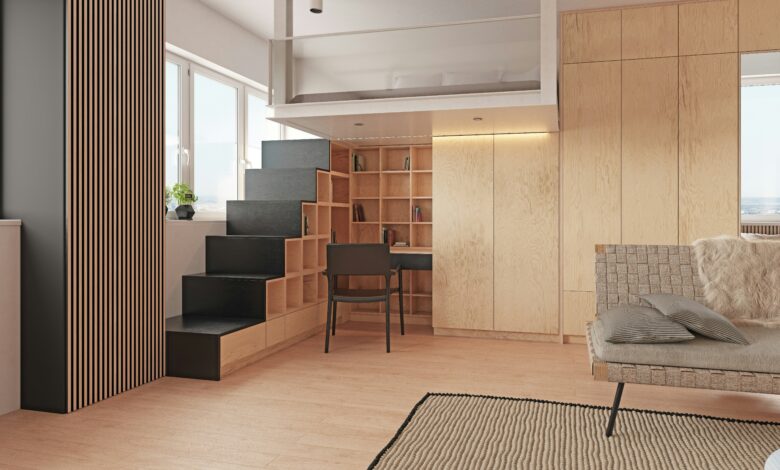
With the average UK home measuring around 85–100 square metres, the pressure to make every room work harder has never been greater. Smart storage solutions can change how a home feels, like reducing clutter, improving flow, and making daily life significantly calmer. From exploiting overlooked corners to rethinking furniture choices entirely, there are practical options to suit every property.
1. Make Use of Awkward Spaces with Built-In Solutions
Many homes contain areas that go entirely to waste, such as sloped recesses beneath staircases, awkward alcoves, and eaves cupboards in loft rooms. These spaces don’t have to stay empty. Fitted under-stairs storage, loft eaves cupboards, and built-in shelving can turn dead space into practical, attractive features that integrate seamlessly with a home’s existing layout. A well-designed under-stairs unit, for instance, can house everything from coats and shoes to household appliances, all without claiming an inch of usable floor space elsewhere. Bespoke joinery makes it possible to follow every angle and gradient of these unusual dimensions, making sure that nothing is left unused.
2. Maximise Vertical Space with Smart Shelving and Wall Units
Walls are one of the most underused storage assets in any home. Floating shelves, tall bookcases, and modular wall systems can dramatically increase storage capacity without affecting the floor plan at all. According to Real Homes, unused nooks, alcoves, and corners can all be converted into functional storage using custom-built or floating shelves, particularly useful in living rooms, hallways, and bedrooms where furniture options are more limited. Ladder shelving is another popular choice, offering a layered display that keeps surfaces clear while adding visual interest to a room.
3. Choose Multi-Functional Furniture for Flexible Living
In smaller homes, every piece of furniture should ideally earn its place twice over. Ottomans with hidden compartments, beds with integrated drawers, storage benches, and extendable dining tables all help to consolidate function without adding bulk. This approach works especially well in open-plan spaces or rooms with multiple purposes; a dining area that doubles as a home office, for example, benefits from furniture that can discreetly absorb clutter between uses.
4. Organise Key Areas: Kitchens, Bathrooms, and Utility Spaces
High-traffic rooms tend to accumulate the most disorder, so targeted organisation here delivers the greatest return. Pull-out larder units and tiered drawer inserts make kitchen storage far more accessible than traditional fixed shelving. In bathrooms, mirrored cabinets and recessed shelving keep worktops clear without sacrificing practicality. According to Which?, a larder cabinet can often be incorporated at the design stage or replicated using a freestanding unit, which is an effective option for those not undertaking a full refit. Utility rooms benefit from a combination of open shelving for everyday items and closed storage for bulk purchases or cleaning products.
Adding storage space to your home is rarely about a single sweeping renovation. Often, the most impactful changes come from taking a closer look at what already exists, like the space under the stairs, the blank wall in the hallway, or the bedroom corner that’s been ignored for years, and finding smarter ways to use it.