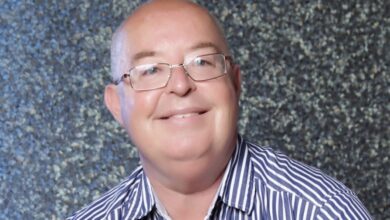


Proud to have been born and bred in Wavertree, raised by a strong, independent single mum with support from the best Scouse nan and grandad on the planet, Antony is Dock and Aloe.
Dock and Aloe is currently a range of natural vegan soaps whose name is a play on words, paying homage to Liverpool’s rich maritime history at the docks, with a nod to the traditional Scouse greeting “Ello”, whilst also alluding to aloe vera and the all-natural plant-based ingredients used in the products.
Antony enthuses about Malta, his favourite holiday destination. He enjoys the community spirit prevalent there and the laid-back lifestyle of its inhabitants. He believes that, as in Liverpool, the Maltese people have family at the heart of their daily lives and are fiercely proud of their island. He adds that visiting Malta always resets his nervous system and he comes home feeling restored.
It was whilst holidaying in Malta with a friend that Antony visited a natural soap shop. He had been struggling with a patch of eczema on his hand which had persisted for two years, despite many doctor’s appointments and prescriptions for steroid creams.
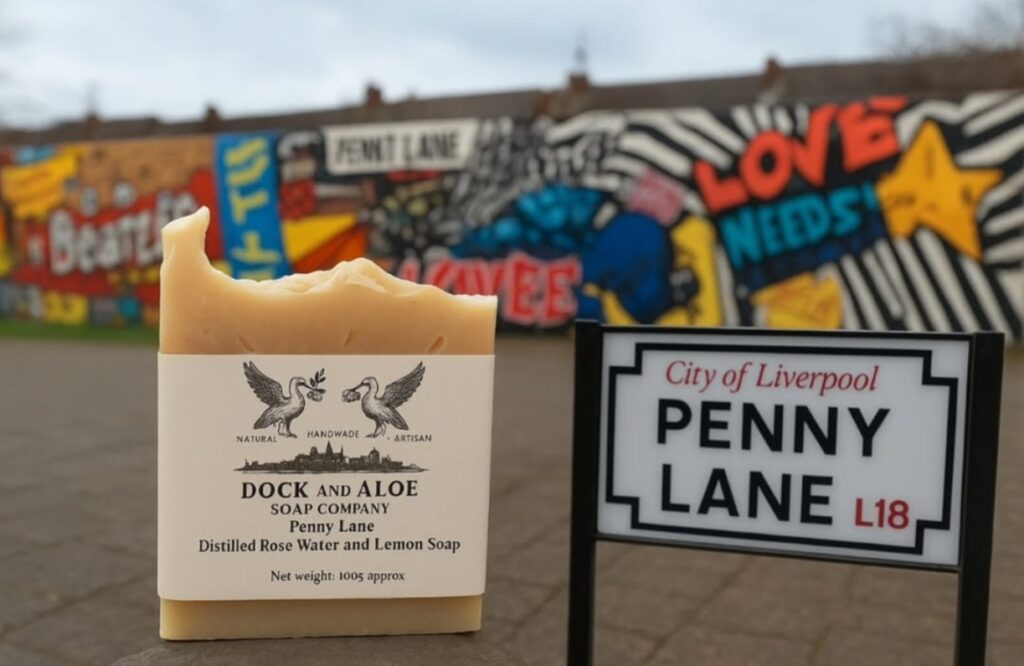
At the shop he bought a completely natural vegan soap. After returning home and using it regularly, he found that within a week the eczema had faded, the itch had stopped and it was practically healed.
He began looking for a similar product in the UK but found them to be extremely expensive and hard to come by, making them beyond affordable everyday use for most people.
His friend suggested he seek out a mentor with a view to developing skills in natural soap making. The wonders of the World Wide Web led him to Ruth Romano (@Ruth_Romano), who was due to begin a one-day soap making workshop in Cheshire. Time was tight and, not really expecting a response, Antony contacted Ruth and was delighted to hear that she could accommodate him on the course. So in May 2025, he was encouraged to dip his toe into the bubbly waters of the natural soap making world.
He completed the course having made a selection of soaps and gained the knowledge needed to develop a more varied range of recipes.
Historically, lye was collected from the roots of oak trees. These roots were purposefully flooded to create an alkaline-heavy solution, which was then combined with animal fats to create some of the earliest soap products.
This method proved problematic for the predominantly female soap makers, as there were too many variables such as water temperature and even the age of the tree, which often resulted in the soap being too weak a solution to set, or worse, too strong and capable of causing skin burns.
Sodium hydroxide is now used as a derived natural version of lye which is much more stable and safe.
This modern-day lye converts to glycerin, which acts as a natural humectant (meaning it attracts moisture from the atmosphere and locks it into the top layer of your skin). Commercially made products often extract the glycerin from the soap and then sell it back to us as body lotions. Antony tells me he simply leaves it in, negating the need for additional hand creams and moisturisers.
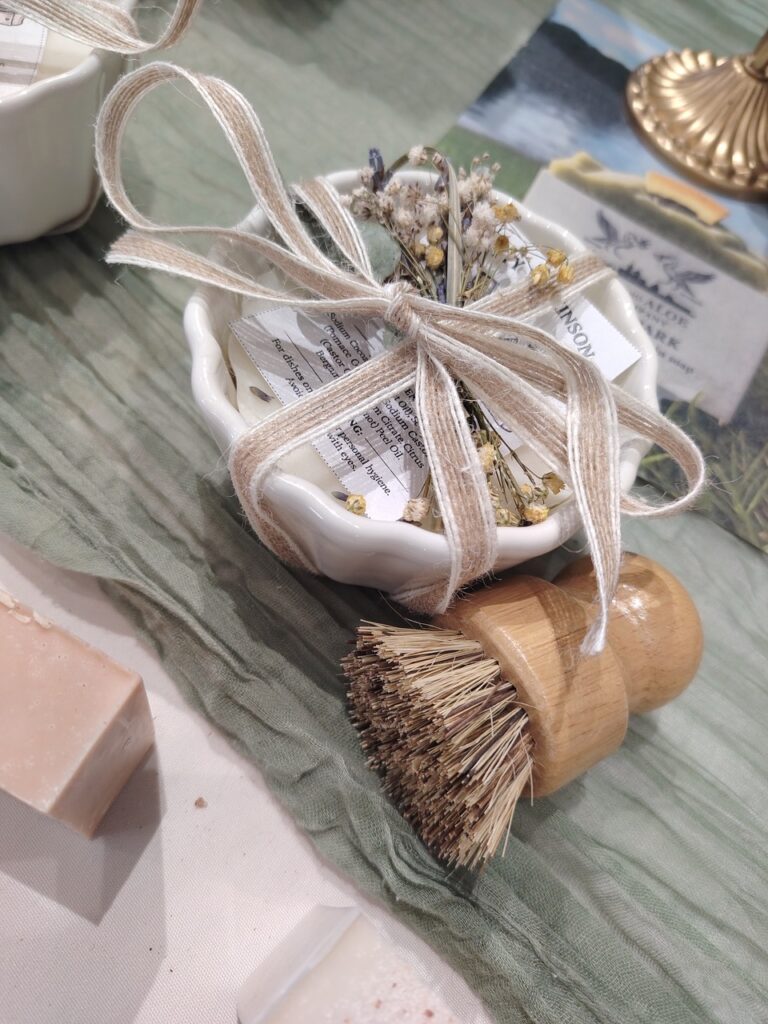
So what’s in Dock and Aloe soap?
Only essential oils are used, with no synthetic fragrances. The base ingredients include Soil Association verified coconut oil and shea butter from a women’s co-operative in Ghana. Antony likes the idea that profits from the butter are reinvested into the community, benefitting village life. There is also castor oil to promote a long-lasting lather, and olive oil which adds richness and skin support.
He explains that the soap contains no artificial colouring, taking its delicate shades from a range of French clays. The inclusion of clay enables the soaps to be used for shaving, eliminating friction on the skin and helping to prevent nicks and cuts. It also absorbs oil from the scalp, meaning the bars can be used as shampoo as well as a body cleanser. This makes them practical for the gym or when travelling, while also reducing the need for multiple plastic containers.
Talking about packaging, it is 100% recyclable, as the bars are never shrink-wrapped in plastic.
Feedback from regular users at markets has been very encouraging, specifically in cases of chronic dry skin problems. It is personally satisfying, Antony tells me, to feel that he is helping people overcome problems that he once struggled with himself.
A self-confessed proud Scouser, Antony believes strongly in community heritage and celebrating his home city, so creating a brand identity inspired by Liverpool was a natural choice.
His different recipes highlight favourite areas of Liverpool such as Sefton Park, Penny Lane, Crosby Beach, Lark Lane, Otterspool Prom, Woolton Village and the newest addition, Hale Village Meadows (honey and oat).
Currently working full-time in education doesn’t leave a lot of free time to expand the range further at the moment, but Antony already has plans for future products and is constantly thinking of new blends to develop.
He is currently working on a completely natural solid dish soap inspired by Liverpool’s Queen of Clean, Kitty Wilkinson.
Kitty was instrumental in helping beat back contagion in the city when cholera was rampant. She understood the importance of cleanliness and the life-saving power of soap and water, allowing her neighbours access to her hot water copper and carbolic soap. Liverpool City Council noticed the improvement in local health and Kitty was permitted to open the first public wash house in Everton.
In recognition of her work, she remains the only woman with a statue in the Great Hall of St George’s Hall (although she will soon be joined by Mary Seacole).
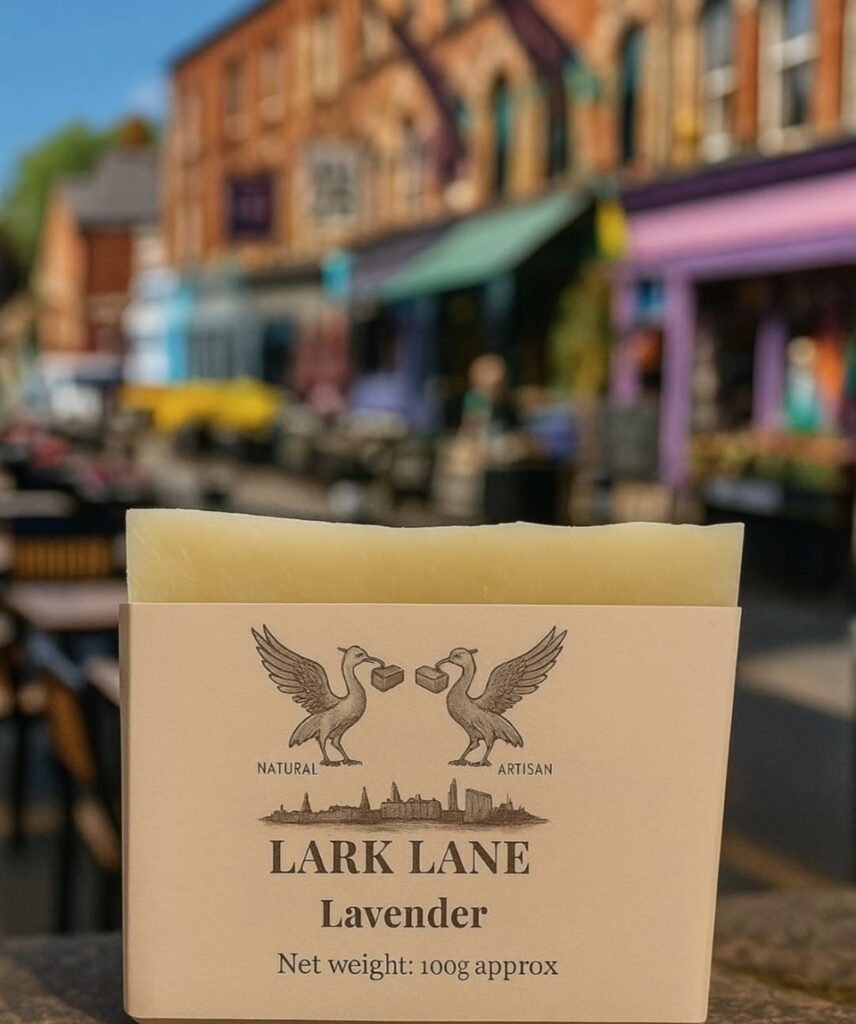
I asked what Antony enjoys about making soap by hand.
“After a hectic and stressful week in work, soap making, like all creativity, provides an opportunity to decompress,” he told me.
“The actual process of creating soap focuses the mind and allows external noise to quieten, effectively giving my mind time to rest and relax. It’s a moment of stillness in a busy world — a nod to a more nostalgic time, free from blue light and screens.”
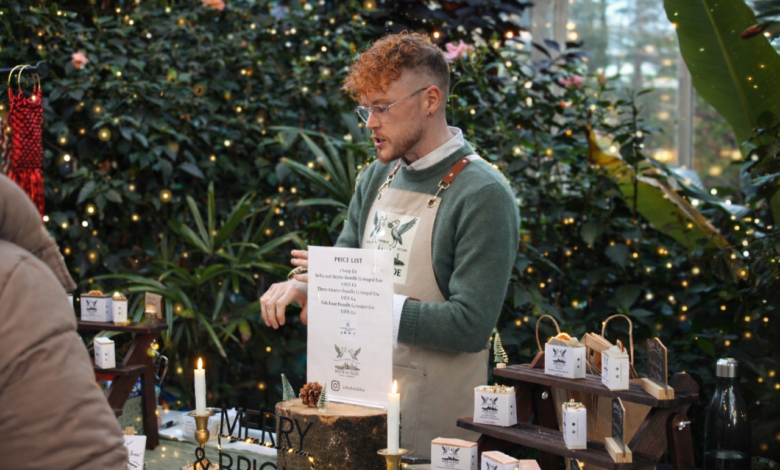
Antony began selling at arts and crafts markets in September 2025. Initially nervous — not of his product, but of meeting new people — he has seen his confidence grow and now looks forward to each event and the friendships he makes on both sides of the counter.
He is enjoying the support and advice from more experienced makers and event organisers, along with the buzz of feedback from returning satisfied customers.
If you’d like more information on Antony’s soaps, he can be contacted via:
Email: DockandAloe@gmail.com
Instagram: @dockandaloe
Or, even better, pop along to the next Liverpool Markers Bazaar at the Old Police Station, Lark Lane, L17 8PP on Sunday April 12th and have a good old-fashioned chat. Doors open at 11am for first pick.