
Past, politics, people — Unity carries them all into a future that’s safe and fiercely of it’s own making.
There are buildings in Liverpool that don’t just hold memories, they argue back. Unity Theatre is one of them. Tucked just off Hope Street, it’s a space that has always felt slightly out of step with the city’s grander cultural institutions — and proudly so. Born out of the Merseyside Left Theatre in the 1930s, Unity’s roots are tangled in trade union politics, working-class storytelling and the belief that theatre should belong to everyone, not just those who can afford the best seats. It’s never been a polite building. It’s been a necessary one.
Over the decades, Unity has quietly shaped Liverpool’s creative ecosystem, giving space to artists who didn’t fit the mould elsewhere — or had no interest in fitting it at all. Careers have been forged here, risks taken, failures survived. That legacy looms large, but it also brings pressure: how do you honour a radical past without turning it into a museum piece?
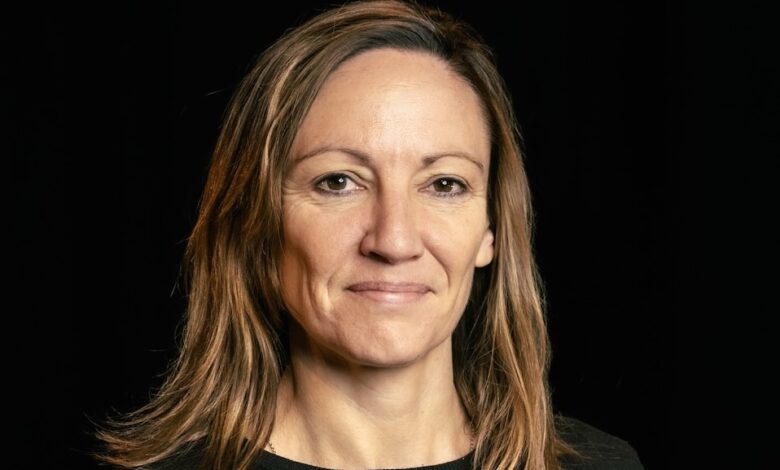
That question sits at the heart of Unity’s current moment, and at the centre of my conversation with Artistic Director Elinor Randle. When Randle stepped into the role, the theatre was in a fragile place — financially, structurally, existentially. Her instinct wasn’t to reinvent Unity as something shinier or safer, but to keep it alive, open and useful. To ask not what Unity used to be, but what it needs to be now.
In this In Conversation piece, Randle talks candidly about reopening doors — literally and metaphorically — reconnecting with artists and audiences, and why risk remains non-negotiable. She reflects on the upcoming A Radical Reimagining heritage project, the importance of long-term relationships over one-off commissions, and the quiet politics of keeping a building active when funding is thin and certainty is scarce.
What emerges is a portrait of Unity not as a fixed institution, but as a living, breathing organism — messy, collaborative and stubbornly alive. Which, in Liverpool, feels exactly right.
Unity’s a building heavy with history — radical, messy, political. Coming into the Artistic Director role, what felt like the thing you absolutely had to protect, and what, if anything, felt overdue for change?
I felt very strongly that I needed to save Unity. When I arrived, it was in a precarious place, and I remember thinking: we can’t lose this theatre. Unity is incredibly special to me, and to so many people. It’s a space that has enabled generations of artists to take risks and make brave work. Without it, and without the extraordinary work of Graeme Phillips, so many careers and creative journeys simply wouldn’t exist.
It has always been a place of radical theatre, with a deeply political history that stretches back to its roots as Merseyside Left Theatre. What felt overdue was reopening the doors in every sense: reconnecting with artists, communities and audiences, and reimagining why we exist now. What does Unity need to be in 2026? How can we honour our past while making ourselves urgently relevant to the present?
From my perspective, Unity has sometimes been at its strongest when it’s taken risks that bigger buildings won’t. Where are you consciously pushing things in the 2026 programme?
This year is a huge year for us because of our heritage project, A Radical Reimagining. When I started here, I was thinking deeply about why Unity should exist at all, and that meant looking both backwards and forwards.
Our archive is being properly digitised with LJMU Library, there will be exhibitions drawn from it, and I’ll be creating a performance about our radical history with both professional artists and community groups. Alongside that, we’ll be making a piece about the future with our newly launched Young Radical Theatre Makers programme.
We’re also presenting national touring work that feels bold and urgent, while continuing to champion local artists through things like the Up Next Festival and by hosting work from Liverpool’s incredible diverse festivals and partners like our Associate Company RAWD who create amazing work with disabled adults.
For me, risk is essential. I want people to be inspired by new ways of making work and telling stories. Playing it safe often leads to mediocrity; risk is what keeps theatre alive and prevents it from becoming homogenised.
What does a meaningful relationship with local artists actually look like to you — beyond one-off commissions or short runs?
For me, it’s about ongoing dialogue and long-term connection. It means artists feel Unity is a place they can return to, experiment in, and grow with.
I’ve been in this city a long time and have built strong, trusting relationships with artists, communities and organisations. That trust comes from listening, from offering space to try things out, and from making sure people feel supported, through mentoring, through conversation, and through creating an environment that feels warm, open and full of possibility.
How are you thinking about audience in 2026 — not just who’s coming through the door, but who isn’t, and why?
I’m always thinking about audiences. We’re still rebuilding, and that means reconnecting with schools, communities, and people who may not have visited Unity for years. It’s about meaningful engagement and helping people feel emotionally connected to the work we programme.
Our programme is deliberately mixed and eclectic, so different shows will speak to different people. The challenge is reaching those audiences and encouraging them to experience something new.
Bringing back Unity’s own Christmas show this year felt especially powerful. It used to be such a staple of the city, a unique, devised alternative to the big pantomimes. I actually did my first professional performance in the Unity Christmas show in 2002, so it was very personal for me. Seeing new audiences and many children back in the building, including people who didn’t even know we were here, was incredibly moving.
Do you think there a particular community, voice, or form of work you feel Unity hasn’t fully made space for yet, and that you’re actively addressing in the next programme?
We’re currently developing a project called In Motion, which I created to better understand and engage with the Deaf and hard-of-hearing community. It feels like a really important step, and hopefully just the beginning of deeper work in this area.
There is always more to be done around representation, particularly in supporting Global Majority creatives. We’re developing partnerships that will create space for more voices, more stories, and training within our programme.
Financial reality is part of every artistic decision right now. Where are you prepared to compromise — and where are you not?
Like many arts organisations, Unity is under huge financial pressure. We’re constantly seeking funding for projects, and at the moment programming itself doesn’t even have a core budget, which is incredibly challenging.
But I won’t compromise on keeping the building alive and open to artists. When I arrived, there was no work programmed at all, and that can’t be the answer. You can always find ways to make things happen. Space, access and support are fundamental. If we close ourselves off, we stop being a theatre.
Unity sits slightly outside Liverpool’s bigger producing houses. Do you see that position as a freedom, a challenge, or both?
It’s absolutely both.
We don’t have the capacity to rely on big commercial names to subsidise other work, which is a challenge. But that limitation is also our freedom. We shouldn’t be commercial. We should be a space for innovation, experimentation and new voices.
And I truly believe that work can be both artistically bold and widely loved. Quality and accessibility don’t have to be opposites.
How much do you want Unity to feel like a place artists ‘grow through’ rather than ‘pass through’
This is vital to me. Unity should feel like a creative home.
We already have a community of artists-past, present and emerging, who feel connected to the building. I want them to keep returning, whether that’s to watch work, lead workshops, take part in events or make their own projects.
We’ve already seen beautiful examples of growth: ideas that started at scratch nights becoming sold-out shows, or projects gaining funding to develop further with our support. A thriving, supportive creative community is essential, and Unity can be the hub for that.
If someone who hasn’t set foot in Unity for years wandered in next season, what do you hope would immediately tell them: this place is alive again?
The energy.
The building being constantly in use, with rehearsals, workshops, community groups, students, performances and audiences. That sense of movement and activity is everything.
People already say to me, “The building feels alive again” or “Unity is back.” That’s the greatest compliment we could receive!
When people look back at the 2026 programme, what do you hope they’ll say Unity was trying to do at that moment in time?
That we were bravely reimagining our past and future at the same time. That we were programming bold, diverse, high-quality work across different art forms. That we were telling urgent stories, asking important questions, and making space for new voices. And that Unity was once again doing what it has always done best: being radical, open and alive.
Spend any time in Unity right now and you can feel it — a renewed sense of purpose. This isn’t revival-by-nostalgia or a cosmetic reset; it’s the careful, determined work of making a theatre useful again. Under Elinor Randle’s stewardship, Unity now feels listened to as much as it’s led — its history respected, its politics intact, its future thoughtfully reimagined. The risks remain, the pressures are real, but so is the energy – and that is the vital thing.
For a building that has always argued back, it feels like it’s found someone who knows when to push, when to protect, and when to simply let it breathe. Unity is alive again — and it’s in safe, sympathetic hands. And as Unity is my favourite Liverpool theatre, it’s fine by me.
To find out more about Unity Theatre’s programme visit unitytheatreliverpool.co.uk/whats-on/.