

A life-long love of live music, a fleeting moment in the light – Michelle Marshall on photographing a scene she calls home…
Long before Michelle Marshall began photographing Liverpool’s music scene with any sense of professional purpose, she was taking a camera to gigs and hoping for the best. Film would be developed, the results inspected, and the distance between what she remembered seeing and what she had actually captured would become apparent. The photographs were often disappointing. But the desire to take them remained undiminished.
That enthusiasm still underpins her work. Access to a photography pit, an exhibition wall or an established artist has brought opportunities she once scarcely imagined, but the essential attraction remains familiar: walking into a venue, sensing its atmosphere and waiting to discover what the performance might bring.
“For me, it’s that feeling of excitement when you walk into a gig,” she explains. “I’ve never lost that.”
Marshall grew up in Kirkdale and has lived in Bootle for the past 25 years. During a childhood in which her mother worked full-time following her parents’ separation, reading, drawing and music offered space for an imaginative life of her own. Music, particularly, became a lifeline. Copies of Smash Hits filled her bedroom, lyrics were committed to memory, and Top of the Pops supplied a regular appointment with the performers who populated that world.
In 1983, a Big Country concert at Liverpool’s Royal Court gave that enthusiasm a new setting. The experience established an appetite for live music that would continue through years of performances at the Royal Court, the Empire and beyond. Those venues became part of her personal geography, places remembered through the artists who appeared there and the feelings their appearances generated.
Photography offered a way of carrying something of those experiences home. Around 2018, an opportunity to work with Explore Liverpool alongside one of its music writers encouraged Marshall to pursue it more seriously. Further work brought her into contact with organisations including Mellowtone, the British Music Experience, Africa Oyé and Milap, gradually extending both her practice and her involvement in the region’s creative community.
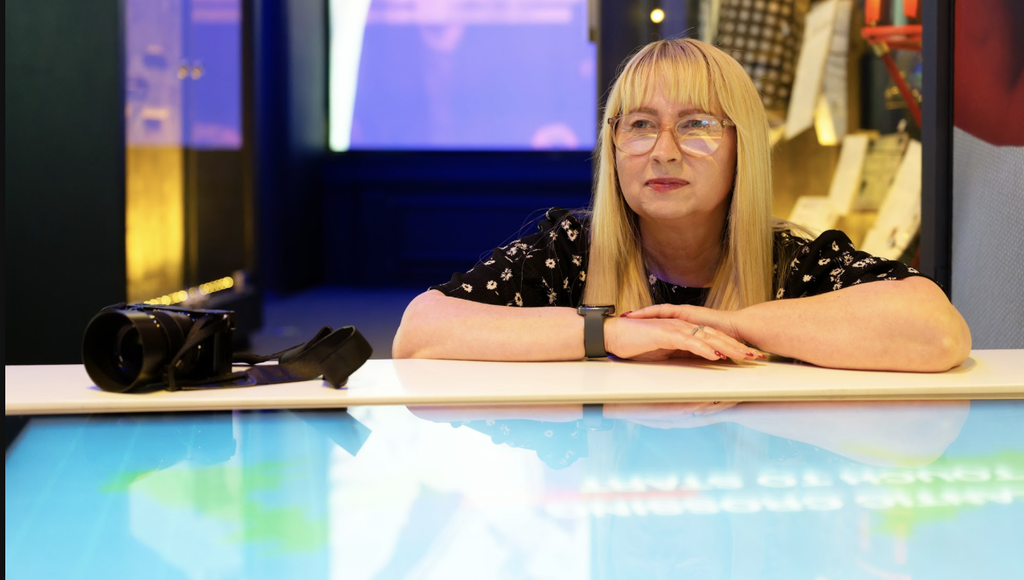
“It’s really grown from something I simply loved doing into something that’s allowed me to connect with so many people and experiences along the way.”
Her subjects have included Nile Rodgers, Ronan Keating and personal favourite Rick Astley. Photographing established performers can involve the concentrated pressure of securing usable images within the first three songs. Yet Marshall speaks with equal enthusiasm about working closer to home, photographing Ian Prowse, Bill Ryder-Jones, Edgar Jones, The Sway and Red Rum Club. Familiarity brings its own rewards, as does encountering an artist whose work she has never previously heard.
Liverpool provides a continuing source of both. Her affection for the city encompasses its architecture, streets and everyday encounters as readily as its stages. Walking through it remains a pleasure in itself; photography has given her a deeper sense of participation in the creative life she encounters. That participation requires a curious adjustment when the music begins. The fan who arrives eager to listen becomes a photographer occupied by changing light, movement and expression.
“It’s funny because I become so focused when I’ve got the camera in my hand that I almost stop hearing the music altogether,” she says. “I’m watching what’s happening rather than listening to it.”
Occasionally, she deliberately lowers the camera to recover the experience of being in the audience. It is a revealing admission. The activity that brings her closer to a performance also demands an attention so particular that other aspects briefly recede.
Her working method accommodates the speed and unpredictability of the stage. Camera settings need continual adjustment; a performer’s movement can alter a composition almost immediately. Bursts of photographs allow her to follow these changes, although the decisive differences may only become apparent afterwards. A slight shift in expression or an unexpected fall of light can distinguish one frame from its near-identical neighbours.
Experience helps her anticipate those moments. So does an increasing familiarity with how artists perform. Her account gives due space to chance, but it also describes the patient development of an eye capable of recognising when the elements have aligned.
“For me, the best photographs aren’t necessarily the most technically perfect ones,” she says. “They’re the ones that make you feel something or capture a moment that might otherwise have disappeared in a second.”
Looking at the work of other photographers has sharpened her appreciation of how differently the same subject can be seen. She admires Peter Neill, whose subjects include Astley and The Script, while Mark McNulty’s photographs of Liverpool’s club culture have prompted reflection on what an image can come to hold. Clothes, faces, venues and gestures acquire significance as the world around them changes.
Marshall returns repeatedly to this question of time. Photographs of Mathew Street, Eric’s and the characters around Probe Records now allow viewers access to a cultural life they may remember intimately or never have experienced. Their present significance invites a question about the images being made today.
“I don’t think you ever really know how important the things you’re photographing now might become in the future.”
She makes no grand claim for her own place within that history. Her pleasure lies in being present and contributing to its visual record. The connections surrounding that work matter too: conversations reveal mutual acquaintances, artists support one another, and the boundaries between music, photography and spoken word become increasingly permeable.
At the British Music Experience, where she also volunteers at weekends, that lifelong enthusiasm finds another outlet through conversations with visitors. Talking about music, sharing its stories and photographing those who make it all belong to the same continuing interest.
Her ambitions remain open: more live performances, further encounters and opportunities to exhibit. One photograph of Ian Prowse has already reached an audience beyond the gig, appearing outside the Philharmonic Music Room. Another image has travelled further still in the meanings and creative responses it has gathered. Taken at Yawnfest at Future Yard in 2024, Marshall’s photograph of Bill Ryder-Jones began with a last-minute decision to bring her camera. Its subsequent life would reveal how much can follow from a moment whose significance only becomes clear after the shutter has closed. It is this photo that we will now discuss in detail…
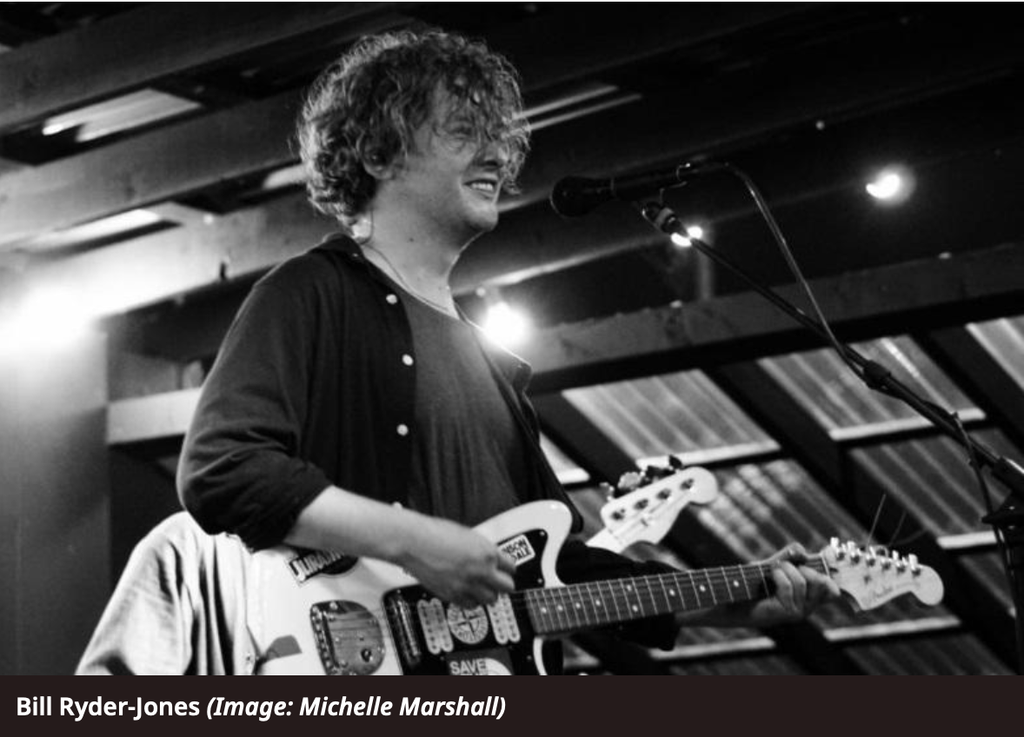
LN: You’ve said this was your first time photographing at Future Yard, and your first time seeing Bill Ryder-Jones live. Did you have any idea of the kind of image you wanted to come away with before you started shooting, or did this photograph emerge completely from the moment?
MM: To be honest, I didn’t have a plan at all! I only decided to take my camera at the last minute, so I went along not really knowing what to expect.
It was my first time at Future Yard and my first time seeing Bill, so I didn’t have a particular type of shot in mind. I knew it would be outside in the garden, but I didn’t know if he’d be solo or with a band. I just started taking photos and seeing what caught my eye.
This one really did just come in the moment. Everything seemed to come together at the right time and luckily, I managed to capture it. Looking back now at everything that’s happened with the photo since, I’m very glad I decided to take my camera that day!
LN: There’s something wonderfully unguarded about this image – Bill looks absorbed in what he’s doing, rather than performing for the camera. How conscious are you of looking for those moments when photographing musicians?
MM: I think those are probably the moments I’m drawn to most. I love it when an artist is just completely caught up in what they’re doing and almost seems to forget there’s a camera there. Those shots tend to feel much more natural to me.
I don’t necessarily go into a gig consciously looking for a particular shot – most of the time I don’t know what to expect from a performance. I’m just watching what’s happening, how the artist moves, their expressions and the lighting, and sometimes everything comes together in that split second.
That’s what I love about this photograph. It doesn’t feel posed, it’s just a moment during the performance that I happened to capture, and I think those are often the images I end up liking the most.
LN: You chose to make this image black and white, saying that you felt the treatment suited it perfectly. What was it about the original scene – the light, the atmosphere, Bill himself – that made you see it in monochrome?
MM: I do love black and white photography, but I don’t automatically convert every image just because I think it might look better that way. With this one, it just seemed to work.
There was quite a lot going on in the original shot with the lighting and the background, and I felt that taking the colour away made the image much stronger. It brought my attention back to the Bill, the lighting and his guitar, without anything else distracting from it.
I also think black and white gives it a slightly timeless feel, which I really liked. Sometimes I’ll try an image in black & white and then change it back, but with this one I remember thinking that it just felt right.
LN: I agree that the lighting is doing a lot of work here, particularly the bright light behind Bill and the contrast between his face, the guitar and the darker background. How much of the composition was something you deliberately sought out and how much was about reacting quickly to the available light?
MM: I think it was probably a bit of both. I’d love to say I planned the whole composition, but I definitely didn’t! I could see that the light behind Bill was creating a really strong contrast with the darker background, so I knew there was the potential for a good shot.
I liked the angle I was shooting from too, with Bill framed against the darker part of the stage and the guitar cutting across the image. I was conscious of trying to keep the focus on him without too much going on around him.
But with live music, everything changes so quickly. The lighting, movement and facial expressions can be different from one second to the next, so a lot of it is just instinct and reacting to what’s in front of you at the time.
With this one, everything just seemed to come together at the right time. I’d love to take all the credit, but sometimes there’s definitely a bit of luck involved too!
LN: Bill’s guitar is almost as important to the composition as Bill himself. When you’re photographing a musician, how important is it to capture the relationship between the performer and their instrument rather than simply making a portrait of the person?
MM: I think it’s definitely important, although I’m not really thinking about it too much at the time! I’m just looking at the whole picture and trying to capture what’s happening in front of me.
With this shot, I love how much of the frame the guitar takes up. It’s such a big part of the image and, without it, I don’t think the photograph would have quite the same impact. For me, it would be a completely different photograph.
When someone is completely caught up in playing, the instrument almost becomes part of them rather than something separate. That’s what I like about it, it’s not just a portrait of Bill, it feels like a moment from the actual performance.
I’d love to say I’m thinking about all of that when I press the shutter, but I’m really not that organised!
LN: There’s a lovely sense of movement in the photograph – his hand on the guitar, his expression, the hair falling across his face – but the image itself feels remarkably calm. Was that tension between movement and stillness something you noticed when you made the shot?
MM: Honestly, I don’t think I was thinking about any of that at the time! I was just trying to capture what was happening in front of me and hopefully get the shot.
It was only afterwards, going through the photos, that I noticed all the little things that had come together, the movement of his hand on the guitar, the hair across his face and everything else happening in that split second.
I had taken a burst of shots in that moment, each one was slightly different, but I knew as soon as I saw it, that this was my favourite.
That’s one of the things I love about photography, you sometimes capture something without realising quite what you’ve got until you see it afterwards. Luckily, this was one of those!
LN: Future Yard has become such an important part of the musical identity of Birkenhead and the wider Wirral and Bill has a particularly strong connection to that place. Did knowing something of that relationship influence the way you approached photographing him that night?
MM: To be honest, with it being my first time at Future Yard and my first time seeing Bill, I didn’t really know too much about that connection at the time.
I just went in and photographed what I saw, without any preconceived ideas about what I wanted to capture. In a way, I think that probably helped because I was simply reacting to the performance and the moments that caught my eye.
I learnt more about Bill’s connection with Future Yard afterwards, and I think knowing that now adds another little layer to the photograph for me. Considering what’s happened with that one photo since, I’m very glad I was there!
LN: When you look at this photograph now, more than two years after taking it, is there anything about the moment that you remember that isn’t contained in the photograph itself – something about the sound, the atmosphere or what was happening around you?
MM: What really stands out to me is how chilled everyone was. It was an all-day event and sometimes by the evening they can get a bit rowdy after people have been drinking all day!
But it was the complete opposite which surprised me. The audience was really relaxed and everyone just seemed to be enjoying the music. There was a lovely atmosphere about the whole day that I wasn’t really expecting compared to other venues I’ve been to.
I think that’s probably why the calmness in this photograph feels right to me now. It actually reminds me of how it felt to be there.
LN This image was subsequently chosen for your Through the Lens exhibition. What made you decide that this particular photograph deserved to be taken out of the live-music context and presented as a photograph in it’s own right?
MM: I think by then I’d learnt more about Bill’s connection to the area and, with the exhibition being in Birkenhead, it just felt like the obvious photograph to choose really!
I already loved the image, but knowing more about that connection made it feel even more fitting. There was something quite nice about a photograph I’d taken at Future Yard being exhibited locally too. For me, it was just the right image in the right place, and I was really proud to see it as part of the exhibition.
LN: If you had to identify one thing that makes this photograph work for you personally, what would it be – the light, the composition, Bill’s expression, the atmosphere of Future Yard, or simply the feeling of being there at that particular moment?
MM: I think it’s a bit of everything really. I’d only been to Birkenhead a couple of times before and it was my first time at Future Yard, so I didn’t really know what to expect. I loved the photograph straight away, but I had no idea then that Bill would go on to become one of my favourite artists and that I’d see him live so many times afterwards. I think that makes it even more special to me now.
Obviously, I love the composition of the photograph, but it’s also all the memories that have become attached to it since. It’s funny to think what’s come from this one photograph from a day when I just happened to be there with my camera!
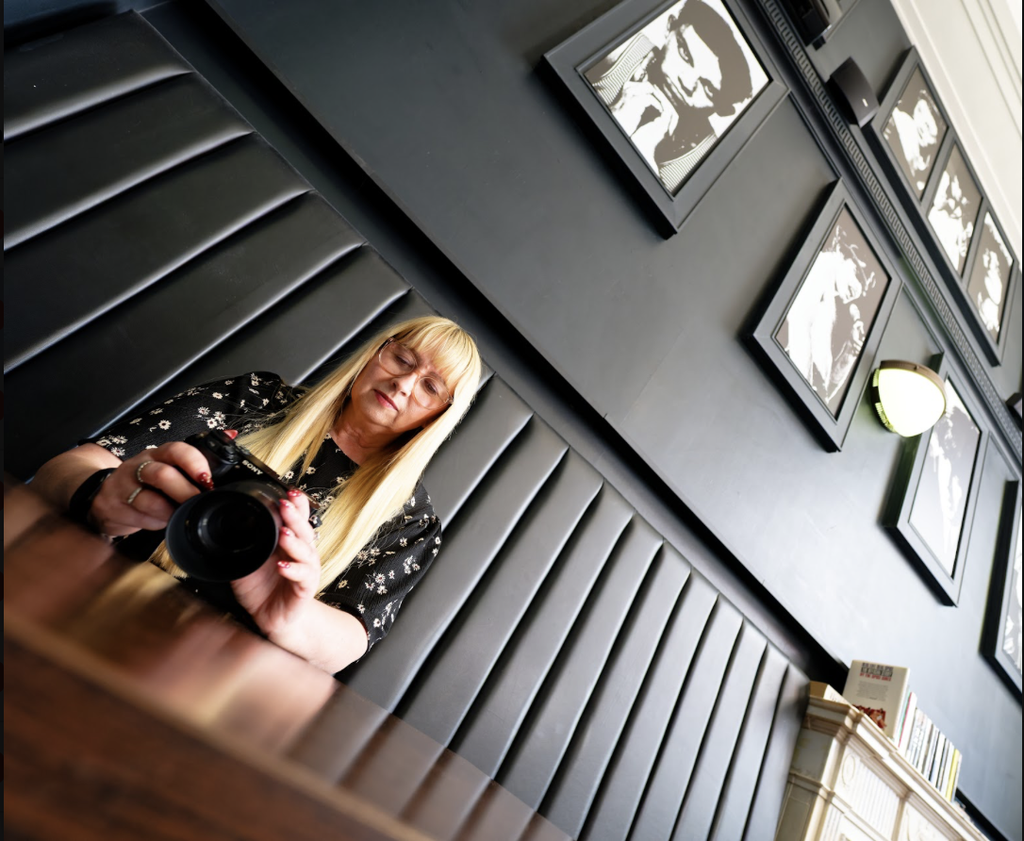
Michelle Marshall’s photography begins with an enthusiasm that remains undiminished by experience. The excitement of entering a venue, discovering an unfamiliar artist or watching a favourite performer still animates her work. Alongside that pleasure, she has developed the judgement to recognise how light, movement and expression can briefly combine to give a photograph its emotional force.
Her image of Bill Ryder-Jones demonstrates how those fleeting encounters can acquire an unexpected creative life. A performance becomes a photograph; the photograph enters an exhibition and inspires a song. Its significance grows through the responses of others, extending an experience that might otherwise have survived only in the memories of those present.
That possibility gives a wider resonance to Marshall’s involvement in Liverpool’s creative community. Each gig offers something worth attending to, whether its lasting importance is immediately apparent or emerges years later. Her photographs contribute to a visual memory of the artists, audiences and places sustaining the region’s musical life.
Marshall speaks modestly about that contribution, but her affection for her subjects is clear. The music fan who once waited hopefully for films to be developed now creates images that carry those experiences forward, giving other people something to recognise, remember and respond to.