

There is something wonderfully refreshing about a production that takes a familiar literary classic and turns it completely on its head, throws it into the 21st century kicking and screaming and ignites new interests and passions in literatures classic story and Austen’s works.
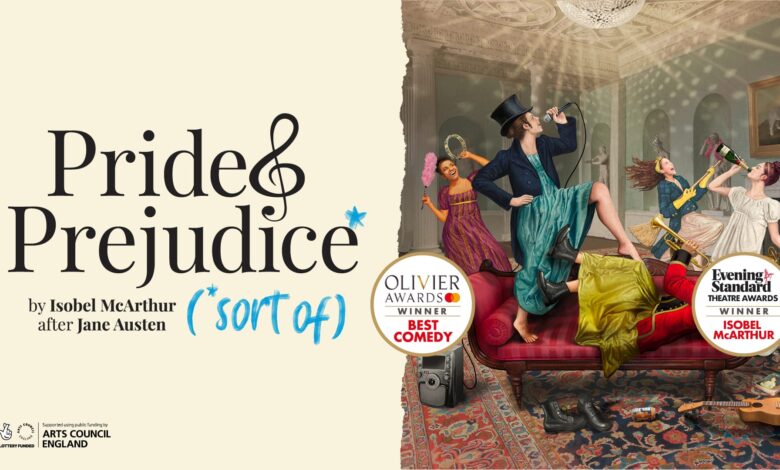
Pride and Prejudice (sort of), playing at Liverpool Playhouse, takes Jane Austen’s much-loved tale of romance, reputation, class and marriage and transforms it into a lively comedy packed with musical outbursts and outrageous humour.
Written and directed by Isobel McArthur, this is far from a traditional period drama. Instead, the production embraces a modern, playful approach, mixing Regency-era romance with pop classics, physical comedy and an inventive theatrical style that keeps the audience engaged and entertained throughout.
The production’s greatest strength is its talented five-person cast, who take on multiple roles throughout the evening. The ability to switch between characters, often at astonishing speed, is impressive in itself, but what makes it particularly entertaining is the individuality each performer (Georgia May Firth, Eva Hope, Phoebe Marshall, Roxanne Morgan and Julia Murray) brings to their roles.
Elizabeth Bennet, captures intelligence, wit, independence and determination. A wonderfully engaging central character, and her developing relationship with Mr Darcy provides the comedic duo and romantic heart of the production.
The contrasting roles of Mrs Bennet and Fitzwilliam Darcy. The transformation between an excitable, marriage-obsessed mother and the reserved, proud Darcy demonstrates the versatility demanded of the cast. Darcy’s awkwardness, pride and gradual emotional softening provide plenty of opportunities for comedy throughout.
Distinction is brought to Jane Bennet and Lady Catherine de Bourgh, navigating the contrast between Jane’s gentleness and Lady Catherine’s formidable authority.
Mary Bennet, Lydia Bennet and Mr Gardiner and many more are brought to life with very different personalities and purposes within the story, an excellent performance. Mary and Collins were particular favourites of mine with spot on facial expressions and comedic timing. Finally, completing the principles playing Charlotte Lucas, Charles Bingley and Miss Bingley. The changes between these characters demand sharp comic timing and a strong understanding of physical characterisation.
What is particularly impressive is how the performers establish who they are playing without needing elaborate changes of scenery or lengthy costume alterations, just additions, although some grand, placed over already versatile costumes. A shift in posture, an altered voice or a change in expression can completely transform a character. The cast’s commitment to the comedy is infectious, and their ability to move between romance, satire and outright silliness gives the production much of its energy.
The cast also show off their vocal and musical abilities throughout playing a number of different musical instruments live on stage. A very talented cast indeed.
Ryan Joseph Stafford’s lighting design plays an important role in shaping the atmosphere and directing the audience’s attention. The production moves rapidly between scenes and characters, so lighting is essential in helping those transitions feel purposeful rather than disruptive. It also supports the shifts between romantic moments, heightened comedy and the more theatrical musical sequences.
The sound design by Michael John McCarthy and Niamh Gaffney is equally significant. Rather than treating music as a background addition, the production makes it an integral part of its storytelling. Familiar pop songs, including Young Hearts Run Free, Will You Love Me Tomorrow and You’re So Vain, bring a contemporary flavour to Austen’s world.
The contrast between the period setting and recognisable modern music is a major part of the production’s appeal. Songs become a way of expressing feelings, commenting on relationships and adding another layer of humour to the action. The musical elements help give the familiar story a fresh identity and create some of the evening’s most memorable moments.
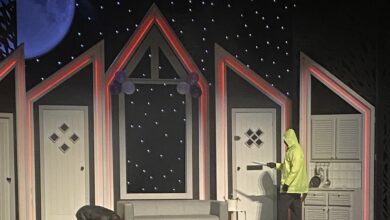
Ana Inés Jabares-Pita’s set and Morag Pirrie’s costumes demonstrate how imagination can be more effective than an elaborate. The set creats a distinctive theatrical world while allowing the performers to move clearly and quickly between locations and characters without the need for the larger main frame of the set to change at all. The costumes are particularly important in establishing the Regency setting while supporting the production’s playful approach. Period-inspired clothing provides the visual foundation, but the rapid changes and comic transformations prevent the show from becoming a conventional historical drama. With stand out character pieces making them easily recognisable before characters even spoke.
The set and costumes work together to keep the stage visually engaging without distracting from the performers. The production relies on the cast’s versatility and the audience’s imagination, and this approach gives the show a lively, almost mischievous quality.
One of the most enjoyable aspects of Pride and Prejudice (sort of) is the way it plays with the expectations audiences bring to Jane Austen. The familiar themes remain: the pressure to marry, the importance of money and social standing, and the difficulty of recognising genuine affection beneath pride and prejudice.
However, the comedy (Jos Houben, comedy staging) gives these themes a fresh perspective. The production pokes fun at the social conventions of the period while retaining affection for the characters and their predicament. The result is a show that can be silly and deliberately outrageous without losing sight of the emotional story underneath.
Pride and Prejudice (sort of) is a bold, entertaining and affectionate reworking of a literary classic. Its success lies in the combination of a versatile cast, inventive design, contemporary music and a willingness to embrace the ridiculous alongside the romantic.
A lively, unconventional and thoroughly entertaining evening at Liverpool Playhouse, proving that even a literary classic can let its hair down, pick up a microphone and have a little fun.