


Joe Campbell On Culture City, Creative Relationships and Why Good People Remain At The Heart of Everything

There was a point in Joe Campbell’s life when the future of Culture City had to compete with the considerably more immediate demands of stacking shelves in Morrisons. University occupied the daytime, supermarket shifts took care of the evenings, and whatever remained belonged to the increasingly consuming business of filming bands, interviewing artists and discovering, largely by doing it, how to make the kind of work he wanted to make. Then The Anfield Wrap came along…
Becoming Culture City’s first retainer client meant Campbell could finally hang up the apron and find out whether the “mad little world” he had been constructing in the gaps between everything else might actually become his job. Thirteen years later, Culture City operates from the Royal Liver Building, has worked with major clients including Nike and developed projects considerably more ambitious than anything its founder could have imagined while replenishing supermarket shelves. However, Campbell still misses the chicken bites from the deli counter, apparently.
That combination of ambition and irreverence runs throughout the Culture City story. Campbell doesn’t talk about entrepreneurial journeys, strategic visions or disruptive business models. He talks about people, opportunities, mistakes, having a go and, above everything else, enjoying what you do. Success has arrived almost as a consequence of those things rather than as the original objective.
Indeed, Culture City partly exists because Campbell’s university course wasn’t giving him what he wanted. Sold as practical and hands-on, it changed over the summer as lecturers and content shifted, leaving considerably more coursework and fewer opportunities to actually make things. Dyslexic and understandably unenthusiastic about replacing practical work with examinations and essays, Campbell didn’t want to leave. Instead, he decided to learn the missing skills elsewhere. The solution was Culture City TV. Or CCTV.
He cringes at it now, but there was an appealing simplicity to the original idea: become a fly on the wall of Liverpool’s cultural life and document whatever interesting things were happening. The name itself emerged during discussions at home. Campbell needed two Cs; City had already survived the selection process when his father suggested Culture. Campbell remembers leaping up and declaring: “That’s it!”. His father, however, apparently remembers events differently. Joe’s verdict is succinct: “He’s wrong.” Either way, Dad has never stopped reminding him of his contribution.
Behind the joke was an instinct that now seems strikingly contemporary. Liverpool in 2013 was full of people simply deciding to make things happen. Blogs could become influential publications, podcasts could turn conversations about football into businesses, musicians and artists could put work online without waiting for somebody’s permission. Careers might emerge from experiments that initially appeared to have no obvious commercial purpose. Culture City belonged to that moment. Its original audience consisted largely of Campbell and his mates — and, as he readily admits, some of his mates weren’t even watching.
But it didn’t really matter. There were no clients to satisfy, analytics to worry about or deadlines carrying financial consequences. The reward was making the thing. If it worked, great. If it didn’t, they had learned something. Campbell still tries to protect a little of that freedom within the considerably more professional operation Culture City has become. Not everything needs to generate huge numbers or immediate commercial return. Occasionally there should still be room to try something because it might be interesting. A friend once gave him a phrase that has stuck: “We win or we learn.”
The first Culture City interview brought an early indication of where that attitude might lead. Campbell interviewed Brian ‘Nasher’ Nash of Frankie Goes To Hollywood and immediately knew he had found something he wanted to pursue. More revealingly, Nash remains part of his life today. They still work together, speak constantly, and Campbell now considers him family.
That longevity isn’t unusual. Tom McCabe of Novelty Island was another early connection; years later, they are still making things together. What Campbell appears to have accumulated alongside the films, clients and projects is a network of relationships that has gradually become inseparable from the company itself.
However, not every encounter has produced lifelong friendship, of course. Some people teach you who you don’t want to work with again. Others provide the rather more practical lesson that occasionally it is advisable to get paid before doing the job. But the underlying principle remains surprisingly uncomplicated: find good people and hold onto them.
It is tempting from the outside to describe Culture City’s development as a move from documenting Liverpool’s creative scene to helping shape it. Campbell resists the suggestion. Years ago, a well-known producer described himself and people doing similar work as “the back room boys”. Campbell loved the phrase, still does. He has little desire to become the person in front of the camera. Culture City’s job, as he sees it, is to make somebody else’s talent visible: document it well, understand when an opinion might be useful and recognise when the wisest thing is simply to stand back.
There is modesty in that position, although perhaps a productive tension too. A company repeatedly trusted by artists, organisations and major clients inevitably exerts some influence, even if its founder is reluctant to claim it. Campbell acknowledges that responsibility most clearly when discussing those moments when somebody he cares about appears to be making the wrong decision. Sometimes honesty is necessary. The difficult part is knowing when your opinion is helpful and when it becomes interference.
The scale changed, significantly, when Culture City moved into its second office in the Royal Liver Building. The timing could hardly have been less comfortable. Covid arrived, yet the company grew. Nike became a client, work began on its first feature and new commissions followed. Campbell remembers it as both frightening and exhilarating: perhaps the first moment he could genuinely imagine Culture City becoming “a job for life.”
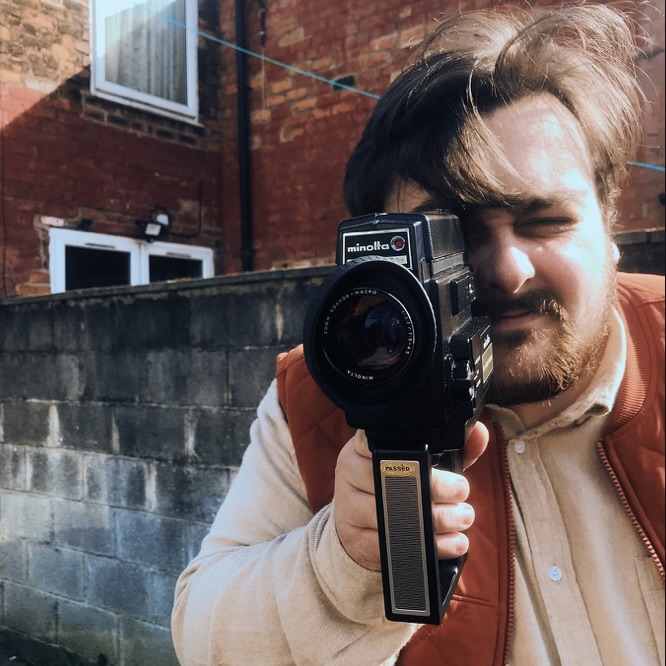
Today, the breadth of Culture City’s work demonstrates what followed. Alongside its commercial commissions, the company has retained the connection with music that ran through those early years, with projects involving artists including Jake Bugg, The Lathums, Brooke Combe and The Lottery Winners. Jamie Webster has become a particularly visible presence, with Culture City’s portfolio including This Place at Hope Street Hotel, Weekend in Paradise (Live From Sefton Park) and This Must Be The Place, Webster’s collaboration with Brooke Combe.
For a company that began by pointing a camera at Liverpool’s creative life because Campbell thought what was happening deserved to be seen, there is a satisfying continuity here. The stages have become bigger and the productions more ambitious, but the underlying instinct remains recognisable: get close to creative people, understand what they are trying to do and tell their story well. Not everything Culture City does, however, can be measured by the profile of the artist or the size of the client.
Campbell has also developed an important relationship with Liverpool charity Mandela8, with Culture City working alongside its Young Media Group and helping young people gain practical experience of filmmaking and documentary production. That involvement has become increasingly personal: in 2025 Campbell joined Mandela8’s board as a trustee, extending a creative collaboration into a wider commitment to the organisation and its work.
Viewed from a distance, there is something pleasingly circular about that relationship. Culture City was partly born because a young Campbell wanted the practical creative experience he wasn’t finding through formal education. More than a decade later, the company he created has been able to help other young people learn by doing. It is perhaps another example of Campbell having more influence than he is entirely comfortable claiming.
The Liver Building also creates an irresistible physical connection between the company and the city that made it possible. Campbell believes there are only a handful of places where Culture City could have developed in quite the same way: Liverpool, New York, Dublin and Amsterdam. Different cities, certainly, but each with a powerful sense of identity and the possibility of telling intensely local stories capable of travelling far beyond their origins. Liverpool, though, remains home.
He remembers Timo Tierney of The Tea Street Band once telling him: “People from Liverpool get behind people.” It stayed with him because it captures something Campbell recognised during Culture City’s earliest days — a willingness among creative people to support somebody simply for getting up and trying. His other favourite story is rather more mischievous. Asked in a survey to identify England’s second city, Manchester apparently answered Manchester and Birmingham answered Birmingham. Liverpool answered London. “It’s not perfect,” Campbell says of the city, “but it is special.”
Keeping some of that Liverpool irreverence becomes harder as a company grows. There are now salaries, clients and expectations. Commercial success matters because without it there is no Culture City, but Campbell is acutely aware of the opposite danger: making profitable work that leaves everyone bored.
The balance is something he consciously monitors. Culture City’s new Monthly Round Up films allow the team to look back at what they have made during the previous four weeks. On one level they’re promotional; on another, they provide Campbell with a useful test. Are they still proud of the work? Are they enjoying themselves? Has earning a living begun to crowd out the reasons they wanted to do this in the first place? For all the jokes, that question matters deeply to him. Ask what the university-age Joe Campbell would make of walking into Culture City’s Liver Building studio today, and the humour briefly disappears. “I find it very emotional, to be totally honest.”
There have been good days and bad ones, but Campbell loves the life Culture City has given him and is plainly proud of what has been built. The student who started CCTV because his university course wasn’t practical enough could hardly have anticipated Nike, feature films, a growing team or a Royal Liver Building address. Perhaps, though, there is another element in Culture City’s success that Campbell himself would be unlikely to put forward: Campbell.
Spend any time talking to him and it becomes easy to understand why people return. He is extremely likeable, but there is something more substantial beneath the humour and self-deprecation. Campbell possesses the sort of interpersonal skills that cannot easily be taught on a university course: an instinct for people, an understanding of when to speak and when to listen, and the emotional intelligence to recognise that creative relationships depend upon trust as much as talent. You buy into him.
That matters in an industry built around collaboration. The technical ability has to be there, and Culture City’s increasingly ambitious portfolio provides ample evidence of that, but professionalism is also about making people feel confident placing their work, image or reputation in somebody else’s hands. Longstanding relationships begin to look less accidental in that context. Nasher is still there. Connections formed in Culture City’s earliest years have survived. Major artists and organisations have trusted the company with their stories, while Campbell’s relationship with Mandela8 has developed from collaboration into trusteeship.
None of this means Campbell is performing some carefully cultivated version of likeability. If anything, the opposite seems true. He is funny, occasionally irreverent and refreshingly willing to admit when things haven’t worked. But underneath that informality is somebody who appears to take both the work and the people involved in it very, very seriously. Perhaps that is why his description of himself as one of the “back room boys” feels so appropriate. Campbell doesn’t need to occupy the centre of somebody else’s story. He seems perfectly comfortable helping them tell it.
The future, inevitably, is bigger. Campbell talks about larger projects, growing different parts of the business and continuing work already underway. There is even the possibility, half seriously floated, that Culture City might one day exist in some of those other cities whose character he recognises in the company. But beneath the expansion plans is the same test that applied when hardly anybody watched those first films. Was it worth making? Did we work with good people? Are we proud of it? And did we enjoy ourselves?
That may ultimately be the most revealing measure of what Joe Campbell has built. Culture City has grown from a student’s response to a disappointing university course into a serious creative business without entirely losing the freedom, curiosity and slightly reckless optimism of its beginnings. Its founder still prefers the back room to the spotlight and talks considerably more enthusiastically about the people around him than about his own achievements.
Thirteen years separate the student squeezing Culture City between lectures and supermarket shifts from the creative director working inside one of Liverpool’s most recognisable buildings. The surroundings have changed. The clients have changed. The scale and expectations have changed. And Joe Campbell? Perhaps, rather less so. He still wants to have a go, make something good and do it with people he likes.
And if that ever stops being fun? Apparently, Morrisons can expect an application…
Visit culturecity.co.uk to find out more about what Joe and the team do. Follow @culturecitytv on Instagram for updates.