

For many people, the name Samuel Beckett immediately conjures images of two men waiting beneath a lonely tree, hoping against hope that someone called Godot might eventually arrive. Others picture stark stages, long silences and plays that carry a reputation—often unfairly—for being difficult, enigmatic or intimidating. This September, however, Liverpool invites audiences to look at Beckett rather differently.
Returning for its third edition, Beckett: Lieben is far more than a celebration of one of the twentieth century’s greatest writers. Running from 17–20 September, the international festival transforms venues across the city into spaces where theatre, music, visual art, photography, dance and conversation collide in a programme that asks not simply what Beckett wrote, but why his work continues to inspire artists across the world. It is an ambitious, multidisciplinary event that has quietly established Liverpool as one of the most exciting places in Europe to experience Beckett’s extraordinary legacy.
Curated by actor and director Adrian Dunbar alongside acclaimed musician Nick Roth, and presented in collaboration with the University of Liverpool’s Institute of Irish Studies and Unreal Cities, Beckett: Lieben follows the acclaimed Beckett: Confined in 2022 and Beckett: Unbound in 2024. Each festival has explored a different aspect of Beckett’s life and work. This year’s theme turns towards Germany, examining the writer’s enduring fascination with German art, literature and theatre, influences that helped shape one of the most distinctive creative voices of the modern era. But it is this willingness to look beyond the obvious that makes the festival so compelling.
Rather than simply presenting productions of Beckett’s plays, the programme explores the artistic conversations that surrounded him. Visitors are invited to experience theatre alongside sculpture, music beside literature and visual art in dialogue with performance. It is less a literary festival than a celebration of artistic influence itself—an opportunity to discover how ideas travel between disciplines and across generations. That philosophy is evident throughout this year’s programme.
One of the headline productions is a double bill of Play and Come and Go, directed by Adrian Dunbar and staged at the Liverpool Playhouse. Both works demonstrate Beckett’s extraordinary ability to strip theatre back to its essentials, revealing profound emotional truths through deceptively simple dramatic forms. Each performance will also be followed by a post-show discussion, offering audiences the chance to explore the plays in greater depth.
Elsewhere, the festival ventures into equally fascinating territory. At the Tung Auditorium, Six Paintings brings together renowned musicians responding to six works of art that Beckett himself admired, creating an evening where music becomes a conversation with painting through Beckett’s eyes. It is a reminder that his imagination was nourished as much by galleries as by libraries, and that his creative world extended far beyond the written page.
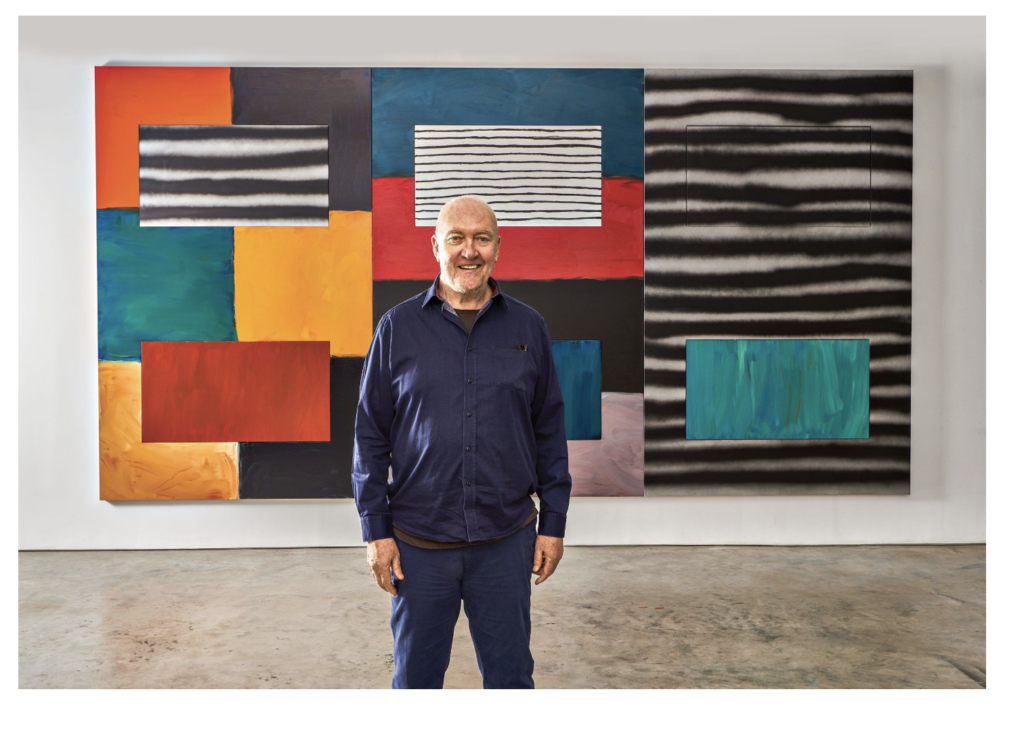
Perhaps the festival’s most striking visual centrepiece, however, will be Sean Scully’s Tree for Godot.
Few theatrical images are as instantly recognisable as the solitary tree in Waiting for Godot. Commissioned from internationally renowned Irish-American artist Sean Scully, Tree for Godot transforms that familiar stage prop into a remarkable public artwork. Installed at the University of Liverpool’s School of Architecture, the sculpture becomes both speaker and listener, recording the sounds around it while playing Beckett texts gathered from across the world. Throughout the festival it will host specially commissioned readings, performances and reflections, inviting audiences not simply to observe the work, but to become part of an ongoing artistic dialogue.
Scully himself describes the sculpture with characteristic poetic economy:
“Godot never arrives,” he writes. “The tree must not give false expectations… it is skinny, though so is hope.” Those few words capture something essential about Beckett’s work: its ability to find humour, resilience and even beauty within uncertainty.
Yet perhaps the most significant story unfolding this September is not taking place on stage at all. Over the past four years, Liverpool has quietly emerged as an international centre for Beckett scholarship and performance. Through the partnership between the University of Liverpool’s Institute of Irish Studies and Unreal Cities, the city has developed a festival unlike any other in Britain—one that refuses to treat Beckett as a museum piece. Instead, his work becomes the starting point for fresh conversations between artists, musicians, actors, academics and audiences.
That ambition is reflected in the breadth of this year’s programme, which stretches from theatre and visual art to photography, film, dance and public discussion across venues including the Liverpool Playhouse, LIPA, the Tung Auditorium and the University campus. Rather than confining Beckett to one stage, the festival allows his ideas to ripple throughout the city itself.
For newcomers, there is reassuringly little need to arrive armed with detailed knowledge of Beckett’s plays. Indeed, one of the festival’s greatest strengths is its accessibility. Whether drawn by Adrian Dunbar’s involvement, Sean Scully’s sculpture, contemporary music, visual art or simply curiosity, audiences are encouraged to enter Beckett’s world from whichever doorway feels most inviting. That openness feels particularly fitting.
Samuel Beckett’s work has often been reduced to stereotypes of bleakness and existential despair. Yet anyone spending time with this year’s festival will quickly discover another Beckett entirely—playful, inquisitive, visually adventurous and endlessly inspiring to artists working across every imaginable discipline.
As Adrian Dunbar notes in announcing this year’s programme, one of the festival’s greatest satisfactions has been seeing its reach extend ever further into the city of Liverpool itself. That observation perhaps explains why Beckett: Lieben feels so important. This is no longer simply an arts event taking place in Liverpool. Increasingly, it is becoming part of Liverpool’s cultural identity.
In a city celebrated for music, theatre and artistic innovation, Beckett: Lieben offers something quietly remarkable: four days in which one of literature’s greatest minds becomes the catalyst for fresh acts of creativity. More than a festival of plays, it is a festival of ideas.
And in a world that often feels increasingly fragmented, there is something rather hopeful about artists, audiences and a city coming together to continue a conversation begun by Samuel Beckett many decades ago.
Beckett: Lieben Ticket Information
Many events at Beckett: Lieben are free, although advance registration is required. Tickets for Adrian Dunbar’s Play / Come and Go double bill at the Playhouse are £15 (£12 concessions), plus booking fee, with performances on Thursday 17, Friday 18 and Saturday 19 September.
Other free events include More Real Than Nothing at LIPA, the festival’s film screenings and talks, and Six Paintings at the Tung Auditorium on Sunday 20 September. Free tickets are required for Six Paintings.
For the full programme, timings and booking information, visit the University of Liverpool’s Beckett: Lieben 2026 Festival page.