
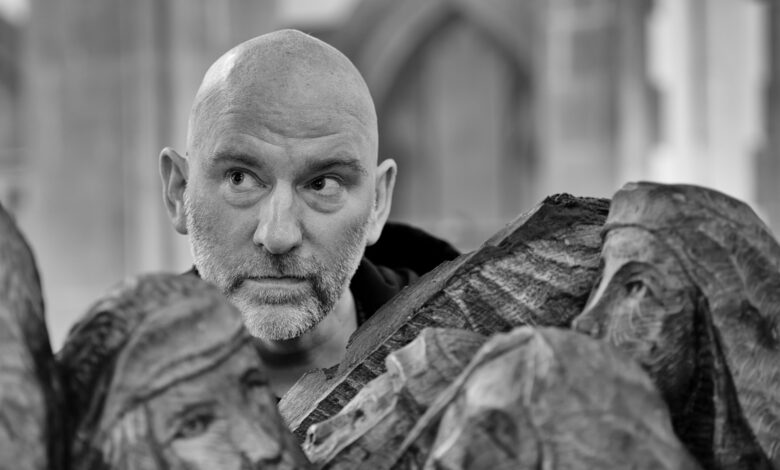
Ali Harwood – Keeping stories alive
Creativity rarely sits still in the hands of Ali Harwood. Across poetry, storytelling, visual art, performance and education, the Liverpool-based artist has spent decades building connections between disciplines that many practitioners might keep separate. Rather than seeing poetry as distinct from visual art, or storytelling as different from community learning, Harwood treats them as parts of the same creative ecosystem, each informing and strengthening the others.
That approach has made him a familiar and respected figure across Merseyside’s cultural landscape. Whether performing poetry in museums and planetariums, telling stories beneath bridges, creating public artworks, facilitating workshops or hosting spoken-word events, Harwood has developed a practice rooted in participation, curiosity and connection.
His creative journey began long before he stepped onto a stage. Growing up in a household filled with books, he was surrounded by stories from an early age. His father wrote Ladybird books, and reading became an everyday presence rather than a distant pastime. Music also played a significant role. As a teenager, Harwood started writing songs, with lyrics providing an early pathway towards poetry and a lifelong fascination with the power of language.
Today, he is perhaps best known within Liverpool’s poetry community as the host of Liver Bards, one of the city’s most enduring spoken-word platforms. Although he is often associated with the organisation, Harwood is quick to point out that Liver Bards found him rather than the other way around. Invited by poet Steve Regan to take on hosting duties nearly a decade ago, he has now overseen well over one hundred events.
During that time, he has witnessed Liverpool’s spoken-word scene grow into a thriving and diverse creative network. Yet what continues to matter most to him is not simply the performance itself but the sense of belonging these spaces can generate. Poetry nights become places where dreamers, romantics and outsiders can find common ground, with audiences feeling as valued as those standing at the microphone.
Community remains central to Harwood’s work. Recent collaborations have included projects with the Liverpool Diocese’s Slavery Truth Project, community groups across the city and organisations supporting refugees in Bristol. These initiatives sit comfortably alongside his personal creative practice because they emerge from the same belief: that art can help people understand themselves, each other and the world around them.
That conviction was reinforced during his twenty-three years working in education. Teaching children offered a constant reminder of the importance of imagination and play. Young people approach language with a freedom that many adults gradually lose, and Harwood continues to draw inspiration from their willingness to explore ideas without fear of failure. For him, creativity is not an abstract concept but “imagination with purpose” – a force capable of shaping understanding and generating meaningful action.
Another defining thread throughout his work is a fascination with myth, symbolism and storytelling traditions. Liverpool itself provides fertile ground for this interest. The city’s histories, legends and cultural folklore regularly surface within his writing and visual art, creating work that feels both rooted in place and connected to wider human experiences.
“Myths and stories often contain greater truths than simple facts,” he explains, highlighting the influence of thinkers such as Jonathan Pageau and Martin Shaw. This attraction to symbolism can be seen across much of his output, where images and narratives operate on multiple levels, inviting audiences to discover their own meanings.
Harwood’s willingness to move between artistic forms also keeps his practice fresh. Some projects naturally begin with words, others with images. Commissioned work often determines the medium, while personal projects may evolve more organically. The common thread is a desire to communicate ideas in the most effective and engaging way possible.
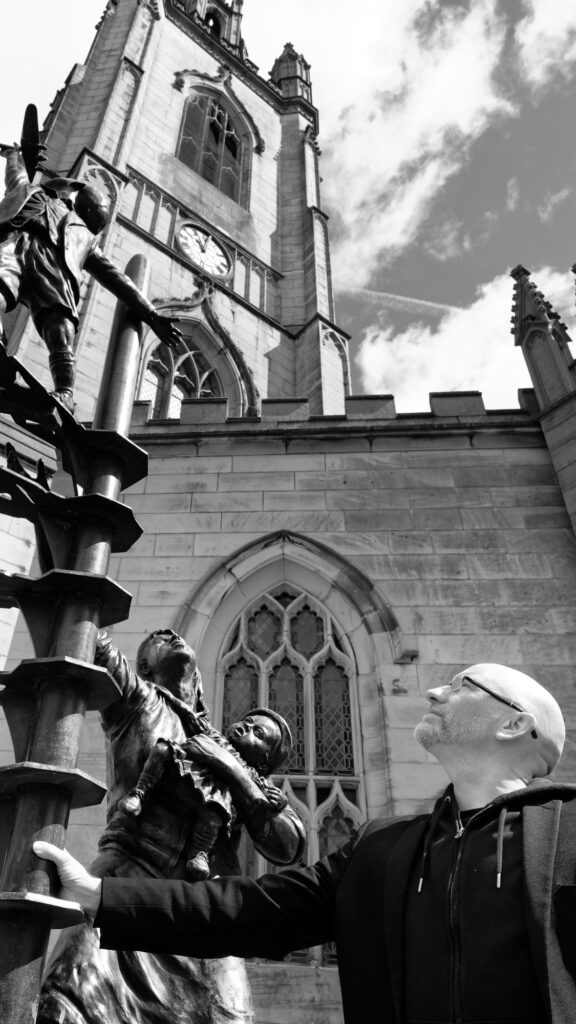
Accessibility is another principle that runs through everything he does. As a host, facilitator and performer, he has consistently worked to make poetry feel welcoming rather than exclusive. Through events such as Liver Bards, Bootle Bards, Itch at Shakespeare North and the Wirral Poetry Festival, he has helped create spaces where participation matters more than status and where emerging voices can be heard alongside established performers.
Looking towards the future, Harwood remains optimistic about Liverpool’s creative community. He speaks enthusiastically about younger poets finding their voices and connecting with audiences in unexpected ways. Their honesty, openness and willingness to engage with difficult subjects suggest a vibrant future for the city’s artistic landscape.
For an artist whose work spans so many disciplines, the connecting thread is remarkably simple: creativity as a shared experience. Whether through poetry, storytelling, visual art or education, Ali Harwood’s work continues to build bridges between people, places and ideas, reminding us that art is often at its most powerful when it brings communities together.
For a poet whose work is deeply interested in myth, symbolism and overlooked histories, it is perhaps unsurprising that Ali Harwood should eventually find his way to Thomas Chatterton.
More than 250 years after his death, Chatterton remains one of English literature’s most intriguing figures. A Bristol teenager who died aged just seventeen, he has been variously described as a prodigy, a fraud, a visionary and a tragic romantic hero. His creation of the fictional medieval monk Thomas Rowley challenged ideas of authorship and authenticity long before such questions became commonplace, while his influence would later ripple through generations of writers including William Blake and Percy Bysshe Shelley.
In Harwood’s poem posthumous child, Chatterton emerges not as a literary curiosity but as a complex young man searching for identity, belonging and purpose. The title itself points towards one of the defining circumstances of his life. Chatterton’s father died before he was born, leaving him literally a posthumous child, disconnected from a paternal lineage he could never directly know. For Harwood, that absence becomes more than a biographical detail; it becomes a lens through which to view Chatterton’s restless imagination and his desire to connect with history, ancestry and myth.
Posthumous Child
With Redcliffe tide arrives a posthumous child.
Through infant cries, you stare – unreconciled.
From Pile Street School, dismissed a fool, expelled.
Once home, illuminated letters swell.
A hallowed Henbury Gardner changed your stream
to the Colston’s Hospital’s unadorned regime
at seven – and for seven years you stayed –
though when you could, you roamed in goodliest shade.
Those Rowley boats – medieval ships you steered
until they sprung their leaks with mutineers.
At seventeen, from Bristol, London drawn.
Within four months, new elegies are born.
Imagined African dignity and strength –
the expansion of these deeps we dive at length.
From your works, Shelley, Blake and More, they draw.
With Rushton’s robin, rises your macaw.
This dead crew’s charts reprised? You may still rise.
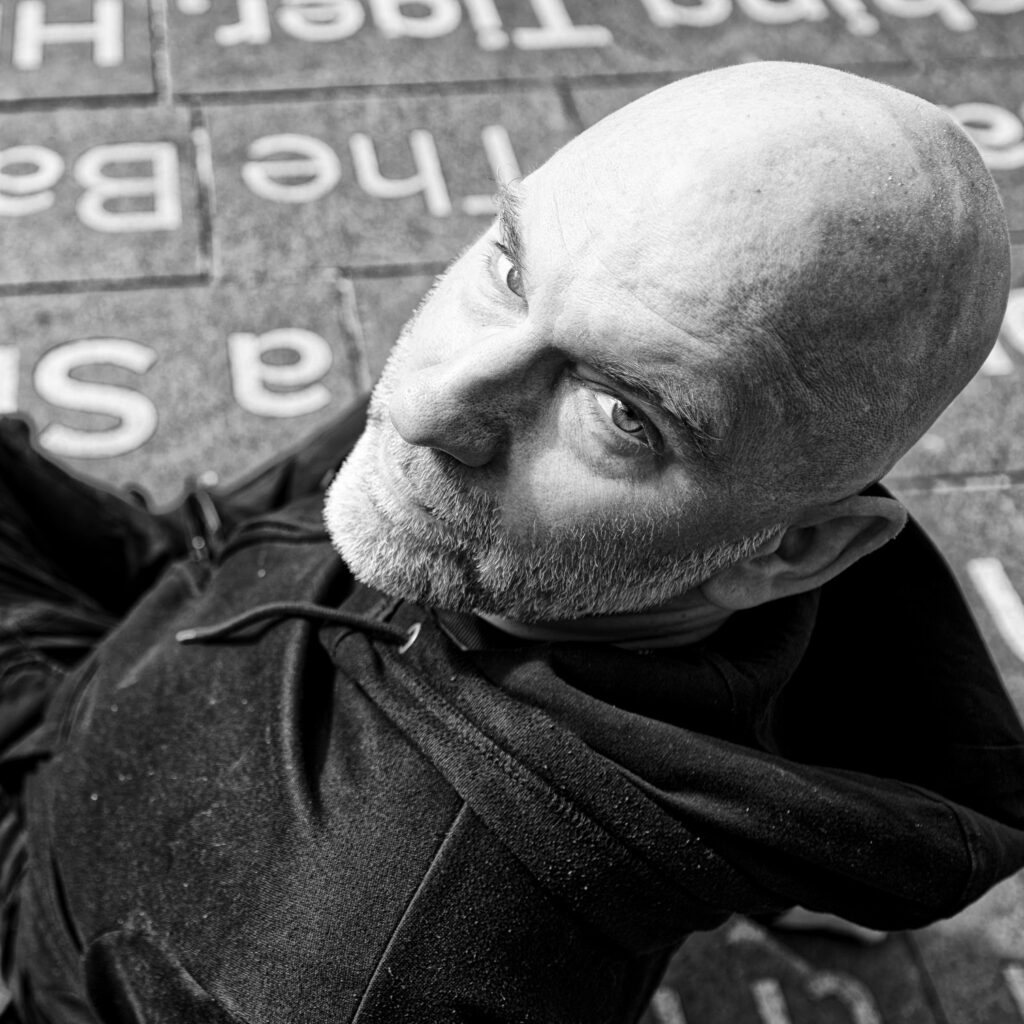
In the following Q&A, Ali Harwood discusses the inspirations behind posthumous child, his fascination with Chatterton’s story, and the enduring relevance of a young poet who continues to speak to outsiders, dreamers and creators across generations…
LN: The poem seems to inhabit the voice and mythology surrounding Thomas Chatterton — what first drew you to Chatterton as a subject?
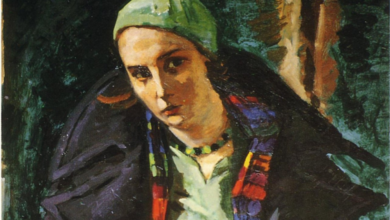
AH: In my teens, I was drawn to the subject and idea of suicide and read the book ‘The Savage God’ by Al Alvarez with considerable intensity. In it, the author covers several aspects of suicide, including those who have taken their own lives, including Sylvia Plath and Thomas Chatterton. The painting ‘The Death of Chatterton’ by the Pre-Raphaelite painter Henry Wallis is also an image that has stayed with me since I saw it in my formative years. I also went to the same school as Chatterton.
LN: The phrase “posthumous child” immediately introduces ideas of absence, inheritance and destiny. What does that title mean to you emotionally as well as historically?
AH: The poet himself was a posthumous child. His father died before Chatterton was born. Perhaps he was always looking for paternal guidance in one form or another in his brief productive life. Historically, the title is one of contrasts and a break of lineage. Thomas senior never saw his son alive and Thomas junior never met his father in person. The idea of a ‘posthumous child’ suggests a yearning for a link between the past and the present.
LN: There’s a tension throughout the poem between invention and authenticity — especially around the Rowley poems. Are you interested in Chatterton as a fraud, a visionary, or something more complicated?
AH: Chatterton had no time to be a fraud. He was too busy searching for his true self through his poetry formed through the eyes of others, often imagined. Yes he was a visionary, and perhaps was a precursor of Tolkien. He was complicated in the way that many precocious teenage boys are contradictory and inconsistent in their quest for authenticity. His process is fascinating and may never be fully understood.
LN: Bristol feels almost alive in the poem — from Redcliffe tide to Colston’s Hospital. How important is place in shaping both identity and imagination here?
AH: Place is of prime importance. To paraphrase mythologist Martin Shaw, the most powerful stories have a postcode. I often work at Blaise Castle House Museum for Bristol Museums, and St Mary’s Church in Henbury is a stone’s throw from here. The nave and lower tower of this holy site date from around 1200. It was the priest named Gardner from this church named Gardner who recommended Chatterton to attend Colston’s Hospital.
LN: The line “imagined African dignity and strength” introduces race and empire into the poem in a subtle but significant way. Was that intended as a critique of the world Chatterton inhabited, or of the myths later generations constructed around him?
AH: It is currently not widely known that this teenage poet from over 250 years ago wrote anti-slavery poetry from the perspective of his imagined African narrators. The African Eclogues are a trio of poems written in 1770 during the final months of his life. They were unusual for the time as they combined exotic imagery with a critique of British imperialism and its practices.
LN: You reference figures like Percy Bysshe Shelley, William Blake and Thomas More almost as literary descendants. Were you consciously placing Chatterton within a lineage of outsider visionaries?
AH: Shelley, Blake and the writer, philanthropist, poet and playwright Hannah More were all influenced by Chatterton’s work, so in some way they were his poetic descendants. Perhaps they were all to a greater or lesser extent outsiders and visionaries, but distilled through time, they seem to become increasingly relevant.
LN: The poem feels densely musical and formally controlled, with echoes of older poetic traditions. Did you consciously shape the language to mirror the period Chatterton belonged to?
AH: My aim was to keep the language tight and each word absolutely necessary. I wrote predominantly in iambic pentameter, a form which Chatterton used, including in ‘Chatterton’s Last Verses’, written shortly before he died in his London garret. I shaped the poem to be seventeen lines, one for each year of his life.
LN: There’s compassion in the poem, but also distance — almost as though the speaker is excavating a ghost. Did you want readers to feel emotionally close to Chatterton, or aware of how unknowable he remains?
AH: I want them to see themselves in Chatterton and vice-versa. Many of us often feel undervalued in our lives when we are expressing ourselves, especially as teenagers but also before and after this time. We are not alone.
LN: The closing lines — “This dead crew’s charts reprised? You may still rise.” — suggest resurrection through art and influence. Do you see poetry as a way of reviving forgotten or misunderstood lives?
AH: The last line uses the modal verb of possibility ‘may’ so the uplift is not certain. However, the best poetry is always alive and resonates in others. The final four words reference Maya Angelou’s ‘Still I Rise’.
LN: More broadly, what does Chatterton’s story say to contemporary artists and writers now — especially younger creatives trying to invent themselves within difficult systems?
AH: Chatterton’s story says keep creating through the ups and downs life throws at you. It says to me and you that our creative endeavours – whether immediately appreciated and published, or initially disregarded by ourselves and others – are certainly worthwhile.
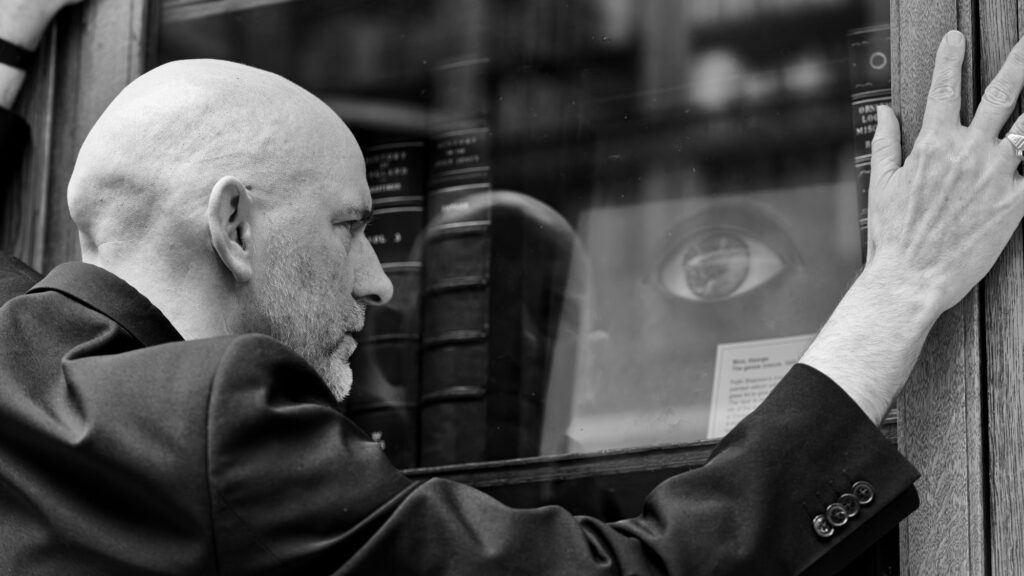
Spending time with Ali Harwood’s work reveals an artist who is less interested in creative boundaries than in creative possibilities. Poetry, storytelling, visual art, education and community engagement are not separate pursuits but interconnected ways of exploring what it means to be human. Whether he’s hosting a spoken-word night, facilitating a workshop, creating public art or crafting a carefully structured poem, the underlying impulse remains remarkably consistent: to connect people with stories, ideas and one another.
That spirit runs throughout posthumous child. On the surface, the poem revisits the life of Thomas Chatterton, but beneath its historical detail lies something more universal. It speaks to anyone who has searched for their voice, wrestled with self-doubt or pursued creative expression despite uncertainty. Chatterton’s story may belong to the eighteenth century, yet the questions it raises about identity, recognition and artistic purpose remain strikingly contemporary.
Harwood’s fascination with myth, symbolism and place also reflects a broader belief in the power of stories to carry meaning across generations. By revisiting overlooked lives and uncovering hidden connections between past and present, he reminds us that creativity is never solely an individual act. It is a conversation that stretches across time, linking artists, audiences and communities in unexpected ways.
As Liverpool’s cultural landscape continues to evolve, voices like Ali Harwood’s play an important role in nurturing participation, encouraging curiosity and keeping those conversations alive. His work demonstrates that art can be both deeply personal and profoundly communal — rooted in local experience while continuing to resonate far beyond it…
Follow Ali Harwood on Instagram
Read Ali’s 52 for 26 Poetry Project feature