

Exhibition Preview: The Diamond — Brian O’Hanlon’s Powerful Portrait of Working-Class Nightlife

The Diamond – Holding On to Something Real in a Fading Nightlife Culture.
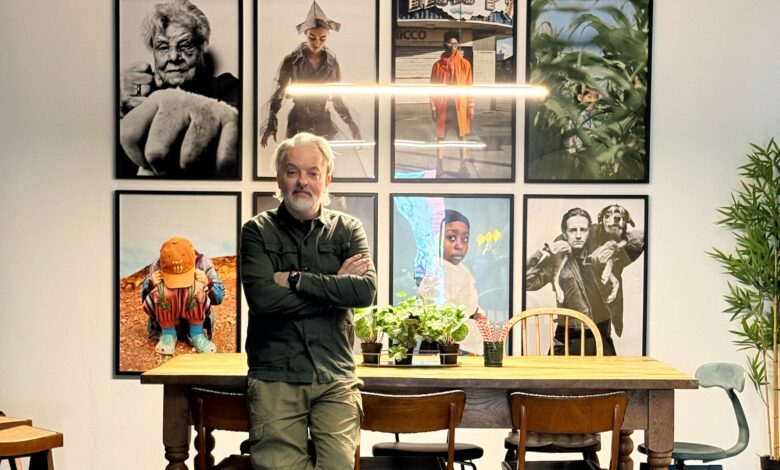
Brian O’Hanlon is a Liverpool-based photographer whose work bridges documentary storytelling and commercial image-making. Originally trained in graphic design and art direction, he spent over two decades in the creative industries before returning to photography, a shift that continues to shape his distinctive visual style.
His work focuses on people, place and identity, often exploring working-class culture and contemporary British life with both sensitivity and structure. Indeed, O’Hanlon has received international recognition through selections in Portrait of Britain and Portrait of Humanity, underscoring his ability to capture quietly powerful moments of contemporary life.
However, The Diamond marks a significant milestone — his first major solo exhibition and a deeply personal exploration of community, music and belonging. With The Diamond, O’Hanlon turns his attention to a venue that feels both deeply specific and quietly universal: a working-class music club in Sutton-in-Ashfield that carries decades of memory in its walls.
What begins as a flicker of recognition, an almost uncanny sense of déjà vu, quickly evolves into something more urgent. The Diamond is not just a location; it’s a cultural ecosystem. A place where tribute acts channel the ghosts of stadium-sized icons, where regulars gather week after week, and where histories of labour, community and resilience linger just beneath the surface. At a time when grassroots venues are disappearing at an alarming rate, O’Hanlon’s instinct to document feels less like an artistic choice and more like an act of preservation.
The resulting body of work moves between the energy of the dance floor and the stillness of carefully constructed portraits, capturing both the collective spirit of the space and the individuality of those who inhabit it. There’s a tension at play throughout, between performance and reality, spectacle and intimacy, that gives the project its depth. These are images that don’t just observe; they embed themselves, building trust over time and revealing layers gradually.
Presented as his first solo exhibition at Helta Skelta Studio, The Diamond offers an honest, unvarnished record of a community bound together by music, memory and shared experience. In the following conversation with myself, O’Hanlon reflects on the origins of the project, the people at its heart, and the enduring importance of spaces like this—places where, even now, something real can still be found…
What first drew you to the idea behind the The Diamond project, and how did it begin?
That’s easy, it was as soon as I walked inside it’s doors and felt I’d been there before. I was instantly transported to 1979, North Wales caravan park and the ‘Steamboat’ residents bar and then to 1988 to the Dunlops working mans club in Old Skelmersdale behind Skem United’s old ground. Cherished but forgotten memories of a time of real human connection where you felt accepted and part of a cultural collective. After my second visit I felt compelled to document it’s rarity and increasing scarcity; as small music venues continue to disappear at an alarming rate in an ever changing financial and human sphere.
The title The Diamond suggests something multifaceted—what does it represent in the context of this body of work?
When I first started the project I only saw The Diamond as a whole, a place where bands played and people enjoyed a cheap night out and if I’m being perfectly honest, a bit of a novelty. But the more time I spent there and the more I dug into it’s foundations; it revealed layers of nuance, of a place, of a people and of a time (now and then). I spent weeks and months moving between these invisible layers capturing it’s audience, the bands on and off stage, the memorabilia covered walls and most importantly its members who are the mortar between the bricks of the building.
Can you tell us about the subjects or communities featured in the project, and how you approached photographing them?
At first this was quite a challenge. Early on in the project I photographed the bands playing on stage and everyone enjoying themselves; but I didn’t really feel I was getting under the skin of the place, so I decided to set up a small portrait studio in the furthest corner of the club; situated in the ‘dining area’ (my umbrella still smells of fried onions). I then invited people off the dance floor and onto my little set which had two positive effects, one, it removed the person from the crowds and neon club lights which allowed me to capture everyone in a more controlled and consistent studio setting and two, the set having an air of professionalism calmed the person on set and allowed me to briefly connect with them.
I also asked their name and how long they’ve been going to The Diamond which features at the bottom of every portrait within the book. Some members have been going to The Diamond for over 40 years. I approached the bands differently too. All the artists are tribute acts, from AC/DC, Oasis to Pink and Nile Rogers and everything in-between. I wanted the viewer to question “Is that really KISS?” or “could that be Queen?” The only time you see the reality of an artist is in the honest back stage corridor and The Diamond’s green room.
How does this exhibition at Helta Skelta Studio differ from previous presentations of your work, if at all?
I’m really excited to say this will be my first solo exhibition of a body of work I dearly care about and want to share. Helta Skelta Studio is a fab new space that offers creatives a new Northern home to develop, elevate and present their work. I’m really looking forward to it.
What kind of atmosphere or experience are you hoping visitors will have when they step into the exhibition?
I’m hoping whoever takes the time to visit will enjoy connecting with the imagery and maybe reconnect with their working class roots. Maybe they’ll see a detail or a person or a feeling that unlocks a cherished memory from their past. We’ve all met a character or a relative or entered an establishment that has stayed with us. I hope the exhibition unlocks a hidden gem for them. For everyone else it’s an honest record of culture that is slowly changing; as technology allows us to connect more but we become less connected.
Your photography often carries a strong sense of place: how important is location within The Diamond project?
A sense of place is incredibly important. Sutton-in-Ashfield on the outskirts of Nottinghamshire has had its fair share of knocks and none more bruising than the closure of the local colliery. Its people bonded as all good communities do when something as seismic as this happens and The Diamond became a focal point. It offered a free drink to any miner who opposed Thatchers tyranny during the cruelest of times thus cementing it’s reputation within the town and continued loyalty amongst the locals.
Were there any particular moments during the project that changed your perspective or direction as a photographer?
Absolutely. Whilst chatting to one of my friends who’s also a musician; he informed me how difficult it is to be a tribute act. Not only do you have match note for note some of the most recognisable songs whilst being constantly judged on how close you are to the best and biggest artists of our time past and present, you have to do it every time you play, week-in week-out without fail. I realised that these interloping chameleons where extremely talented and accomplished musicians. Alright, they didn’t create the original but when you hear a painter and decorator from Durham play an exact rendition of Eddie Van Halens guitar solo from Michael Jacksons Beat-it note for note! you have a new found respect for their craft and performance.
How do you balance storytelling with aesthetics in your work, especially in a project like The Diamond?
This is a very good point and one that I wrestle with every image I take. The story in the honesty of your work didn’t use flash on the dance floor as I felt this removed the deeply saturated colours of the overhead gelled lighting and also exposed whoever I was photographing making them feel conscious and vulnerable. This made things more challenging but when you pressed the shutter at the right time it would offer you something uncontrived and visceral. The Diamond portraits on the other hand had a consistent and controlled lighting set-up and I shot on a black cloth to balance the darkness of the club. It was important to me to see The Diamond patrons as individual facets and not as a collective entity. Each with their own honest personality and vulnerable sparkle.
What challenges did you encounter while developing this series, and how did you overcome them?
There were two major challenges I found, one at the beginning and one six months into the project. The first was trust from The Diamond patrons. Trust that I wasn’t there to expose or exploit this hidden oasis. That took weeks of visiting every weekend Friday to Sunday. The more I was there the more comfortable the regulars became around me, especially for the individual portraits.
The second challenge was project fatigue. Like with most things excitement and energy are in abundance at the beginning of a project but as the weeks and months passed I found it more and more difficult to finish my payed job (freelance photographer) on a Friday and drive 2hrs 30mins away from home and continue to shoot a place which I felt I already knew Friday through to Sunday week after week, month after month.
What helped me was that I’d given myself a deadline of 12 months so I knew there was an end goal but what really motivated me was that every time I visited The Diamond there was something or someone I connected with and photographed that made the trip worth while.
What do you hope audiences take away from The Diamond after seeing it in this setting?
The Diamond is a rare jewel hidden between old warehouses and new build terraces. It’s as important now as it’s ever been. People need a safe affordable place where they feel part of a collective that understands and accepts them for who they are. That understands the pressures of everyday life in uncertain and divided times. I hope the exhibition and the book communicates a sense of belonging to something real and something honest and that physical human connection is vitally important for us all.
In the end, The Diamond isn’t just about a venue tucked away in Nottinghamshire, it’s about what spaces like this represent, and what happens when they’re gone. O’Hanlon’s work doesn’t romanticise or exaggerate; it simply pays attention, and in doing so reveals the quiet importance of places built on routine, familiarity and shared experience. These are the rooms where people return to, week after week, not for spectacle but for connection. What he captures here is something increasingly fragile: a sense of belonging that can’t be streamed, staged or scaled. And maybe that’s the point. In a culture that’s constantly moving on, The Diamond reminds us of the value in staying put…
The Diamond – A New Photographic Exhibition
Friday 17 – Sunday 19 July, 10am – 6pm
Helta Skelta Studios (6 Jordan Street, Liverpool L1 0BP)