


Eleanor Rees: Where Place Becomes Voice
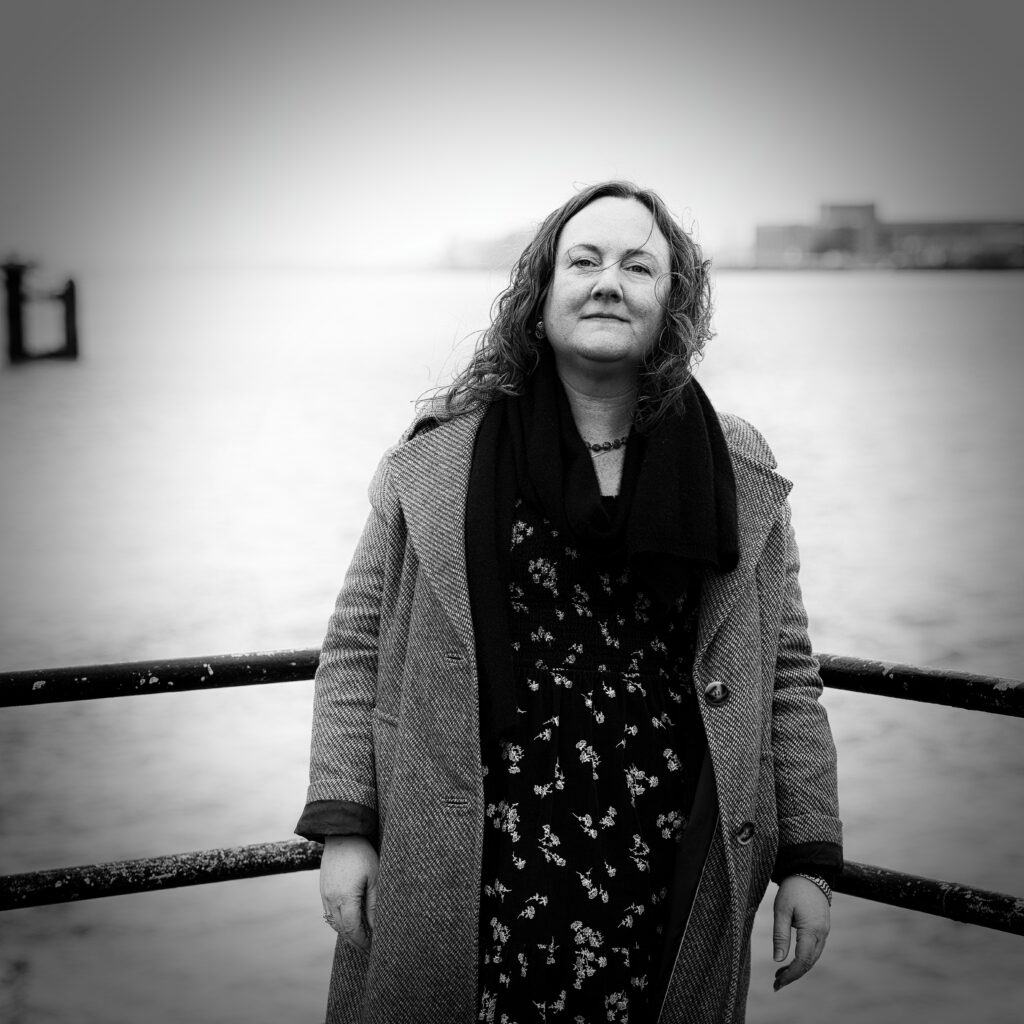
For Eleanor Rees, poetry has never been a performance of the self. It is something quieter, more porous — a practice of attention rooted in landscape, language and the subtle negotiations between the human and the more-than-human. Across more than two decades of work, the Birkenhead-born poet has traced rivers, parks, mythic figures and post-industrial terrains, building a body of writing that listens as much as it speaks.
Rees’s journey began early. As a teenager she borrowed contemporary poetry from Birkenhead Central Library, already certain that writing was not simply a hobby but a calling. “I’ve always written since I was a child,” she says. “I always wanted to be a writer and understand this as a vocation.”
The decisive shift toward poetry came during her university years, when she took part in an Arts Council England-funded workshop called Opening Line in Sheffield. Meeting other poets and writers, and recognising that publicly funded support could actively nurture creative lives, crystallised her understanding of poetry as something embedded within society. The idea that writers are sustained by, and responsible to, a wider civic world remains central to her outlook.
That ethos of connection pulses through her career. Her early pamphlet Feeding Fire won the Eric Gregory Award in 2002, marking her as a distinctive new voice. Her debut full collection, Andraste’s Hair (Salt, 2007), went on to be shortlisted for both the Forward Prize for Best First Collection and the Glen Dimplex New Writers Award. In those poems, myth and city overlap, landscapes flicker with transformation, and identity becomes something mutable, unsettled, alive.
Subsequent collections — including Eliza and the Bear (Salt, 2009), Blood Child (2015), Riverine (2015) and The Well at Winter Solstice (Salt, 2019) — deepen that exploration of thresholds. Rivers recur as sites of crossing and reflection; parks and margins hum with uncanny presence. In Tam Lin of the Winter Park (Guillemot Press, 2022), Rees reimagines folkloric energies within contemporary, post-industrial settings, allowing myth to leak into municipal green space.
Her most recent volume, Portents and Portals: New and Selected Poems (2025), gathers work spanning three decades. Reading the early and later poems side by side, Rees observes less rupture than refinement. Themes of place, transformation and encounter remain constant; what has shifted is technical assurance and a heightened consciousness of how the reader moves through the poem. The voice is still instinctive, but the architecture has grown more intricate.

That instinct remains at the heart of her writing process. Rees carries softback artist’s notebooks, writing freely without pressure to produce finished pieces. Some entries remain fragments; others reveal a pulse that demands further shaping. “They tend to begin with a location which provokes an image or sound/phrase,” she explains. “I then improvise with this feeling until it begins to turn into a rhythm or voice.”
Place is not backdrop but catalyst. A field, a shoreline, Birkenhead Park, a stretch of river — these sites generate language through sensation and association. For Rees, poetic imagination is a form of thinking with the world rather than about it. Lyric impulse and philosophical inquiry are not opposing forces but interwoven currents. The poem becomes the first articulation of thought — philosophy trailing behind as commentary rather than origin. One poem that brings those ideas into sharp focus is Five Breaths. Moving from the intimate act of extinguishing a candle to a charged encounter with landscape, memory and animal presence, the poem feels both domestic and mythic — grounded and unsettled. Rather than interpret it at a distance, it makes sense to let Rees speak directly about its making. Here, she provides us with an insight into the poem, but first, the poem itself…
Five Breaths
were needed to extinguish the flame
and now a red wick leans into the melt,
diving into a quarried lake
high on the mountains to find mouthfuls
of salt in the freshwater under the slate.
Here, dust edges the decorations.
The holly wreath curls, browns,
is a woodland floor alongside a stream
which pours towards the quarry.
Inside the wreath berries are the eyes of a fox
on the grass verge along the back lane
which runs towards the Hill.
*
2 am; I hear them in the dark
of the spare room the day after Christmas,
a scream like a child being hit
and then a long extension
like the downstroke of a comma
hangs in the air and repeats five times
as they patrol along the markings
of the side streets, stepping pawprints over the double yellow,
disappearing into alleys to return and process
towards the cemetry across Boundary Road
where a candle burns in a derelict chapel,
(funds are sought for its repair),
and the fox with the red hair and human face,
leans across the municipal railings
and towards the chancel, then blows
through canine teeth, five times,
as the light waivers but will not go out.
The poem moves from an intimate domestic gesture to a mythic, almost ritual encounter. How did that progression emerge during your drafting?
The structure emerged in the first draft, I think, and were possibly two poems before I saw that they connected together in a sequence.
How much of the poem is grounded in an actual experience, and how much unfolded imaginatively during the writing?
Some of my poems are based in experience but this one is from my imagination although the landscape is the area around Flaybrick Memorial Gardens in Birkenhead.
The image of the “red wick diving into a quarried lake” is strikingly surreal. How do you see the relationship between domestic objects and landscape in this poem?
They all seem to be totemic or meaningful in some way, I may well be remembering blowing out an actual candle in old flat in Liverpool and then this attention is transferred to the landscapes of the Wirral and also the connection to Wales, quarries and the mountains of Eryri.
The movement between indoor and outdoor spaces is fluid — wreath, quarry, lane, chapel. How do you conceive of these spaces speaking to each other?
The question frames this rightly. They do speak, both to each other and to myself in the poem. I think these spaces blur as they have an agency or energy of their own to which I am atuning.
Why five breaths? Is the number significant symbolically, numerologically, or rhythmically?
I think it did take me five breaths to blow out a candle in the old fireplace in my flat. It was a grand, carved fireplace and I’d been trying to find ways to have an open fire in it for years. The flame seemed to resist me and not what to be extinguished. It was alive.
The poem sits between tenderness and unease: Christmas remnants, night-time screams, a candle that won’t extinguish. What emotional landscape were you exploring here?
I didn’t approach any of these elements with a deliberate sense of their meaning but I wrote the poem in the weeks before I relocated back over to the Wirral after many years of living and writing poetry in South Liverpool.
There’s a tension between extinction and persistence in the poem. How deliberate was this duality?
This certainly wasn’t deliberate, but the duality is perhaps a theme in my work – crossing the river, living between city/country. It may be a Wirral outlook. It is a liminal peninsula.
The fox appears almost guardian-like yet unsettling. Do you see it as a messenger, a witness, or something more ambiguous?
Another good reading of the poem – I hadn’t considered this but Foxes for me seem to be messengers perhaps between the human/more-than-human. They come down from Bidston Hill, I think, to find food so they seem to appear with news, or something to say, which we should listen to.
Sound — the scream, the breath, the quiet of 2am—seems to shape the poem’s atmosphere. How important was sound in guiding its structure?
The use of sound wasn’t deliberate but it’s interesting to see that noted in the poem and I agree it is important to the themes. I think I was listening to the transition and the sense of alteration, and this has appeared in the poem. I did hear the foxes make this noise but many years ago and not as part of writing the poem. It’s a composite of all these sounds heard and imagined.
The poem feels cinematic in its pacing, especially the transition between the two sections. How do you approach building momentum or suspension across a poem’s structure?
I think in this poem I was exploring how to write about this place and transitions without creating fragmentation. So the opening imagery was a bit experimental as it contradicts some of the norms of an extended metaphor but in a way it isn’t a metaphor but an appreciation of real places, rather than a comparison, so I am linking them into the action of blowing out the candle and what follows from this action.

The approach finds extended expression in her forthcoming prose collection, Eyes in the Wood: Occasional Prose (Broken Sleep Books, 2025), where she reflects on ecology, perception and poetic practice. Across both poetry and prose, she returns to the idea of flux: a world in motion, where voices emerge through mediation between human and more-than-human realms.
“I think of poetry as an encounter with a world in flux,” she says. The phrasing is telling. Encounter suggests reciprocity — not domination or extraction, but meeting. Her poems resist the centrality of the isolated self; instead, they search for forms of subjectivity accountable to environment and history. Rivers carry memory. Parks whisper of myth. Landscapes speak back.
Alongside her creative practice, Rees teaches on the MA in English Literature and Creative Writing at Liverpool Hope University. Modules in creative-critical writing and posthumanism align closely with her own research interests, and dialogue with students continually feeds into her thinking. Teaching workshops, she notes, offers fresh perspectives each year — new generations encountering poetry on their own terms.
Her doctoral research, completed at the University of Exeter, explored the work of the local poet, a theme that remains resonant. Rees’s poetry is unmistakably rooted in Merseyside — in its waterways, its borderlands, its overlooked corners — yet it never feels parochial. Her work has been translated into multiple languages and published internationally, mapping a dialogue between the local and the global that mirrors her thematic concern with interconnected systems.
Now she is returning again to Birkenhead in a new pamphlet provisionally titled River Town. The project continues her exploration of local/global interactions while pushing further into questions of communication beyond the human sphere. Underpinning this is a desire to see “different ideas of subjectivity emerge” — identities that do not dominate their environments but remain accountable to them, invested in shared survival.
Across her career, Rees has resisted the idea of arrival or mastery. There is no sense of having ‘made it’ — only an ongoing practice of attention. The poems feel exploratory, provisional in the best sense: acts of listening that invite readers into a collaborative process of perception.
In a cultural climate often driven by assertion and spectacle, Rees’s work offers something steadier and more searching. It asks what it might mean to inhabit place attentively. To hear the subtle rhythms beneath surface noise. To recognise that voice does not belong solely to the human speaker.
For Eleanor Rees, poetry is not escape from the world but immersion within it — a way of tracing the delicate lines that bind river to city, myth to memory, self to soil. And in following those lines, she continues to expand what a Merseyside poetics can be: grounded, questioning, and alive to the pulse of everything that moves around us.
To find our more about Eleanor Rees visit eleanorrees.info.